Shared Decision-Making in Autoimmune Care: How Patients and Doctors Choose Treatments Together
 Dec, 8 2025
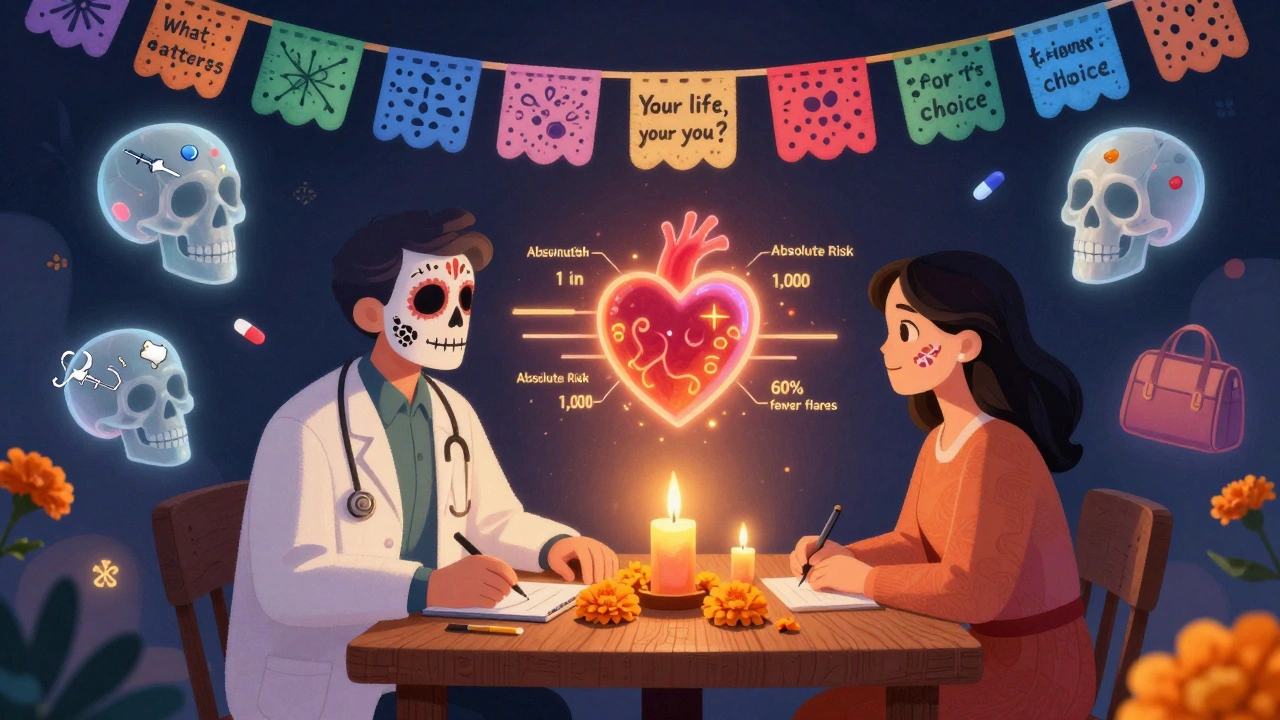
When you’re living with an autoimmune disease like rheumatoid arthritis, multiple sclerosis, or lupus, every treatment choice feels like a high-stakes gamble. One drug might slash your flare-ups by 70%, but could also raise your risk of a rare, life-threatening infection. Another might be safer but less effective-and leave you stuck with constant pain. Shared decision-making isn’t just a buzzword here. It’s the difference between feeling heard and feeling rushed. It’s the line between sticking with a treatment that fits your life… and quitting because no one ever asked what your life even looked like.
Why Shared Decision-Making Matters More in Autoimmune Care
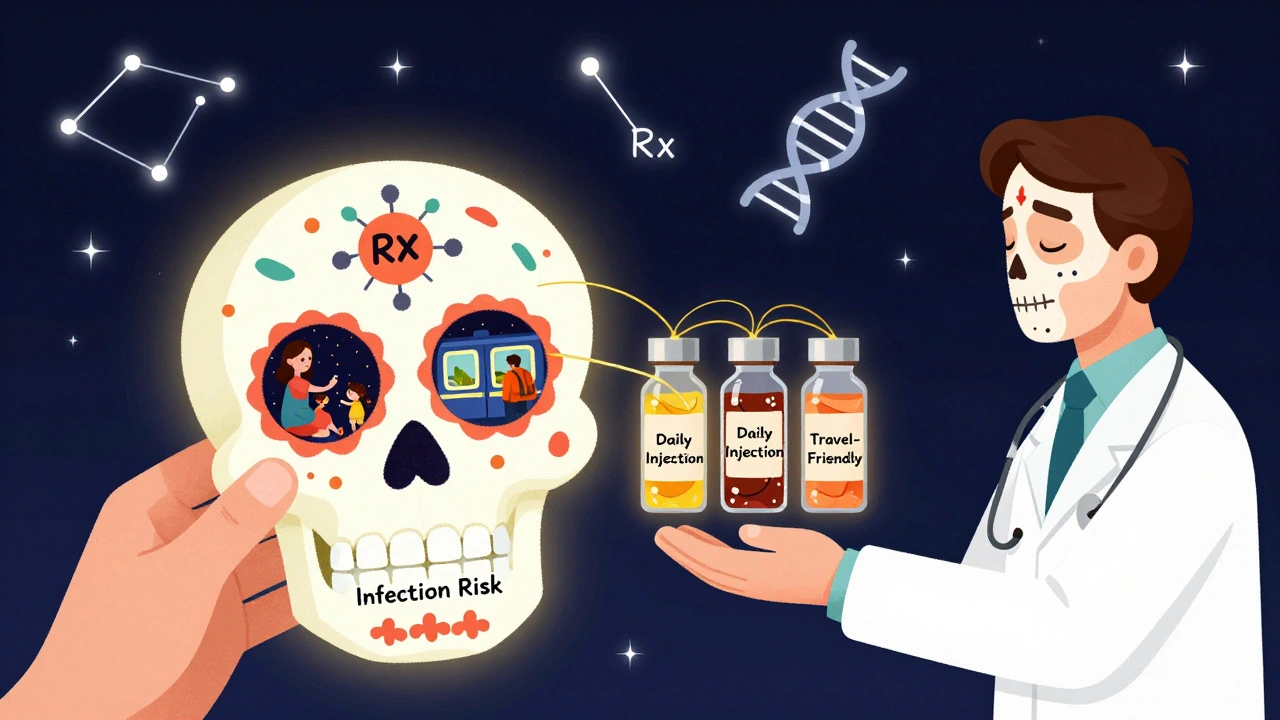
Traditional medicine used to work like this: doctor knows best. You got the treatment they picked, and you took it. But autoimmune diseases don’t follow simple rules. Two people with the same diagnosis can have wildly different experiences. One might be a busy parent who can’t handle daily injections. Another might be a traveler who needs a pill they can carry in their suitcase. A third might fear side effects so much they’d rather live with pain than risk infection. That’s why shared decision-making (SDM) became essential. It’s not about giving patients a list and letting them pick. It’s about doctors and patients walking through the trade-offs together-using real numbers, not vague warnings. Studies show when patients are part of the decision, they stick with their treatment 82% of the time. Without it? That number drops to 63%. That’s not just about compliance. It’s about survival.How It Actually Works: The Three-Step Process
SDM isn’t magic. It’s a structured conversation. Most experts agree on three clear steps:- Team Talk (1-2 minutes): The doctor starts by saying, ‘This is your health. I’m here to help you weigh your options.’ No jargon. No assumptions. Just an invitation to collaborate.
- Option Talk (5-7 minutes): Here’s where data comes in. Instead of saying, ‘This drug has serious risks,’ they say, ‘Out of 1,000 people on this medication, about 1 will develop a serious brain infection over two years.’ They use tools like decision aids-simple booklets, videos, or apps-that show exact numbers: ‘This treatment reduces flares by 60%, but increases infection risk from 1.2 to 1.8 per 100 people per year.’
- Decision Talk (3-5 minutes): ‘Which of these trade-offs feels right for you?’ The doctor doesn’t push. They listen. They ask, ‘What matters most to you right now? Travel? Work? Family time? Avoiding needles?’ Then they match the treatment to the answer.
What Tools Help Make It Real?
You won’t find SDM working well without the right tools. Here’s what works:- The SDM-Q-9: A simple 9-question survey patients fill out after a visit. It measures how well the doctor involved them. Scores above 80 mean the conversation was truly shared.
- Decision Aids from the Ottawa Hospital: These are free, evidence-based tools for RA, MS, and lupus. One for TNF inhibitors shows exactly how many people get better, how many get infections, and how many stop because of side effects. No guessing.
- MS Values Compass: Launched in early 2023, this digital tool asks patients to rank what matters most: relapse prevention? Avoiding hospital visits? Being able to travel? It then matches their answers to treatment options.
- Arthritis Foundation’s Decision Aids: Used by over 150,000 people since 2017. They don’t just list drugs-they show how each affects daily life. One patient said, ‘I didn’t realize methotrexate meant I’d need monthly blood tests. That changed everything.’
When Shared Decision-Making Falls Short
It’s not perfect. And patients know it. In a 2020 survey by the National MS Society, 63% of patients said their neurologist rushed through treatment options. One woman shared: ‘My doctor listed three drugs in 90 seconds. He didn’t ask if I was a nurse with three kids. He didn’t ask if I was scared of needles. I left feeling like a number.’ Another problem? Doctors don’t always explain risk correctly. Saying ‘There’s a 0.1% chance of PML’ means nothing to most people. Saying ‘1 in 1,000 people get this serious brain infection’? That sticks. Studies show patients misunderstand relative risk (‘50% higher chance’) more than absolute risk (‘1 extra case per 1,000’). That’s why experts insist: always use absolute numbers. And then there’s time. In 2021, 78% of rheumatologists said they didn’t have enough time to do SDM properly. Many still default to the old way: ‘Here’s the prescription.’ Especially during flares. When a patient’s joints are swollen and burning, or their vision is blurry from MS, there’s no time for a 10-minute chat. That’s when doctors take charge. And that’s okay-if it’s temporary.Who’s Doing It Right?
Some places are leading the way. In Europe, the European League Against Rheumatism now requires doctors to document shared decisions before starting biologic therapies. In the U.S., Medicare is starting to pay more to clinics that prove patients are involved in their care. The Choosing Wisely campaign has 17 autoimmune-specific guidelines pushing for patient preferences. And new tech is helping. In March 2023, the FDA cleared the first AI-powered SDM tool for rheumatoid arthritis: ArthritisIQ. It pulls data from your EHR, your symptom logs, even your pharmacy refills, and builds a personalized risk-benefit profile. It doesn’t decide for you. It just makes the trade-offs clearer. Rheumatologists are ahead of neurologists here. 68% of rheumatologists say they use SDM often or always. Only 52% of neurologists do. Why? Because RA treatment has more options-and more real-world trade-offs. MS drugs can be life-changing, but the risks are scarier. And not every neurologist has been trained to talk about them.
What You Can Do: Be the Driver of Your Care
You don’t have to wait for your doctor to lead. You can start the conversation. Before your next appointment:- Write down what matters most: Is it energy? Freedom from needles? Avoiding hospital visits? Keeping your job?
- Ask: ‘What are the exact chances this drug will help me? And what are the exact chances it could hurt me?’
- Request a decision aid. The Arthritis Foundation and National MS Society offer free ones online.
- If you feel rushed, say: ‘I need more time to understand this. Can we schedule a follow-up?’
The Bigger Picture: Why This Isn’t Just About Drugs
Shared decision-making isn’t just about picking the right medication. It’s about recognizing that your life matters as much as your lab results. It’s about seeing you-not just your disease. Autoimmune conditions are lifelong. You’re not just treating inflammation. You’re protecting your ability to play with your kids, go to work, travel, sleep without pain. No drug can give you that. Only you can. And only when your doctor listens can they help you get there. The future of autoimmune care isn’t in the next breakthrough drug. It’s in the conversation you have before you take it.What is shared decision-making in autoimmune care?
Shared decision-making is a process where you and your doctor work together to choose a treatment based on both medical evidence and your personal values, lifestyle, and goals. Instead of the doctor deciding for you, you both review the risks and benefits of each option and agree on the best fit for your life.
Why is shared decision-making important for autoimmune diseases?
Autoimmune treatments often involve serious trade-offs-like reducing flares but increasing infection risk. Because outcomes depend heavily on your daily life (work, family, travel, fear of needles), decisions can’t be made on numbers alone. Shared decision-making ensures your priorities are part of the choice, leading to better adherence, less regret, and lower long-term costs.
What are decision aids, and how do they help?
Decision aids are tools-like booklets, videos, or apps-that show real, clear data on treatment options. They use absolute numbers (e.g., ‘1 in 1,000 risk’) instead of vague terms. For example, one aid for rheumatoid arthritis shows that adalimumab helps 60% of patients reduce symptoms, but carries a 1.8% annual risk of serious infection. These tools help patients understand risks better and feel more confident in their choices.
Can shared decision-making be used during a disease flare?
Usually not. During severe flares-like sudden joint swelling, vision loss, or neurological symptoms-immediate treatment is needed. Doctors may make quick decisions to stabilize you. But once the crisis passes, shared decision-making should begin to choose the long-term plan. It’s not about avoiding urgency; it’s about ensuring long-term choices are thoughtful.
What if my doctor doesn’t offer shared decision-making?
You can start the conversation. Ask: ‘Can we go over the pros and cons of each option using real numbers?’ Request free decision aids from the Arthritis Foundation or National MS Society. If you feel rushed, say you need more time. You have the right to be involved. Many doctors want to do this-they just need a nudge.
Are there digital tools I can use before my appointment?
Yes. The National MS Society’s ‘MS Values Compass’ and the Arthritis Foundation’s condition-specific tools let you rank what matters most to you-like avoiding injections or staying active. These tools generate a personalized summary you can bring to your appointment. Some are even integrated with electronic health records now.
How do I know if my doctor is good at shared decision-making?
Look for these signs: They ask what matters most to you, use plain language instead of jargon, show you exact risk numbers (not percentages), and don’t push one option. After your visit, you should feel clearer, not more confused. You can also ask for the SDM-Q-9 survey, which measures how well the conversation went.
Does shared decision-making cost more?
No-in fact, it often saves money. Patients who engage in shared decision-making have 17% lower annual healthcare costs. Why? Because they’re more likely to stick with treatment, avoid unnecessary hospital visits, and skip ineffective drugs. One study found inflammatory bowel disease patients saved nearly $4,000 a year just by making better-informed choices.
Suzanne Johnston
December 9, 2025 AT 00:07It’s not about the drugs. It’s about whether your doctor sees you as a person or a set of lab results. I’ve had both. One told me to take the injection or face ‘serious consequences.’ The other sat with me for 20 minutes, showed me a chart, and asked if I’d rather be tired or scared. I chose tired. Still here. Five years later. That’s the difference.
Shared decision-making isn’t a buzzword-it’s the bare minimum we deserve.
Stop treating patients like problems to solve. Start treating them like humans with lives.
Graham Abbas
December 10, 2025 AT 03:19Oh my god. This. This right here. I cried reading this. Not because I’m emotional-I’m a damn engineer-but because I finally felt seen. My neurologist said ‘MS is unpredictable’ and handed me a pamphlet. No numbers. No options. Just fear wrapped in jargon.
I found the MS Values Compass on my own. Ranked ‘keeping my job’ #1, ‘avoiding needles’ #2. It matched me to a pill that works. No injections. No hospital stays. Just me, my laptop, and my dog.
Doctors need training. But patients? We need tools. And we need to demand them.
Haley P Law
December 12, 2025 AT 01:11YESSSSSSSSS this is everything 😭😭😭
I had a flare last year and my doc said ‘take this’ and left. I Googled it. Found a Reddit thread. Found the Arthritis Foundation’s tool. Went back. Said ‘here’s what I want.’ He paused. Said ‘you’re right.’ We changed it.
Now I get my monthly blood test on a Friday so I can nap all weekend. That’s my win.
Stop being passive. You’re not a patient. You’re the CEO of your body.
Also-why do doctors think ‘0.1% risk’ means anything? I’d rather know if I’m the 1 in 1,000 or the 999 who walk away fine. 😤
Andrea DeWinter
December 12, 2025 AT 11:32People don’t realize how much this saves the system. I work in healthcare admin. Patients who use decision aids have 30% fewer ER visits in the first year. Less waste. Less burnout. Less ‘I didn’t know’
And yes-it takes time. But imagine if every rheumatologist did this? We’d cut down on failed treatments, hospitalizations, and the emotional toll on families.
It’s not just ethical. It’s economic. We’re not talking about feel-good fluff. We’re talking about real cost savings and better outcomes.
Why aren’t we funding this everywhere? Because it’s easier to write a script than have a conversation.
And that’s lazy.
ian septian
December 13, 2025 AT 09:38Ask for the numbers. Demand the tool. Say no to rushed decisions.
That’s it.
Arun Kumar Raut
December 15, 2025 AT 08:18I am from India. Here, doctors still say ‘take this medicine’ and you pay and go. No talk. No questions. I saw my cousin suffer because she didn’t know the side effects. She thought ‘weakness’ was normal. It was not. It was the drug.
This system? It is good. Simple. Clear. No fancy words. Just truth.
Why not use this everywhere? Why make it hard? People just need to know what will happen. Not guess.
My sister used the Arthritis Foundation tool. Now she takes her pill and sleeps well. That is victory.
precious amzy
December 15, 2025 AT 15:16One must question the epistemological foundations of this so-called ‘shared decision-making’ paradigm. Is it not a neoliberal co-optation of patient autonomy, wherein the illusion of agency is manufactured through quantified risk-benefit matrices that ultimately serve institutional efficiency? The very act of reducing lived experience to statistical probabilities-‘1 in 1,000’-is a form of biopower that reifies the clinical gaze.
Moreover, the assumption that patients can meaningfully engage with ‘decision aids’ presumes a level of health literacy that is structurally inaccessible to the majority of the population, particularly under conditions of socioeconomic precarity.
One wonders: is this not merely the sanitization of paternalism under the banner of ‘collaboration’?
And let us not forget: the FDA-cleared AI tool? A black box algorithm trained on biased datasets, now masquerading as emancipatory technology. The irony is not lost.
Carina M
December 15, 2025 AT 17:43It is profoundly irresponsible to promote the notion that patients, many of whom lack formal medical training, are capable of making informed decisions regarding complex immunomodulatory therapies. This is not ‘empowerment’-it is abdication of professional duty.
The physician’s role is to guide, not to poll. To diagnose, not to defer. To prescribe, not to negotiate.
When a patient is in the throes of an autoimmune crisis, the last thing they need is a 10-minute ‘values assessment’-they need a competent clinician who knows the science and isn’t afraid to act.
What you call ‘shared decision-making,’ I call ‘therapeutic nihilism dressed in virtue signaling.’
William Umstattd
December 16, 2025 AT 15:41Let’s be clear: shared decision-making isn’t a ‘nice-to-have.’ It’s a moral imperative. You don’t get to hand someone a prescription and say ‘good luck’ when their life is on the line. That’s not medicine-that’s negligence wrapped in white coats.
And yes, it takes time. But so does repairing a broken trust. So does preventing a suicide because someone felt too scared to ask for help. So does avoiding a hospital stay because someone understood the real risk.
The data doesn’t lie: 82% adherence vs. 63%. That’s not a statistic. That’s 19% more people alive next year because someone listened.
And to those who say ‘it’s too hard’ or ‘they’re not ready’-you’re not ready to stop being lazy.
Stop hiding behind ‘time constraints.’ Start being a doctor.