Generic Drug Names Explained: USAN, INN, and How Brand Names Are Chosen
 Feb, 24 2026
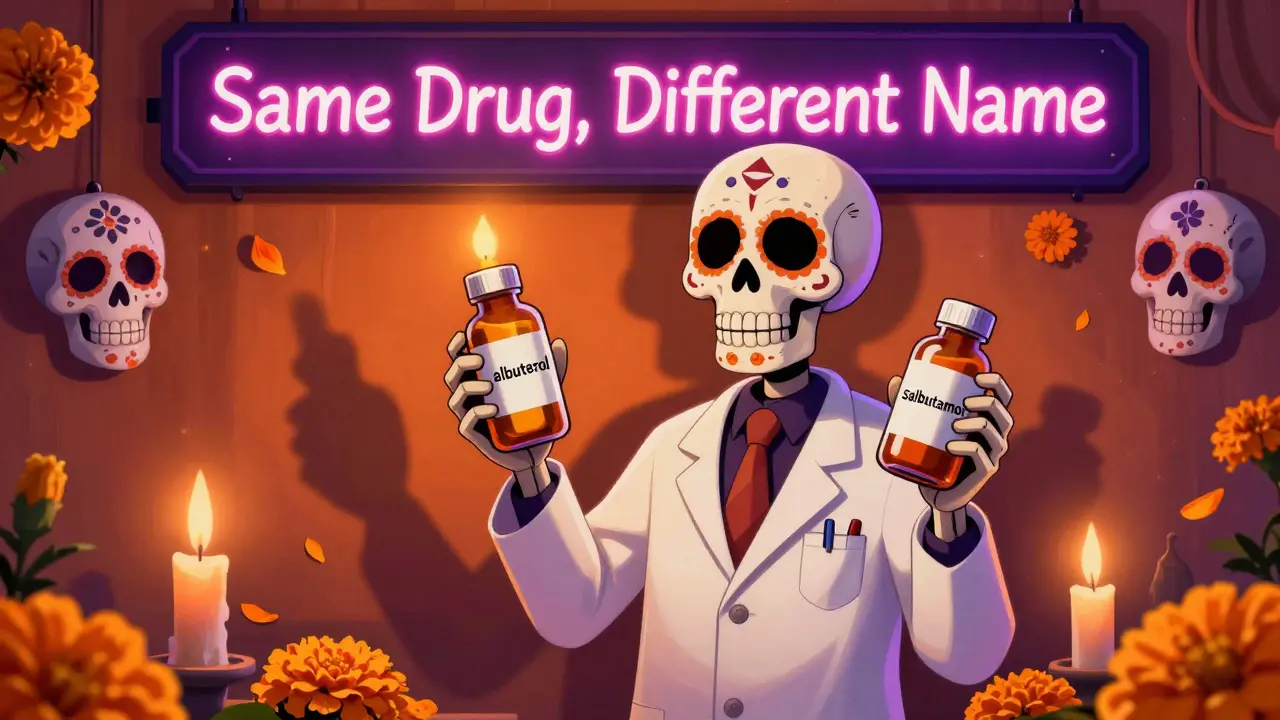
Have you ever wondered why the same drug has two different names on your prescription and on the bottle? One might say albuterol, while the box says salbutamol. Or why some pills are called omeprazole in Europe but prilosec in the U.S.? It’s not a mistake. It’s naming science-and it’s designed to keep you safe.
Behind every generic drug name is a system built to prevent deadly mix-ups. Two major organizations, the United States Adopted Names (USAN) Council and the World Health Organization’s International Nonproprietary Names (INN) program, work independently but in sync to assign names that doctors, pharmacists, and patients can trust. These aren’t just labels. They’re coded messages that tell you what the drug does, who made it, and how it works-all in a few syllables.
What Are USAN and INN? The Two Systems Behind Generic Names
USAN and INN are the backbone of how drugs get their generic names. Think of them as the official dictionaries for medicines. Neither is a brand name. Neither can be owned by a company. They’re public property, meant to be used everywhere-from hospital charts to pharmacy shelves to patient leaflets.
USAN, created in 1964, is managed by a council made up of the American Medical Association, the United States Pharmacopeia, and the American Pharmacists Association. It decides what names are used in the United States. The INN program, run by the WHO since 1950, does the same thing globally. The goal? One name per drug, everywhere. But it’s not always that simple.
Here’s the twist: USAN and INN agree on about 95% of names. The other 5%? That’s where confusion creeps in. Take acetaminophen (USAN) vs. paracetamol (INN). Same drug. Same dose. Different name. In the U.S., you’ll see it on Tylenol bottles. In the UK, it’s on Panadol. That’s not an error-it’s history. The U.S. stuck with one version. The rest of the world went with another.
Another classic: albuterol (USAN) and salbutamol (INN). Both treat asthma. Both work the same way. But if you’re a doctor in Germany prescribing to a patient who got their meds from the U.S., you could accidentally give the wrong dose. There are documented cases of this happening. That’s why the systems try so hard to align-and why they still have gaps.
How the Name Tells You What the Drug Does
Generic names aren’t random. They’re built like a language. And once you learn the rules, you can guess what a drug does just by its ending.
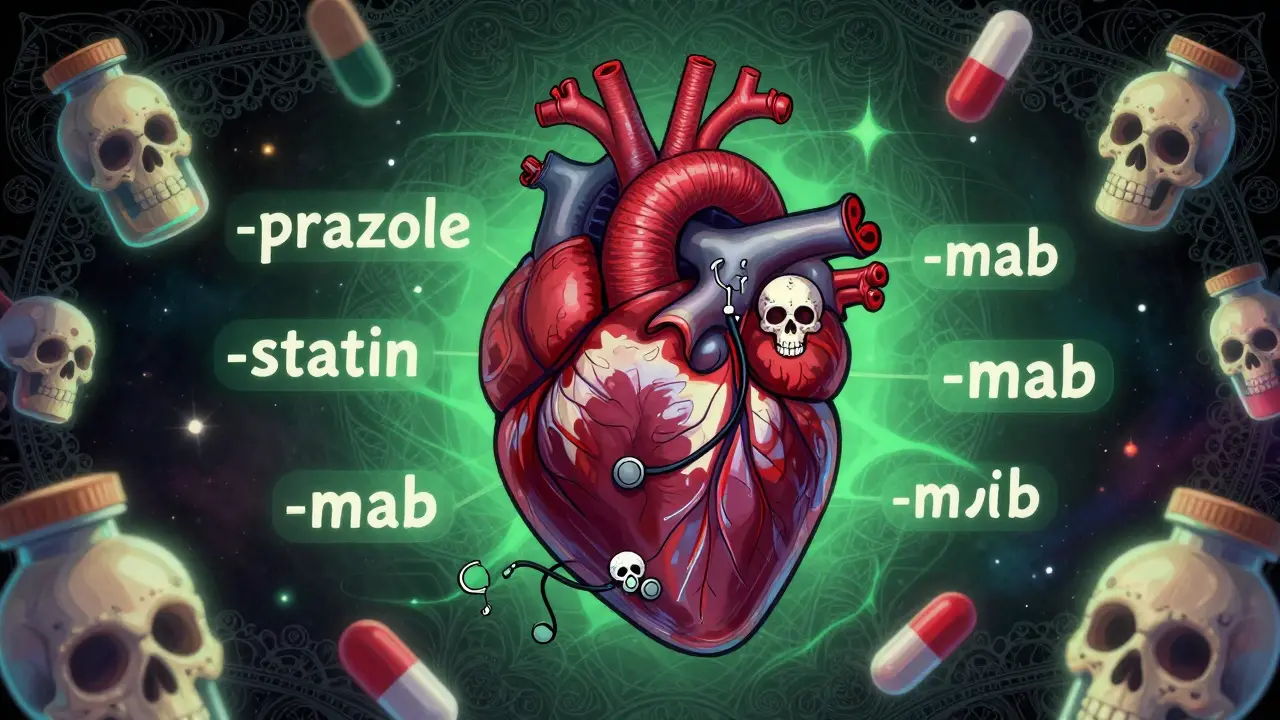
The key is the stem. That’s the part at the end of the name that tells you the drug’s class. For example:
- -prazole = proton pump inhibitor (like omeprazole, pantoprazole)
- -statin = cholesterol-lowering drug (like atorvastatin, rosuvastatin)
- -mab = monoclonal antibody (like adalimumab, rituximab)
- -virdine = HIV antiviral (like zidovudine, lamivudine)
- -feron = interferon-based therapy (like interferon alfa-2a)
These stems aren’t just for experts. Nurses, pharmacists, and even patients can use them. If you see a drug ending in -mab, you know it’s a biologic-likely used for cancer, autoimmune disease, or inflammation. No need to look it up. The name tells you.
Even the prefix matters. Esomeprazole isn’t just a fancy version of omeprazole. The “es-” tells you it’s a specific mirror-image version (a stereoisomer) that works slightly better. Same drug family. Better performance. The name says so.
How a Drug Gets Its Name (Spoiler: It’s Not Easy)
When a drug company develops a new medicine, they don’t just pick a name. They submit up to six options to both USAN and INN. Then the real work begins.
Here’s what happens:
- The company submits names during early clinical trials (Phase 1 or 2).
- USAN and INN teams check every name for conflicts-do any existing drugs sound too similar? Are there trademark issues? Could it be misread on a prescription?
- They test pronunciation. Is it easy to say? Could someone confuse it with another drug? For example, “Zyvox” and “Zyprexa” were flagged because they sound alike.
- They check spelling. One letter off can change everything. “Cytarabine” and “cytosine” are worlds apart.
- They review stems. Does the name fit the class? If it’s a new type of drug, they might create a new stem.
- After review, USAN picks one name. Then INN either accepts it or suggests a different one.
- Once approved, the name is published. There’s a 4-month public comment window. If no one objects, it’s official.
This whole process takes 18 to 24 months. And it’s not rare for companies to go through 15 to 20 name ideas before landing on one that passes. Many never make it. About 65% of drugs that get a USAN name never even reach the market. But the name sticks-just in case.
Why Brand Names Are So Different
Now, compare that to brand names. Prozac. Advair. Humira. These aren’t chosen for science. They’re chosen for marketing.
Brand names are trademarked. They’re catchy. They’re designed to stick in your mind. A brand name might be short, punchy, or even made-up: “Lipitor,” “Zoloft,” “Xarelto.” They don’t tell you anything about the drug’s function. You have to look it up.
But here’s the catch: brand names can’t sound too much like the generic name. The FDA won’t allow it. Why? Because if a patient hears “Lipitor” and the doctor says “atorvastatin,” they might think they’re different drugs. That’s dangerous.
So companies spend millions on naming consultants. They test names across cultures. They check for accidental meanings in other languages. One drug almost got named “Cytomel,” but it was rejected because it sounded like “cytomegalovirus”-a real virus. Bad association. Cancelled.
Brand names also have to avoid sounding like other brand names. “Zofran” and “Zyrtec” are close enough to cause confusion. So they’re kept apart.
What Happens When Names Don’t Match?
Confusion between USAN and INN names isn’t just academic. It’s a real patient safety risk.
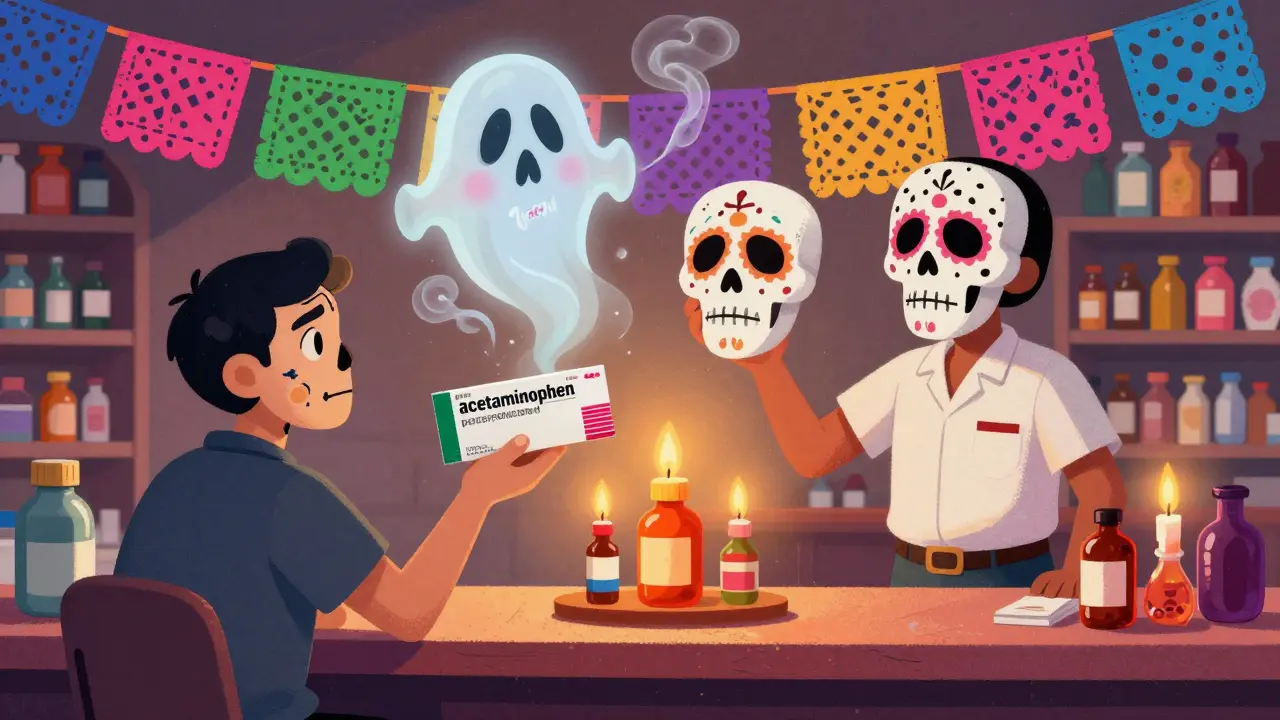
A 2021 study in the Journal of Clinical Pharmacology found that international travelers and migrant workers were twice as likely to get the wrong drug because they didn’t recognize the local name. One patient in Canada took “paracetamol” for pain, but her U.S. doctor prescribed “acetaminophen.” She thought it was a new drug and doubled her dose-leading to liver damage.
Even in the U.S., pharmacists sometimes see both names on prescriptions. A patient might bring in a bottle from Mexico with “salbutamol” and ask for refills. The pharmacist has to know: that’s albuterol. Same thing.
That’s why hospitals and pharmacies use standardized databases that map every INN to its USAN equivalent. It’s not perfect. But it’s necessary.
What’s Next? New Drugs, New Challenges
As medicine gets more complex, so does naming.
Twenty years ago, most drugs were small molecules. Easy to name. Now we have gene therapies, RNA drugs, antibody-drug conjugates. These don’t fit into the old “-mab” or “-statin” boxes.
The WHO updated its antibody naming rules in 2021 to include newer types like bispecific antibodies and Fc-modified versions. USAN followed. But it’s a race. For example, what do you call a drug that delivers CRISPR to fix a gene? It’s not a “-prazole.” It’s not a “-mab.”
Experts are working on it. But for now, the system still works. It’s not perfect. But it’s the best we have. And it saves lives.
Why This Matters to You
If you take medication, this affects you.
- When you refill a prescription, the generic might have a different name than the brand-but it’s the same drug.
- If you travel, your medicine might have a different name abroad. Always carry the generic name.
- When your doctor says “take your albuterol,” and your bottle says “salbutamol,” don’t panic. They’re the same.
- Never assume two drugs with similar-sounding names are the same. Always check the generic name.
Medication errors from confusing names cost the U.S. healthcare system $2.4 billion a year. That’s why these naming rules exist. Not for bureaucracy. Not for lawyers. For you.
Steven Pam
February 26, 2026 AT 06:53Also, shoutout to pharmacists who have to untangle this mess daily. You're unsung heroes.
Michael FItzpatrick
February 27, 2026 AT 21:47Nandini Wagh
February 28, 2026 AT 14:19Also, I’m pretty sure the FDA just picked 'Lipitor' because it sounds like a luxury car. Because nothing says 'I’m healthy' like a brand name that feels like a BMW.
Lillian Knezek
March 1, 2026 AT 01:45Same drug, two names? That’s how they keep you confused. You buy the brand. You pay more. You don’t realize the generic is identical.
And don’t get me started on the 'stems'-they’re not helping you, they’re training you to trust their labels.
Next thing you know, they’ll rename water to 'H2O-Plus' and charge extra for 'purified'. 🤡
Maranda Najar
March 1, 2026 AT 17:56Each stem, each syllable, each carefully vetted syllable is a silent vow to human life.
I weep for the pharmacists who decipher this daily. I weep for the patients who don’t.
This is not paperwork. This is poetry written in pharmacology. And we are all its beneficiaries.
Sanjaykumar Rabari
March 2, 2026 AT 17:30Also, why do Americans say 'albuterol'? It sounds like a car model. We say salbutamol. It’s correct. End of story.
Valerie Letourneau
March 3, 2026 AT 15:17It’s not about politics. It’s about clarity. And yes, we do have a mapping database. It’s not perfect, but it’s the only thing standing between a patient and a fatal error.
Lou Suito
March 4, 2026 AT 01:25Also-'Zyvox' and 'Zyprexa'? They’re not even close. Who’s making these decisions? A committee of toddlers?
Lisandra Lautert
March 4, 2026 AT 12:33Cory L
March 6, 2026 AT 06:18And the stems? That’s next-level. '-mab' = biologic. '-virdine' = antiviral. It’s like learning a new alphabet.
Now I look at my meds like a decoder ring. I’m weird. I know. But I’m alive because of this system.
Bhaskar Anand
March 7, 2026 AT 13:15Stephen Archbold
March 8, 2026 AT 05:10One time a guy came in asking for 'albuterol'-had a U.S. script. We gave him 'salbutamol'. He looked at me like I’d just handed him a snake.
Then he said 'ohhhhh' and bought two. We all high-fived.
It’s messy. But we make it work.
Gabrielle Conroy
March 9, 2026 AT 16:58THANK YOU FOR THIS. I’VE BEEN TAKING THIS FOR 5 YEARS AND THOUGHT I WAS TAKING TWO DIFFERENT DRUGS.
Also-yes to the stems!! I now know that '-mab' means 'this will cost me $10,000' 😅❤️