Antibiotic Resistance: How Bacterial Mutations Make Drugs Fail and What You Can Do
 Mar, 1 2026
Every time you take an antibiotic when you don’t need it, you’re not just helping yourself-you’re helping bacteria get stronger. That’s the harsh truth behind antibiotic resistance. It’s not science fiction. It’s happening right now, in hospitals, farms, and homes around the world. And it’s getting worse. By 2050, unchecked antibiotic resistance could kill more people than cancer. In 2025, we already see over 1.27 million deaths each year linked to drug-resistant infections. This isn’t a distant threat. It’s here.
How Bacteria Outsmart Antibiotics
Bacteria don’t have brains, but they’re brilliant at surviving. When antibiotics are used-especially when they’re misused-they don’t just kill the weak bacteria. They kill off the ones that are easy to kill, leaving behind the tough ones. These survivors pass on their defenses to their offspring. Over time, entire populations become untouchable.
The science behind this isn’t magic. It’s evolution. Bacteria mutate. Fast. And when those mutations help them survive antibiotics, they stick around. Research from 2024 shows that six common bacteria, exposed to low doses of antibiotics over generations, developed full resistance to nearly every drug tested. Not all at once. Not randomly. Step by step. Each mutation gave them a tiny edge. Then another. Then another.
Here’s how they do it:
- Reduced permeability: They change their outer shell so antibiotics can’t get in.
- Efflux pumps: They build tiny trash pumps that spit out the drug before it can work.
- Target modification: They alter the part of the cell the antibiotic targets-like changing the lock so the key no longer fits.
- Antibiotic inactivation: They produce enzymes that break down the drug, like a chemical neutralizer.
- Metabolic shifts: They rewire their internal chemistry to bypass the damage.
Some of these changes are temporary. Others? Permanent. Studies tracking bacterial evolution show that early resistance often comes from changes in gene regulation-like flipping a switch. But over time, those switches get replaced by permanent mutations in core genes. That’s when resistance becomes unstoppable.
The Mutations That Matter
Not all mutations are equal. Some are common. Some are deadly. Whole-genome studies have found patterns across dozens of resistant strains. The fusA, gyrA, and parC genes show up again and again. These are the genes that control how bacteria build their cell walls, copy their DNA, and respond to stress. When they mutate, antibiotics lose their grip.
For example:
- Amoxicillin resistance? Almost always linked to ampC gene mutations.
- Cefepime resistance? That’s pbp mutations at work.
- Tetracycline? It’s more complex. Resistance doesn’t come from one mutation-it comes from a chain. First, a transposon (a jumping gene) inserts itself near the acrB pump gene, turning it on full blast. Then, later, the pump itself mutates to become more efficient. It’s a two-step takeover.
And here’s the kicker: most of the mutations you see early on? They disappear. Only 8% to 20% of the changes seen in the first 100 generations stick around by the end. The bacteria are constantly testing new tricks. The best ones win. The rest? Gone.
Why We’re Losing the War
It’s not just about what’s in the medicine cabinet. It’s about what’s in the soil, the water, and the animals we eat. Antibiotics aren’t just used in humans. They’re pumped into livestock to make them grow faster and prevent disease in crowded conditions. That’s where resistance starts-and spreads.
In the U.S., the CDC says 30% of outpatient antibiotic prescriptions are unnecessary. That’s 47 million prescriptions a year where no bacteria were even present. A sore throat? Probably viral. A runny nose? Not bacterial. But we still reach for the pills.
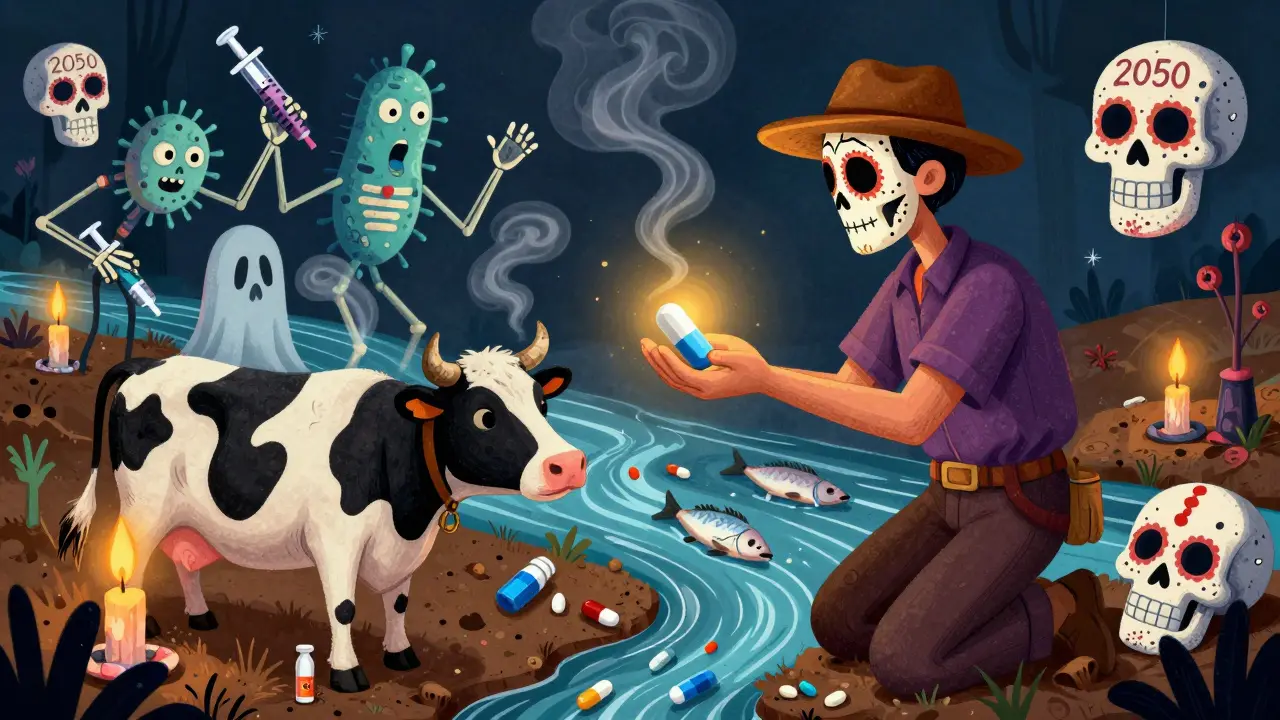
And it’s not just humans. The WHO, FAO, and OIE all agree: we need a One Health approach. Human health, animal health, and environmental health are connected. When resistant bacteria from farms enter waterways, they don’t stop at the fence. They reach rivers, lakes, and even drinking water. And now, research from 2025 shows that even non-antibiotic drugs-like antidepressants or painkillers-can make it easier for bacteria to pick up resistance genes from their neighbors. It’s like giving them a free pass to upgrade their defenses.
What “Appropriate Use” Really Means
“Use antibiotics properly” sounds simple. But what does it actually look like?
- Don’t demand them. If your doctor says you don’t need them, trust them. Antibiotics don’t work on colds, flu, or most sore throats.
- Take them exactly as prescribed. Even if you feel better after two days, finish the full course. Stopping early leaves behind the toughest bacteria.
- Never share or use leftovers. A leftover prescription from last year won’t help your current infection. It might make it worse.
- Don’t use antibiotics for prevention unless it’s medically necessary. Routine use in healthy people? No. Only in very specific cases, like before certain surgeries.
- Ask about alternatives. Sometimes, rest, hydration, or pain relief is enough. Ask: “Is this really bacterial?”
Health systems are starting to catch on. Antimicrobial stewardship programs in hospitals have cut inappropriate use by 20-30% without hurting patient outcomes. But outside hospitals? Not so much. In the EU, AMR causes 33,000 deaths a year and costs €1.5 billion. In Australia? We’re not immune. The same patterns are here.
The Future: Can We Catch Up?
Scientists are racing to keep up. CRISPR tools are being tested to cut resistance genes out of bacteria. New diagnostic tests can now spot resistance markers in hours, not days. The FDA approved new breakpoints for drugs like cefiderocol in 2024-meaning labs can now detect resistance more accurately.
But here’s the hard truth: we’re not making enough new antibiotics. The WHO’s 2024 report found only 17 of the 67 antibiotics in development target the most dangerous pathogens. And only three are truly new-designed to bypass existing resistance.
Meanwhile, resistance keeps evolving. Research from 2025 shows that when bacteria are exposed to fluctuating antibiotic levels (like what happens in a human body), resistance develops three times faster than in constant, low-dose environments. That means inconsistent dosing, missed pills, or incomplete courses? They’re not just risky-they’re fuel.
The most promising new direction? Targeting the metabolic pathways bacteria use to stabilize resistance. If we can stop them from locking in their defenses, we might be able to reverse the process. It’s early, but it’s real.
What You Can Do Today
You don’t need to be a scientist to fight antibiotic resistance. You just need to be smart.
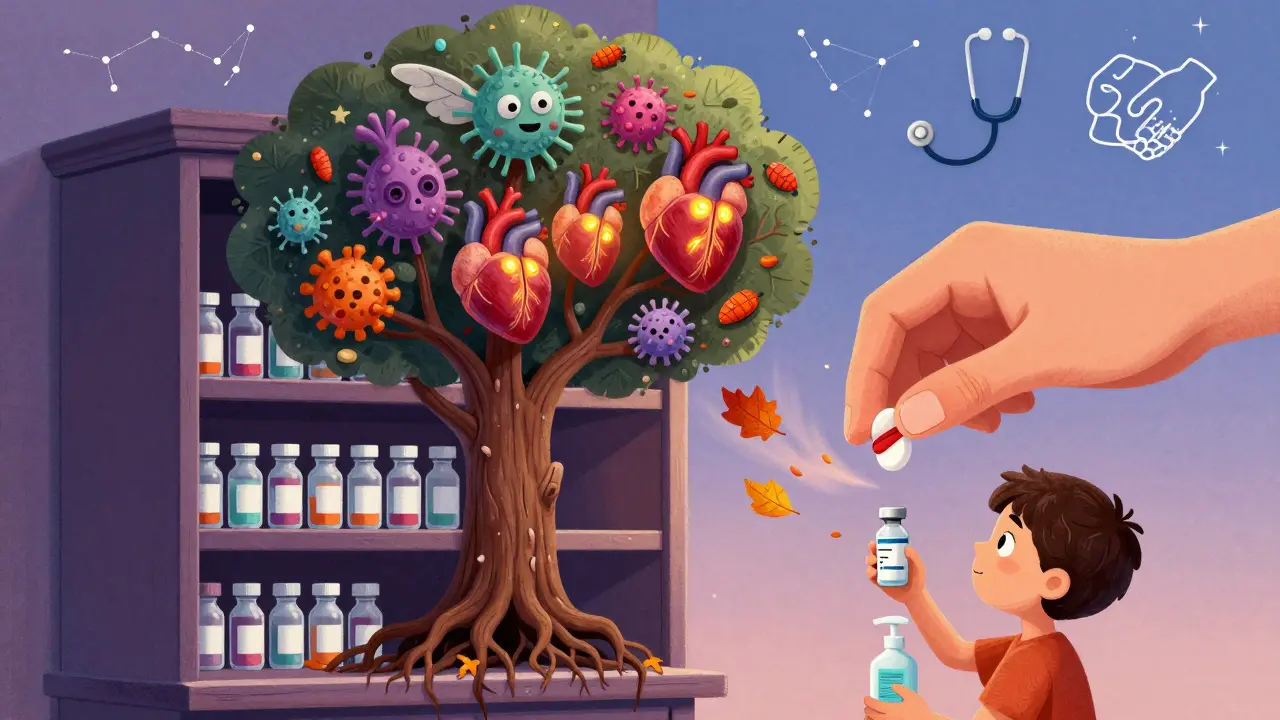
- Wash your hands. It’s the oldest trick, but it works. Fewer infections mean fewer antibiotics needed.
- Get vaccinated. Flu shots, pneumonia vaccines-they reduce infections that might lead to unnecessary antibiotic use.
- Choose meat from animals raised without routine antibiotics. Look for labels like “no antibiotics ever” or “raised without antibiotics.”
- Ask questions. If your doctor prescribes an antibiotic, ask: “What infection is this for?” and “What happens if I don’t take it?”
- Dispose of old antibiotics properly. Don’t flush them. Don’t throw them in the trash. Take them to a pharmacy that takes back meds.
Every time you make a smart choice, you’re not just protecting yourself. You’re protecting the next generation. Because if we keep using antibiotics like they’re magic bullets, we’ll run out. And when that happens, a simple cut could become deadly again.
Why This Matters More Than You Think
Think about surgery. Cancer treatment. Organ transplants. All of them rely on antibiotics to prevent infections. Without effective antibiotics, these life-saving procedures become too risky. We’re not just talking about a few more colds. We’re talking about a return to the 1920s-when a child could die from a scraped knee.
The World Bank predicts that by 2050, uncontrolled antibiotic resistance could push 24 million people into extreme poverty. That’s not a guess. It’s a projection based on current trends.
We have the tools. We have the science. What we’re missing is the will.
Tildi Fletes
March 1, 2026 AT 19:13Antibiotic resistance is one of those slow-motion crises that doesn’t make headlines until it’s too late. The mechanisms described-efflux pumps, target modification, metabolic rewiring-are not theoretical. I’ve seen lab data where a single point mutation in gyrA confers resistance to fluoroquinolones in under 200 generations. What’s alarming is how often these mutations are pre-existing in environmental bacteria, waiting for selective pressure to amplify them. The real failure isn’t patient misuse-it’s policy inertia. We’ve known this since the 1940s. We just chose not to act.
Public health infrastructure needs to treat antimicrobial stewardship like vaccination programs: mandatory, monitored, and measurable. Until then, we’re just rearranging deck chairs on the Titanic.
Also-yes, flushing old antibiotics is a disaster. But so is dumping them in landfills. Pharmaceutical take-back programs exist in 47 U.S. states. Use them.
Siri Elena
March 3, 2026 AT 10:17Oh look, another ‘you’re killing us all’ lecture from someone who thinks ‘antibiotics’ is a four-letter word. Let me guess-you also boycott gluten and think TikTok is a national security threat?
For the record: I took amoxicillin for a sinus infection last winter. Got better. Didn’t die. Didn’t spawn superbugs. Your ‘1.27 million deaths’ stat? That’s global. Includes places where clean water is a luxury. Blaming Americans for ‘overprescribing’ while ignoring that 60% of global antibiotic use happens in livestock? That’s not science. That’s virtue signaling.
Also, ‘no antibiotics ever’ chicken? Tastes like cardboard. And costs $18 a pound. But sure, let’s all starve our families on artisanal guilt.
Alex Brad
March 4, 2026 AT 17:40Don’t take antibiotics unless prescribed. Finish the full course. Don’t share them. That’s it. No need for lectures. No need for fear. Just do the three things that work.
Renee Jackson
March 5, 2026 AT 12:40This is one of the most urgent public health challenges of our lifetime-and yet, we treat it like a minor inconvenience. Every antibiotic prescription is a decision with ripple effects across ecosystems, economies, and future generations.
Let me be clear: this isn’t about personal responsibility alone. It’s about systemic change. Hospitals need rapid diagnostics. Farms need regulation. Pharmacies need incentives to develop novel drugs. And policymakers need to treat antimicrobial resistance with the same urgency as climate change or pandemic preparedness.
But we can’t wait for systems to fix themselves. Start today: ask your doctor if antibiotics are necessary. Choose meat raised without routine antibiotics. Support legislation that funds stewardship programs. Your voice matters. Your choices matter. And yes-you are part of the solution.
Richard Elric5111
March 5, 2026 AT 20:12There is an ontological paradox at the heart of antibiotic resistance: the very tools we use to preserve life inadvertently accelerate the evolution of its negation.
Bacteria, in their blind, unceasing drive to persist, have become the ultimate philosophers-acting without intent, yet achieving profound insight into the nature of survival. We, in our hubris, imagine ourselves as masters of biology. Yet we are merely catalysts in a process older than civilization.
Perhaps the real crisis is not bacterial mutation-but our inability to accept that we are not separate from nature, but embedded within its ceaseless, indifferent dance.
And so we ask: who is the patient here? The human? Or the system that demands our obedience to its logic?
Betsy Silverman
March 6, 2026 AT 13:29I grew up in a household where antibiotics were like candy-every sniffle got a pill. My mom swore they ‘cleared up’ her colds. Fast forward 20 years: I’m a nurse in rural Oregon, and we’re seeing MRSA in kids who’ve never been hospitalized.
What changed? Not just misuse. It’s the invisible infrastructure-the runoff from feedlots, the cheap meat, the lack of access to real healthcare. People don’t ‘abuse’ antibiotics because they’re dumb. They do it because they’re scared, tired, and have no alternatives.
So yeah, wash your hands. Get vaccinated. But also push for better farm policies. Support community clinics. This isn’t about guilt. It’s about justice.
Ivan Viktor
March 6, 2026 AT 23:26So I’m supposed to believe that my 2019 course of azithromycin for a sinus infection is why we’re all gonna die in 2050?
Meanwhile, China and India use 70% of the world’s antibiotics in livestock. But sure, let’s guilt-trip Americans who took one course of amoxicillin while sick.
Also, ‘dispose of old meds’? I live in a town with 3 pharmacies. One has a drop box. It’s always locked. The others don’t care. So I keep ‘em in the cabinet. What’s the alternative-bury ‘em in the backyard?
Zacharia Reda
March 7, 2026 AT 20:47Interesting how the article frames resistance as an individual failure. But let’s be real: if you’re a farmer in Iowa and your pigs are dying in overcrowded pens, you’re gonna use antibiotics. Not because you’re evil. Because you’re trying to feed people.
And if you’re a single mom in Ohio with no insurance and a 102°F fever? You’re gonna call the urgent care and beg for a script. They’ll give you one because they know if they don’t, you’ll show up in ER in two days.
Blaming patients? Easy.
Fixing the system? Hard.
So let’s stop pretending this is about willpower. It’s about access, economics, and power.
Jeff Card
March 8, 2026 AT 17:32I work in a hospital pharmacy. I’ve seen it all.
Parents begging for antibiotics for their kids’ runny noses. Doctors prescribing them just to keep the peace. Pharmacies running out of amoxicillin because demand outstrips supply. And then-two weeks later-same kid comes back with a fever, a rash, and a resistant strain.
It’s not about being perfect. It’s about being aware. One person changing their behavior doesn’t change the world. But 10,000 people? That’s a tide.
So if you’re reading this and you’ve ever taken an antibiotic you didn’t need… don’t feel guilty. Just don’t do it again. And next time you’re at the pharmacy? Ask about the take-back program. It’s there. You just have to ask.
Matt Alexander
March 9, 2026 AT 12:45Antibiotics kill bacteria. But if you don’t finish the whole dose, the tough ones live. Then they multiply. Then they pass it on. That’s it. Simple. Don’t take them unless you need them. Take them all. Don’t save them. Done.