FDA Inspection of Generic Manufacturing Facilities: What to Expect in 2026
 Mar, 4 2026
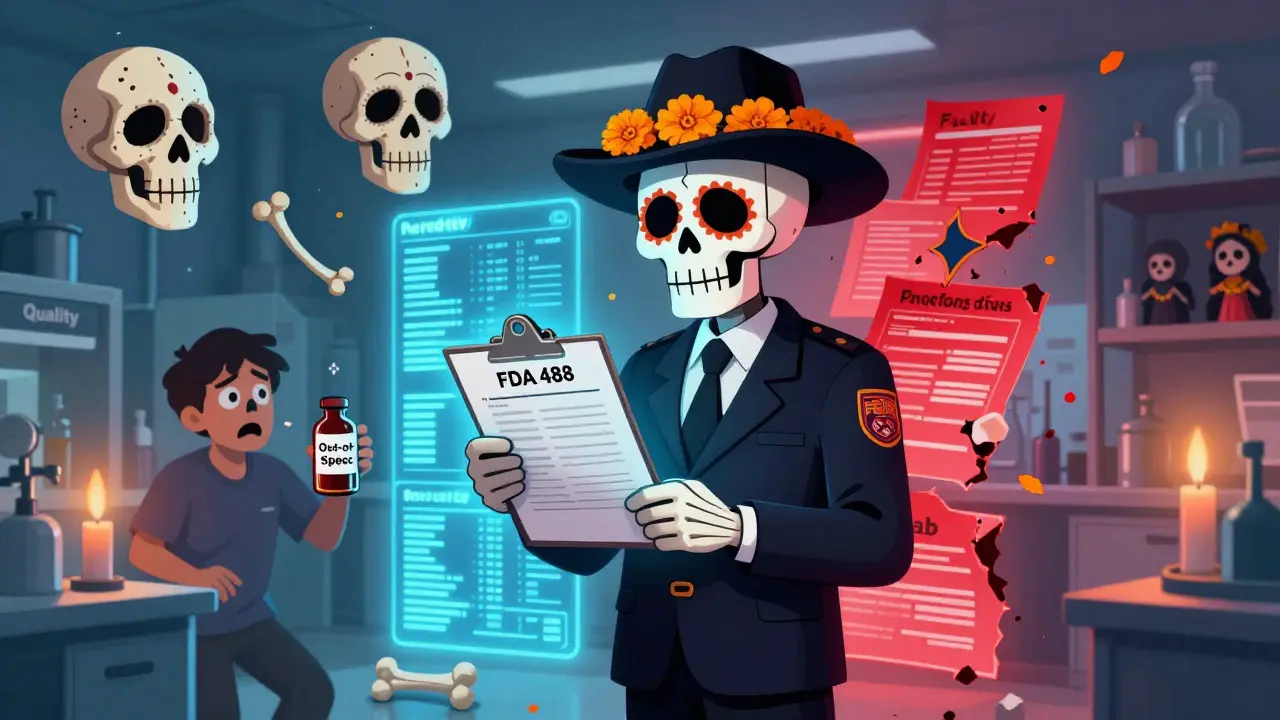
When the FDA shows up at your generic drug manufacturing facility, it’s not a surprise visit-it’s a routine check. But that doesn’t mean you can wing it. Every year, hundreds of facilities across the U.S. and overseas get inspected to make sure they’re following Current Good Manufacturing Practices (CGMP). The goal? To ensure every pill, injection, or capsule you take is safe, consistent, and effective. If you’re preparing for an FDA inspection, here’s what actually happens, what they’re looking for, and how to get through it without a warning letter.
How the FDA Picks Which Facilities to Inspect
The FDA doesn’t just randomly pick factories. They use a risk-based model that weighs dozens of factors. A facility making high-risk drugs like injectables or those with a history of past violations gets flagged first. So do sites with sudden spikes in consumer complaints, tips from whistleblowers, or overseas locations with lower inspection rates. The agency also considers how long it’s been since the last inspection and whether the facility is new or has just filed a new generic drug application.
According to FDA’s 2023 data, over 90% of inspections find facilities in acceptable compliance. That sounds reassuring-but don’t mistake that for low standards. It means most companies are doing the basics right. The ones that fail? Usually because they cut corners on documentation, skipped validation steps, or didn’t train staff properly.
The Six Systems the FDA Checks
Every inspection follows a structured approach based on six core systems. You don’t need to be perfect in all of them, but you must pass the Quality System every time-and at least two others.
- Quality System: This is non-negotiable. The FDA checks if your Quality Unit is truly independent, empowered, and active. Are they reviewing every batch before release? Do they have authority to stop production? This ties directly to 21 CFR 211.22(a). If your quality team reports to production? That’s a red flag.
- Facilities & Equipment: Are your clean rooms maintained? Is equipment cleaned and calibrated? Do you have validation records for every piece of machinery? Investigators will walk through your facility, looking at humidity levels, airflow, and whether surfaces are easy to clean.
- Materials: Where do your raw materials come from? Do you test every batch of active ingredient? Are your suppliers qualified? If you can’t trace a vial of lactose back to its source with a certificate of analysis, you’re at risk.
- Production: Did you follow your approved process? Every step-from mixing to filling-must match what’s in your application. If your team made a change without documentation? That’s a deviation waiting to become a violation.
- Packaging & Labeling: One wrong label on a bottle of 1000 pills is a recall waiting to happen. The FDA checks if labels are approved, if barcode scanning works, and if there’s a system to prevent mix-ups between similar-looking drugs.
- Laboratory Control: This is where many facilities stumble. Are your testing methods validated? Do you have stability data for every product? Are your lab records tamper-proof? Investigators will pull raw data files, check for backdated entries, and verify that your HPLC results match your batch records.
What Happens During the Inspection
Inspectors arrive unannounced. They don’t call ahead. You’ll be asked for your registration number, product list, and facility layout. Then, they’ll ask to tour the plant. Don’t try to hide anything. They’ve seen it all.
They’ll review:
- Deviation logs from the last 12 months
- Batch records for recently produced lots
- Validation reports for cleaning, equipment, and processes
- Stability study data and storage conditions
- Training records for all staff involved in manufacturing
- Supplier qualification files
They’ll also interview employees-not just managers. A lab technician might be asked, “What do you do if a test result is out of spec?” If they say, “I retest until it passes,” you’ve got a problem.
Form FDA 483: The Inspection Report
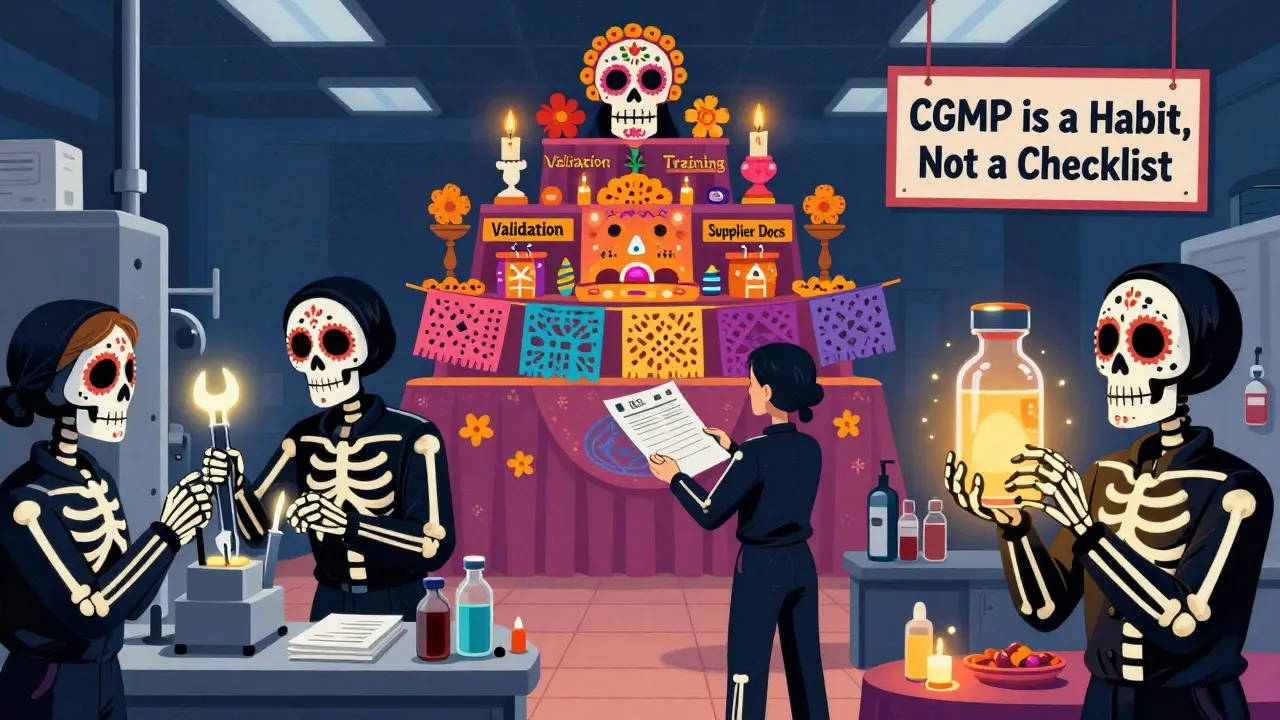
If the FDA finds issues, they’ll hand you a Form FDA 483. This isn’t a fine. It’s a list of observations. Each item references a specific regulation, like 21 CFR 211.110 for lack of written procedures. The list is ordered by severity-critical issues first.
Common findings:
- Missing or incomplete batch records
- Unvalidated analytical methods
- Failure to investigate out-of-spec results
- Poor data integrity (e.g., deleted electronic logs)
- Unqualified equipment or personnel
You have 15 business days to respond. Don’t ignore it. A weak response can lead to a warning letter. A strong one? It shows you understand the problem and have a plan to fix it.
The PreCheck Program: A Game Changer
Since 2024, the FDA has been running the PreCheck program-a proactive tool for manufacturers. Instead of waiting for an inspection, you can request feedback during facility design, construction, or before production starts. You submit a Type V Drug Master File (DMF) with details on your layout, quality systems, and validation plans.
The FDA reviews it and gives you feedback: “Your cleanroom airflow design won’t meet ISO Class 8,” or “Your stability storage plan doesn’t match your filed protocol.” This isn’t a guarantee, but it cuts down surprises. Companies using PreCheck report smoother inspections and faster approvals.
What Happens After the Inspection
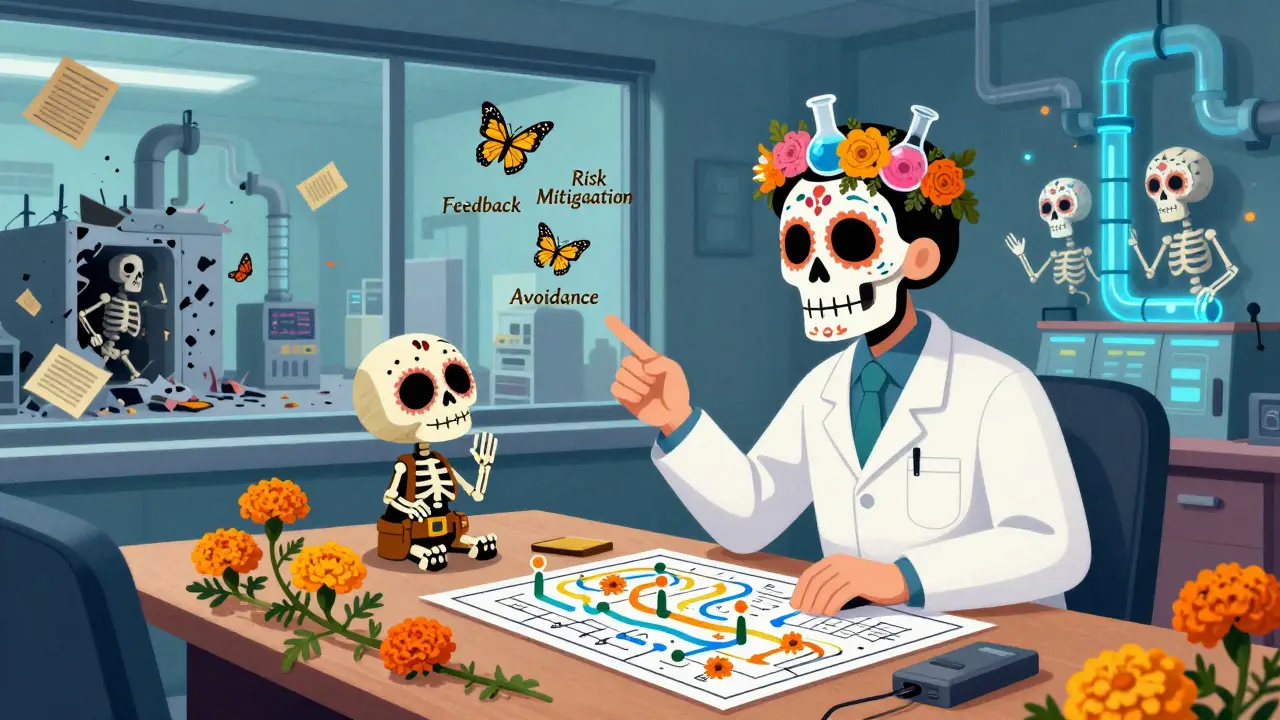
The FDA writes an Establishment Inspection Report (EIR). This becomes part of your facility’s permanent record. If the outcome is “acceptable,” you’re cleared to ship. If it’s “unacceptable,” you might get a warning letter.
A warning letter means you have 15 days to respond with a detailed corrective action plan. The FDA will then decide: do you get another chance, or do they block your products from entering the U.S.? In 2025, the FDA finalized guidance for post-warning letter meetings (PWLMs), giving companies a direct line to regulators to discuss fixes. It’s a rare opportunity to turn a failure into a roadmap for improvement.
How to Prepare (For Real)
Don’t wait for the inspection notice. Start now.
- Train your staff: Everyone-from janitors to QC analysts-needs to know what CGMP means. Practice mock inspections.
- Fix documentation gaps: If your SOPs are outdated, rewrite them. If your records are handwritten, digitize them with audit trails.
- Review your quality system: Is your quality unit truly independent? Can they shut down production? If not, fix that first.
- Simulate inspections: Hire a consultant to do a dry run. They’ll find what you’re blind to.
- Use PreCheck: If you’re building a new facility or launching a new product, don’t skip this. It’s free, and it saves months of delays.
The FDA isn’t trying to shut you down. They want you to make safe medicine. But they won’t accept excuses. If your quality culture is weak, the inspection will find it. If your systems are solid, you’ll walk away with a clean report and confidence you’re doing things right.
Final Thought: It’s Not About Passing an Inspection
It’s about building a facility that never needs one. Companies that treat CGMP as a daily habit-not a checklist-rarely get surprises. They have clean records, trained teams, and real quality control. They don’t prepare for inspections. They live them every day.
Are FDA inspections always announced?
No. Routine inspections are often unannounced. The FDA uses surprise visits to catch facilities in their normal operating state. Pre-Approval Inspections (PAIs) may be scheduled in advance, but even those can change at short notice. Facilities should assume any day could be inspection day.
What happens if I get a Form FDA 483?
Receiving a Form FDA 483 means the inspector found deficiencies. You have 15 business days to respond with a corrective action plan. The response must be specific, data-backed, and show root cause analysis. A vague reply increases the risk of a warning letter. Many companies hire regulatory consultants to help draft their response.
Can I appeal an FDA inspection result?
There’s no formal appeal process for inspection findings. However, if you receive a warning letter, you can request a post-warning letter meeting (PWLM) to discuss your corrective actions directly with FDA officials. This is your best chance to demonstrate compliance and avoid further enforcement. The FDA’s 2025 guidance makes this process clearer than ever.
Do inspections differ for U.S. vs. foreign facilities?
The inspection standards are the same, but foreign facilities face higher scrutiny due to travel logistics and past compliance issues. The FDA inspects fewer foreign sites than U.S. ones, so each visit is more critical. Foreign facilities with poor compliance histories are more likely to be selected for inspection. The PreCheck program is now available to international manufacturers too.
How often are generic drug facilities inspected?
There’s no fixed schedule. High-risk facilities (e.g., those making injectables or with past violations) may be inspected every 1-2 years. Low-risk facilities with consistent compliance may go 3-5 years between inspections. The FDA’s risk-based model prioritizes sites where the consequences of failure are greatest.
What’s the biggest mistake companies make before an inspection?
The biggest mistake is thinking compliance is a checklist. Inspectors look for evidence of a real quality culture. If employees don’t understand why they’re following procedures, or if records are backdated or altered, the inspection will uncover it. Companies that invest in training, transparency, and data integrity consistently pass inspections with minimal findings.
Is the PreCheck program worth it for small manufacturers?
Yes. The PreCheck program is free and designed for all manufacturers, regardless of size. Small companies often lack the regulatory staff to anticipate FDA concerns. PreCheck gives them expert feedback before they spend millions on construction or production. Many small firms have avoided costly delays and redesigns by using this program early.
Gretchen Rivas
March 4, 2026 AT 15:58Just saw this and had to say-CGMP isn’t about passing inspections, it’s about not killing people. I’ve worked in facilities where they cut corners on cleaning validation just to save $20K. One batch of contaminated injectables could kill a dozen kids. Don’t be that guy.
Milad Jawabra
March 5, 2026 AT 16:34LOL you think the FDA’s out to get you? Nah. They’re just tired of companies treating quality like a suggestion. I’ve been on the other side of that inspection table-watched a lab tech shrug and say 'we retest until it passes.' Bro, that’s not a deviation. That’s a crime scene waiting to happen. 🤦♂️
Stephen Vassilev
March 7, 2026 AT 12:52Let me be clear: this entire system is a corporate scam. The FDA is not protecting you-it’s protecting Big Pharma’s monopoly. The 'risk-based model' is code for 'we inspect the ones who can’t afford lawyers.' And PreCheck? That’s just a fee-based trap disguised as 'help.' You think they’re giving you feedback? They’re mining your IP. They’re collecting your designs. They’re building a dossier. They’re watching. Always watching.
Mike Dubes
March 9, 2026 AT 09:19Biggest thing I learned? Don’t overthink it. If your team knows why they’re doing the stuff, not just *how*, you’re golden. We had a janitor who’d stop production if he saw a drip in the cleanroom. He didn’t have a degree, but he knew his job mattered. That’s culture. Not SOPs. Real people. Real pride. 😊
Helen Brown
March 11, 2026 AT 06:47They’re lying. The FDA doesn’t care if you make safe drugs. They care if you’re a foreign company. I know a guy in Hyderabad-his whole plant got shut down over a typo in a logbook. Meanwhile, some Ohio plant with 30 483s gets a pass because they’re 'American-made.' It’s rigged. And don’t tell me about 'equal standards.' That’s propaganda.
John Cyrus
March 11, 2026 AT 07:36Training staff is pointless if your QA unit reports to production. That’s like putting a fox in charge of the henhouse. You don’t need a consultant. You need a CEO with balls. If your quality team can’t shut down a line, you’re not compliant-you’re just delusional
John Smith
March 11, 2026 AT 11:08Man, I’ve been through 3 inspections. The real hack? Stop treating it like an exam. Treat it like a date. Be honest. Be clean. Be ready. Don’t try to impress them with fancy words. Just show up with clean records, happy staff, and zero BS. They’ll smell the BS faster than you can say 'out-of-spec.' And if you’re chill? They’ll chill too. Win-win.
Shivam Pawa
March 12, 2026 AT 00:35PreCheck is underrated. We submitted our facility layout last year. FDA flagged our HVAC airflow design before we even built the walls. Saved us $2M in retrofitting. The real value? They tell you what you don’t know you’re doing wrong. No one else will. In India, we don’t have this luxury. This is a game-changer for global players.
Donna Zurick
March 12, 2026 AT 16:33Just wanna say-this is the kind of content that makes me feel less alone in this field. So many of us grind in the background, making sure pills are safe while no one notices. Keep writing stuff like this. We need more clarity, not more fear. You’re doing great work 💪❤️
Tobias Mösl
March 13, 2026 AT 03:13They’re not inspecting for safety-they’re inspecting for compliance theater. The 483? It’s a financial instrument. Every observation = a consulting contract. Every warning letter = a $500K 'corrective action' bill. The FDA doesn’t want you to fix it-they want you to pay them to fix it. This whole system is a Ponzi scheme built on fear. And you? You’re the sucker paying for the illusion of safety.
Megan Nayak
March 15, 2026 AT 00:19What if the real goal isn’t safety? What if it’s control? Think about it: by forcing every facility into this rigid, paperwork-heavy, surveillance-driven system, the FDA isn’t just regulating-they’re homogenizing. They’re making sure no one innovates. No one disrupts. No one challenges the status quo. Are we making safer drugs? Or are we just making the same drugs, slower, more expensively, under more cameras?
Divya Mallick
March 15, 2026 AT 17:06USA thinks they own quality. But I’ve seen Indian labs that outperform U.S. sites-better documentation, better training, better attitude. Why? Because we don’t have the luxury of cutting corners. We work harder. We care more. And yet? We get targeted. We get scrutinized. We get labeled 'at risk.' This isn’t science. This is colonialism with a clipboard.
Pankaj Gupta
March 16, 2026 AT 13:54One of the most overlooked points: data integrity. Not just electronic logs, but handwritten ones too. If you can’t prove that a record was created when it was supposed to be created, you’re not compliant. Even if the data is correct. The FDA doesn’t care if your result is right-they care if you lied about when you got it. That’s the core of CGMP. Not purity. Not potency. Trust.
Justin Rodriguez
March 18, 2026 AT 09:09Replying to the guy who said the FDA is a scam. You’re not wrong, but you’re missing the point. The system is flawed, yes. But the people? Most inspectors are just trying to do their job. I’ve had FDA agents cry because they found a facility where kids were getting wrong meds. They don’t want to shut you down. They want you to stop putting kids at risk. Don’t hate the messenger. Fix the system.