SSRIs and NSAIDs: Understanding and Preventing GI Bleeding Risks
 Apr, 7 2026
GI Bleeding Risk Interaction Checker
Check how different medication combinations and health factors influence your risk of upper gastrointestinal bleeding. Note: This tool is for educational purposes and does not replace professional medical advice.
Risk Level
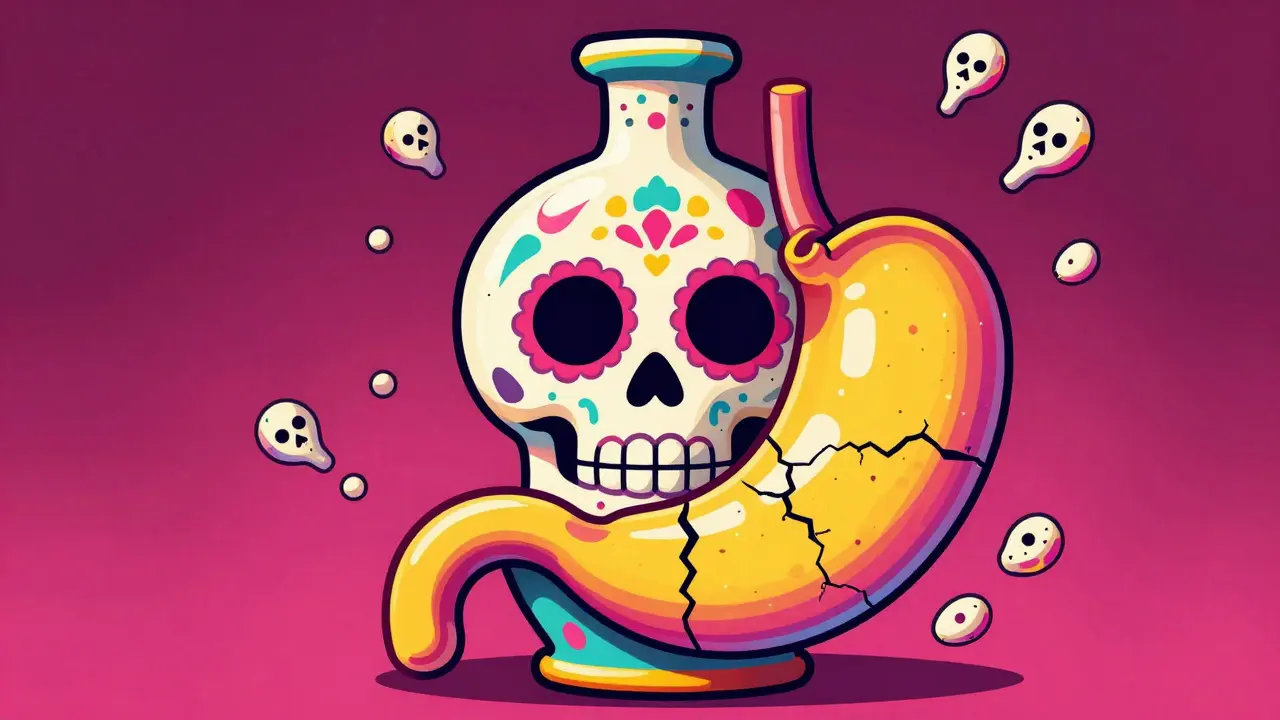
Taking a pill for anxiety and another for a sore back might seem like a standard routine, but for millions of people, this combination creates a hidden danger. When you mix Selective Serotonin Reuptake Inhibitors (SSRIs) is a class of antidepressants used to treat depression and anxiety by increasing serotonin levels in the brain with Non-Steroidal Anti-Inflammatory Drugs (NSAIDs), you aren't just treating two different symptoms-you're significantly increasing your risk of internal bleeding. Specifically, the risk of upper gastrointestinal (GI) bleeding jumps by about 75% when these two are used together.
Why This Combination is Risky
To understand why this happens, we have to look at how these drugs work in your blood and stomach. It's not just that they both cause side effects; they actually attack your body's ability to stop bleeding from two different angles.
First, SSRIs like Sertraline or Fluoxetine don't just affect your brain. Your platelets-the tiny cells that plug leaks in your blood vessels-rely on serotonin to clump together and form clots. SSRIs block the reuptake of serotonin into these platelets, effectively making your blood "slicker" and slower to clot.
At the same time, NSAIDs like Ibuprofen or Naproxen do a double-hit of damage. They inhibit an enzyme called COX-1, which is responsible for producing the protective mucus lining of your stomach. Without this shield, your stomach acid can eat away at your own tissue, creating ulcers. When you combine these "leaky" stomach walls (from NSAIDs) with "non-clotting" blood (from SSRIs), a minor irritation can quickly turn into a major bleed.
Breaking Down the Risks by Medication
Not every drug in these classes carries the exact same weight. Some are more aggressive than others. For instance, non-selective NSAIDs are generally tougher on the stomach than selective ones. If you have a choice, Celecoxib-a COX-2 inhibitor-is often much easier on the GI tract because it doesn't shut down the protective mucus production as aggressively as ibuprofen or diclofenac.
| Medication Type | Example Drugs | Relative GI Risk | Mechanism of Action |
|---|---|---|---|
| Selective COX-2 Inhibitor | Celecoxib | Lowest (OR 1.16) | Targets inflammation while sparing stomach lining |
| Non-Selective NSAID | Ibuprofen, Naproxen | Moderate to High | Blocks both inflammatory and protective prostaglandins |
| High-Toxicity NSAID | Ketorolac, Piroxicam | Highest | Potent COX inhibition with high mucosal damage |
| SSRI Monotherapy | Escitalopram, Paroxetine | Moderate (OR 1.4-1.5) | Reduced platelet aggregation |
Who is Most at Risk?
While anyone taking both can be at risk, some people are in a much more dangerous position. If you are over 65, your stomach lining is naturally thinner and your recovery slower, making you far more susceptible to bleeding. Similarly, if you've had a stomach ulcer in the past, your system is already "primed" for another one to appear.
We also see higher risks in people using low-dose aspirin for heart health. Since aspirin is technically a type of NSAID, adding an SSRI to a daily aspirin regimen can create that same multiplicative risk effect. It's not just an additive problem (1+1=2); it's synergistic, meaning the combined effect is much worse than the sum of its parts.
How to Prevent and Manage the Risk
You don't necessarily have to stop your medication, but you should never ignore the risk. The goal is to move from a high-risk state to a protected state. Doctors typically follow a three-step safety protocol to keep patients safe.
- Risk Assessment: Using tools like the ACG upper GI risk calculator to check for red flags like age, prior ulcers, or H. pylori infections.
- Therapeutic Swapping: If possible, swap the NSAID for Acetaminophen (Tylenol) for pain, as it doesn't affect the stomach lining or platelets. Alternatively, some may switch to antidepressants like Bupropion, which don't have the same antiplatelet effects as SSRIs.
- Adding a Shield: If both drugs are non-negotiable, the gold standard is adding a Proton Pump Inhibitor (PPI). Drugs like Omeprazole reduce the amount of acid your stomach produces, which prevents ulcers from forming even when NSAIDs are present. Research shows PPIs can reduce the excess bleeding risk by about 70%.

Warning Signs You Should Not Ignore
Many people miss the early signs of a GI bleed because they assume they just have "bad indigestion." However, internal bleeding manifests in very specific ways. If you are on both SSRIs and NSAIDs, you need to watch for these symptoms:
- Black, tarry stools: This is a classic sign of upper GI bleeding, as the blood is digested by the time it reaches the end of the tract.
- Coffee-ground emesis: Vomiting material that looks like coffee grounds is a serious warning of a stomach bleed.
- Unexplained bruising: If you start bruising easily or notice small red spots (petechiae) on your skin, your platelets may be too low to function.
- Extreme fatigue: Sudden, profound tiredness can be a sign of slow, chronic blood loss leading to anemia.
One common pitfall is the "occasional" use of NSAIDs. Many patients think that taking an ibuprofen once a week for a headache is safe while on an SSRI. While the risk is lower than daily use, the combination still impairs your clotting ability. For those at high risk, even short-term use can be problematic.
The Future of Prevention
The medical community is moving toward more personalized safety. We are seeing the rise of AI algorithms that analyze electronic health records to predict who is most likely to bleed with 86% accuracy. There is also exciting research into "dual-release" capsules that combine an NSAID with a protective agent like omeprazole in one pill, ensuring the stomach is protected the moment the pain reliever hits the system.
Ultimately, the most important tool is communication. A surprising number of patients are never warned about this interaction. If you are taking an SSRI, ask your doctor: "Is it safe for me to use ibuprofen or naproxen?" and "Do I need a PPI to protect my stomach?" These simple questions can prevent a trip to the emergency room.
Can I take Tylenol instead of Ibuprofen while on an SSRI?
Yes. Acetaminophen (the active ingredient in Tylenol) does not inhibit COX-1 enzymes and does not affect platelet function in the way that NSAIDs do. It is generally considered the safer choice for pain relief for those taking SSRIs.
Is the risk the same for all antidepressants?
No. The risk is primarily associated with SSRIs and SNRIs because they affect serotonin. Some antidepressants, such as Bupropion, do not interfere with platelet serotonin reuptake and therefore do not carry the same elevated bleeding risk when paired with NSAIDs.
How long does the risk last after stopping an SSRI?
The effect on platelets typically resolves once the medication is cleared from your system, but because platelets have a specific lifespan, it may take several days to a week for full clotting function to return to baseline.
Does a low dose of aspirin count as an NSAID?
Yes. Even low-dose aspirin acts as a platelet inhibitor and can irritate the stomach lining. Combining low-dose aspirin with an SSRI increases the risk of GI bleeding similarly to the combination of a standard NSAID and an SSRI.
Should I take a PPI every day if I'm on both medications?
That depends on your personal risk factors. If you are over 65, have a history of ulcers, or use these drugs daily, a daily PPI is often recommended. Your doctor will use a risk calculator to decide if the protection outweighs the potential side effects of long-term PPI use.
Srikanth Makineni
April 7, 2026 AT 13:49just switch to tylenol then