Heavy Menstrual Bleeding on Blood Thinners: What Works and What Doesn’t
 Mar, 11 2026
Heavy Menstrual Bleeding Risk Calculator
Assess Your Risk
Answer these questions to get your personalized risk assessment based on medical research.
Recommended Actions
When Your Period Gets Out of Control on Blood Thinners
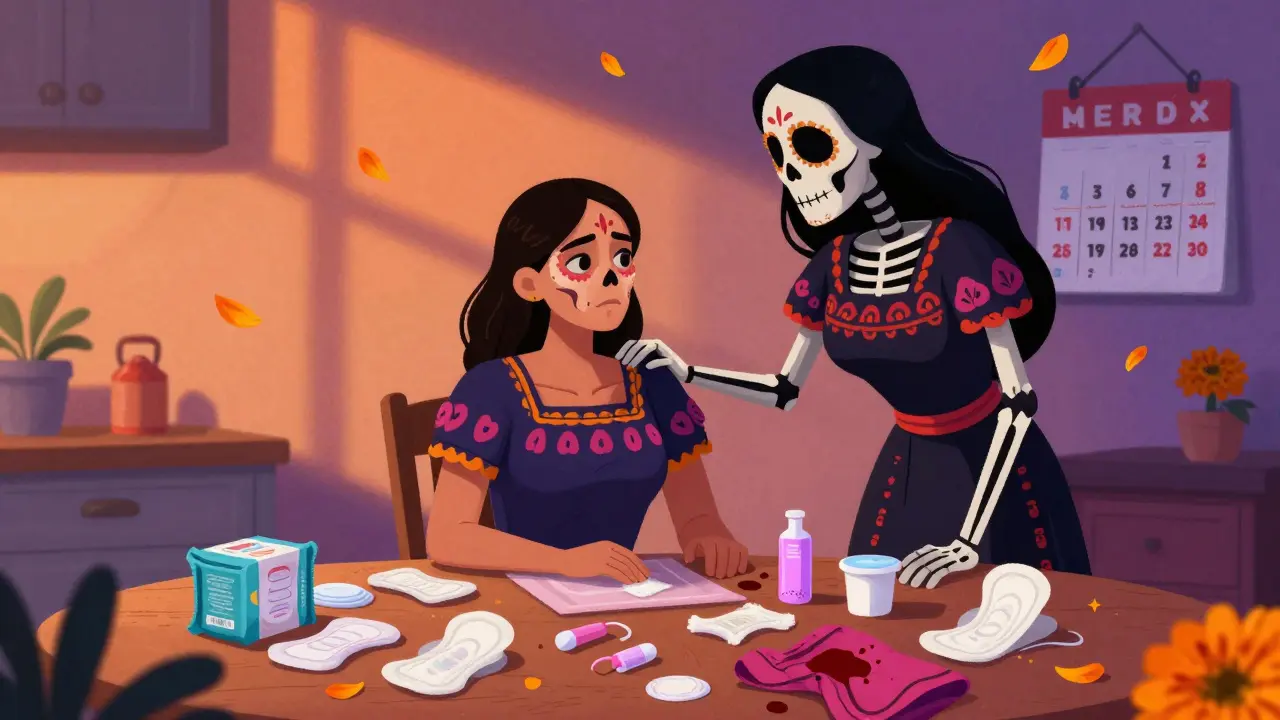
Imagine changing your pad or tampon every 30 minutes. Not because you’re having a particularly heavy day, but because it’s become your new normal. Now imagine doing this while trying to work, go to school, or even just leave the house without panic. For many women on blood thinners, this isn’t a rare nightmare - it’s reality. About 70% of menstruating women taking oral anticoagulants experience heavy menstrual bleeding (HMB) that’s severe enough to need medical attention. That’s more than two in three. And yet, most doctors never bring it up.
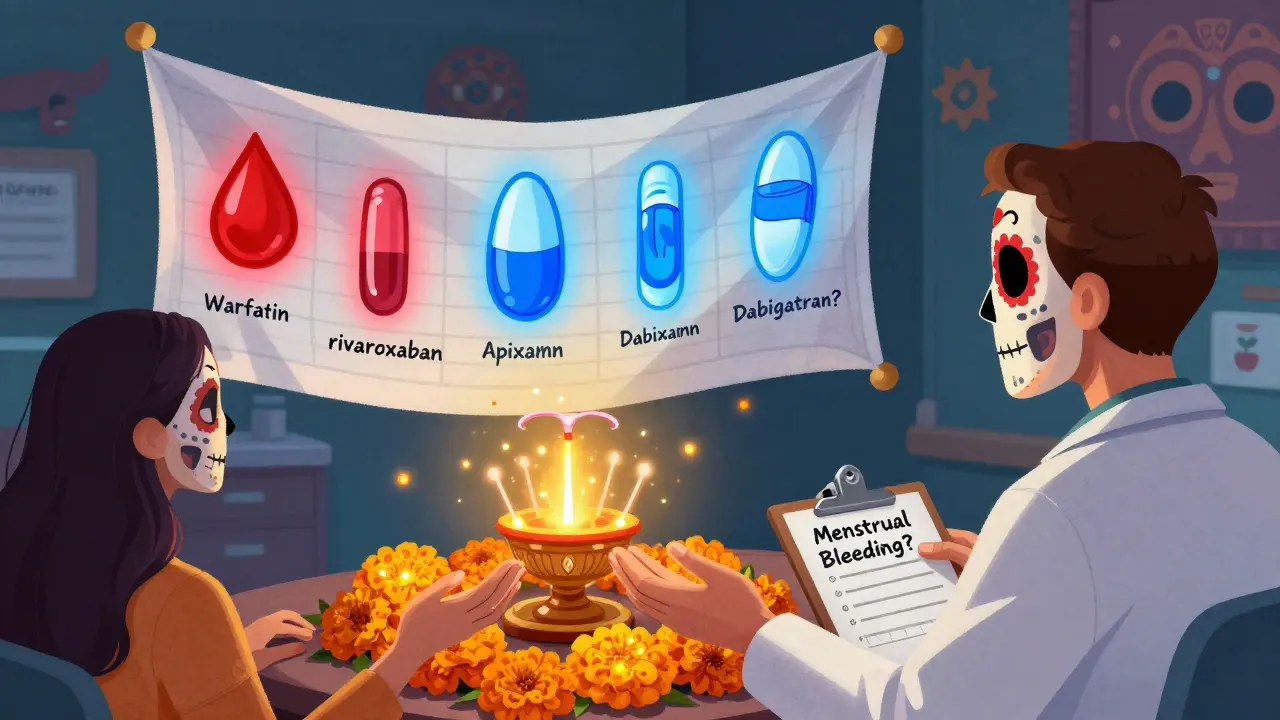
Blood thinners like warfarin, apixaban, rivaroxaban, and dabigatran are lifesavers. They prevent deadly clots in people with atrial fibrillation, deep vein thrombosis, or after a pulmonary embolism. But they don’t care about your period. And when your period turns into a medical emergency, you’re left scrambling - because no one told you this could happen.
Why Blood Thinners Make Periods Heavier
It’s not magic. It’s biology. Blood thinners work by slowing down your body’s ability to form clots. That’s great when you’re at risk of a stroke or lung clot. But when your uterus sheds its lining during your period, your body needs to clot to stop the bleeding. If your blood can’t clot properly, the bleeding doesn’t stop - or it stops too slowly.
Normal menstrual bleeding for most women is about 5 to 15 teaspoons of blood over 5 days. Heavy menstrual bleeding means more than 80 milliliters (about 5 tablespoons) - or needing to change your product every hour, leaking through pads or tampons, or passing large clots. For women on anticoagulants, that number jumps dramatically. A 2022 study in Blood found that 66.7% of women who started a blood thinner saw their bleeding get much worse within just a few months. And for those who’d never had heavy periods before? The drop in quality of life was sharp. Many stopped going to the gym, skipped work, or avoided social events out of fear.
Not All Blood Thinners Are the Same
If you’re on a blood thinner and your period has gone from manageable to miserable, switching might be an option. Not all anticoagulants affect your period the same way.
- Rivaroxaban and warfarin are linked to the highest risk of heavy bleeding.
- Apixaban and dabigatran appear to cause significantly less menstrual disruption.
This isn’t just theory. A 2020 study in Blood Advances showed that women on apixaban or dabigatran reported fewer bleeding episodes and less need for emergency care compared to those on rivaroxaban. If you’re on a high-risk drug and your bleeding is unmanageable, talk to your hematologist about switching. You don’t have to stay stuck with a drug that’s making your life harder.
First-Line Treatment: Hormonal Options That Actually Work
The good news? You don’t have to stop your blood thinner. You can treat the bleeding without risking a clot.
The most effective solution? Hormonal therapy - specifically, progesterone-based options that thin the lining of your uterus so there’s less to shed.
- Levonorgestrel IUD (Mirena, Kyleena, etc.): This tiny device releases a steady dose of hormone right where it’s needed. Studies show it reduces menstrual bleeding by 70-90% within 3 to 6 months. Many women report periods becoming light or stopping entirely. One user on Reddit said: “After getting Mirena while on Eliquis, my periods went from ER visits to nearly nonexistent.”
- Subdermal implant (Nexplanon): A small rod placed under the skin of your arm. It works similarly to the IUD, with high success rates in reducing bleeding.
- Oral progestin (norethisterone): The American Society of Hematology recommends 5 mg taken three times a day for 21 days during your cycle. It’s not a long-term fix, but it can stabilize bleeding quickly while you decide on longer-term options.
These treatments are safe to use alongside blood thinners. No need to pause anticoagulation. No dangerous interactions. Just a simple way to take back control of your body.
Tranexamic Acid: The Non-Hormonal Option
If you don’t want hormones - or can’t use them - there’s another tool: tranexamic acid.
This medication doesn’t change your hormone levels. Instead, it helps your blood clot better during your period. You take it only when you’re bleeding - usually at the start of your cycle. Clinical trials show it cuts blood loss by 30-50%. It’s not as powerful as an IUD, but for some women, it’s enough.
Important note: Take it only during bleeding days. Don’t use it daily. And don’t combine it with NSAIDs like ibuprofen unless your doctor says it’s safe - because both can increase bleeding risk.
What Not to Do: NSAIDs, Aspirin, and DIY Fixes
You might think: “I’ll just take ibuprofen to reduce bleeding.” Sounds logical. But here’s the catch: NSAIDs like ibuprofen, naproxen, and aspirin also thin blood. When you add them to your blood thinner, you’re stacking two anti-clotting agents. That can make bleeding worse - not better.
Some studies show NSAIDs reduce bleeding by 20-40% in women not on anticoagulants. But for women on warfarin or DOACs? The risk often outweighs the benefit. The Cleveland Clinic warns against using them without close monitoring. If you’re thinking about using them, talk to your doctor first. Don’t self-prescribe.
When Surgery Isn’t the Answer
Endometrial ablation - a procedure that burns or removes the uterine lining - works well for many women with heavy periods. But for those on blood thinners? It’s risky.
The procedure itself can cause bleeding. And if you’re on anticoagulants, stopping them to do the surgery raises your risk of clotting by fivefold. Bridging with heparin is possible, but it’s complex, expensive, and not always safe. ACOG recommends this as a last resort. Only consider it if hormonal options have failed, you’re done having kids, and you’re working with a team that knows how to manage anticoagulation around surgery.

The Hidden Crisis: No One’s Asking About Your Period
Here’s the biggest problem: doctors aren’t asking.
A 2023 survey by the National Blood Clot Alliance found that 68% of women said their hematologist never asked about menstrual changes after starting a blood thinner. Meanwhile, 72% of those women had bleeding so bad it disrupted their life. That’s a system failure. You’re not being dramatic. You’re not overreacting. You’re experiencing a common, documented side effect - and your care team is missing it.
Start the conversation yourself. Say: “I’m on a blood thinner, and my period has gotten much heavier. Is this normal? What can we do?” If your doctor shrugs, ask for a referral to a gynecologist who works with anticoagulated patients. You deserve better.
What You Can Do Right Now
- Track your bleeding. Use an app or journal. Note how often you change products, if you leak, if you pass clots larger than a quarter.
- Check for signs of anemia: fatigue, dizziness, pale skin, shortness of breath. Ask your doctor for a ferritin and hemoglobin test.
- Ask: “Which blood thinner am I on? Is there a lower-risk option?”
- Ask: “Can I try a levonorgestrel IUD or implant?”
- If hormones aren’t right for you: Ask about tranexamic acid.
- Never stop or skip your blood thinner without medical advice - the risk of clotting is real and deadly.
The Future Is Changing - But You Don’t Have to Wait
Good news: the medical community is finally waking up. The American Society of Hematology and ACOG are drafting joint guidelines set to be released in mid-2025. The International Society on Thrombosis and Haemostasis now includes menstrual bleeding in its official bleeding assessment tools. And the National Blood Clot Alliance now recommends that all women be warned about this risk before starting anticoagulants.
But you don’t have to wait for guidelines. The tools to fix this are available now. Hormonal IUDs work. Tranexamic acid works. Switching anticoagulants can help. You don’t need to live in fear of your period. You just need to speak up - and know what to ask for.
Can I still get pregnant if I use a hormonal IUD while on blood thinners?
Yes, but the hormonal IUD is also a highly effective form of birth control - over 99% effective. If you’re sexually active and not trying to get pregnant, the IUD protects you from both heavy bleeding and pregnancy. If you are trying to conceive, talk to your doctor about other options, like tranexamic acid or oral progestin. Pregnancy while on blood thinners requires special care, so plan ahead.
Will my blood thinner stop working if I use a hormonal IUD?
No. Hormonal IUDs and implants don’t interfere with blood thinners. They work locally in the uterus and don’t affect how your liver processes anticoagulants. You can safely use both together. Many women do. Studies show no increase in clotting risk and significant reduction in bleeding.
How long does it take for the IUD to reduce heavy bleeding?
Most women notice improvement within the first 3 months. By 6 months, bleeding is typically reduced by 70-90%. Some women stop having periods altogether. The first few months might include irregular spotting, but that usually settles down. Be patient - the benefits build over time.
Can I use tranexamic acid with my current blood thinner?
Yes, but only under medical supervision. Tranexamic acid is generally safe with DOACs like apixaban and rivaroxaban, and with warfarin - as long as you take it only during your period and not daily. Your doctor may adjust your dose or timing. Never take it without knowing your INR (if on warfarin) or kidney function (if on DOACs). It’s not an over-the-counter fix.
What if my doctor says heavy bleeding is just normal?
It’s not normal if it’s new, severe, or affecting your life. Heavy bleeding on blood thinners is a recognized medical issue, not just “bad luck.” Cite the research: 70% of women on anticoagulants experience it. Ask for a referral to a gynecologist experienced in anticoagulation. If your hematologist won’t help, find another. You have the right to safe, effective care. Don’t accept silence as an answer.
Adam M
March 12, 2026 AT 19:15There are solutions. Use them. Or don't. But don't turn it into a drama.
Rosemary Chude-Sokei
March 13, 2026 AT 23:42Noluthando Devour Mamabolo
March 14, 2026 AT 17:35Leah Dobbin
March 16, 2026 AT 09:54Meanwhile, the rest of us are out here surviving actual medical emergencies-like, I don’t know, *clots*-and you’re fretting over tampon changes? How avant-garde.
Tim Schulz
March 17, 2026 AT 15:16Meanwhile I’m over here on Eliquis, sipping matcha, and my period’s basically a whisper.
Maybe you’re just… not doing it right? 🤔 Or maybe your doctor’s just… not great? 🤷♀️
Jinesh Jain
March 18, 2026 AT 04:51douglas martinez
March 19, 2026 AT 14:58Key takeaway: You do not need to choose between clot prevention and bodily autonomy. Both are achievable. Advocate for yourself. Your care team should support-not dismiss-you.