Mixing Alcohol and Opioids: Understanding the Overdose and Death Risks
 Apr, 15 2026
Opioid & Alcohol Interaction Risk Checker
Select the substances being combined to see the resulting risk profile and physiological impact. This tool is for educational purposes and not a clinical diagnostic tool.
Physiological Effect:
Details on respiration and CNS impact.
Mixing a few drinks with a prescription painkiller might seem like a small risk, but in reality, it creates a biological "perfect storm." When you combine alcohol with opioids, you aren't just adding two sedatives together; you are multiplying their power to shut down your body's most basic function: breathing. This combination is so lethal that the U.S. Food and Drug Administration is the federal agency responsible for protecting public health by ensuring the safety, efficacy, and security of drugs mandated black-box warnings on all prescription opioid labels. If you or a loved one are using these substances, understanding why this mix is a death trap is the first step in staying alive.
The Danger of the "Double Down" Effect
To understand why this mix is so dangerous, you have to look at how these substances hit your brain. Both alcohol and opioids are Central Nervous System (CNS) Depressants. This means they slow down the communication between your brain and the rest of your body. When you take one, your heart rate slows and your breathing becomes shallower. When you take both, they work synergistically-meaning the total effect is much stronger than the sum of the two parts.
The primary killer in this scenario is Respiratory Depression, a condition where your breathing becomes too slow or shallow to provide enough oxygen to your brain and heart. According to data from the National Institute on Alcohol Abuse and Alcoholism, even low doses of both can be fatal. For instance, a study showed that while 20mg of oxycodone alone might reduce respiration by 28%, adding enough alcohol to reach a 0.1% blood alcohol concentration (the legal driving limit) dropped respiration by another 19% and caused dangerous pauses in breathing, known as apneic episodes.
Which Opioids Carry the Highest Risk?
While any opioid mixed with alcohol is a gamble, some are significantly more volatile. Schedule II Opioids-the most potent prescription painkillers-carry the highest risk of fatal interaction. These include commonly prescribed medications like Oxycodone (found in OxyContin), Hydrocodone (found in Vicodin), and the synthetic powerhouse Fentanyl.
Fentanyl is particularly terrifying because of its potency. Recent data from Texas health services showed that alcohol involvement in fentanyl-related deaths nearly doubled between 2010 and 2019. The risk isn't limited to prescription pills, either; heroin users frequently mix in alcohol, which contributes to a fluctuating but consistently high percentage of overdose deaths. Even those on Methadone maintenance therapy are at a massive disadvantage; research indicates that methadone patients who drink alcohol have a 4.6 times higher risk of overdose death compared to those who stay sober.
| Opioid Type | Common Examples | Risk Level | Key Danger Point |
|---|---|---|---|
| Synthetic | Fentanyl | Extreme | Rapid respiratory arrest; high potency |
| Prescription (Schedule II) | Oxycodone, Hydrocodone | Very High | Synergistic sedation and deep apnea |
| Illicit/Semi-Synthetic | Heroin | Very High | High volatility; unpredictable purity |
| Maintenance Therapy | Methadone, Buprenorphine | High | Lowered overdose threshold in the blood |
The Triple Threat: Adding Benzodiazepines to the Mix
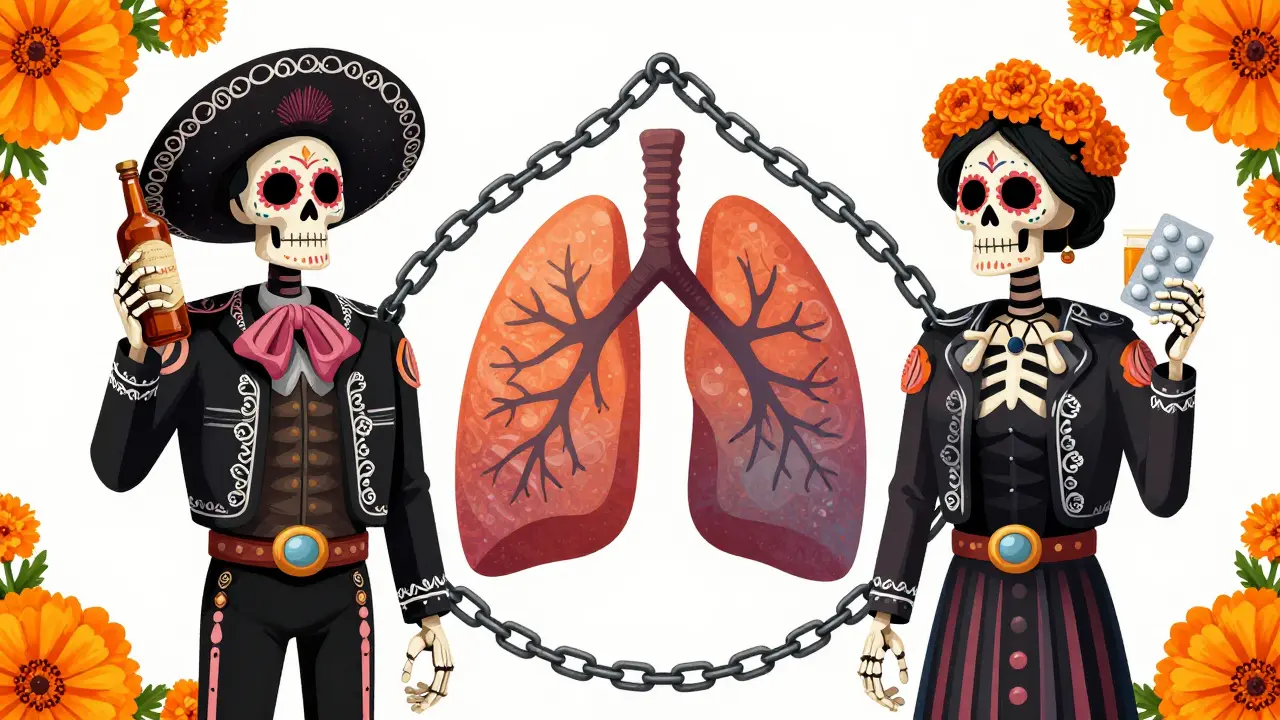
If alcohol and opioids are a dangerous duo, adding a third substance creates a "triple threat." Benzodiazepines (like Xanax or Valium) are often prescribed for anxiety or sleep, but they are also CNS depressants. When you combine these with alcohol and an opioid, you are essentially putting three different "brakes" on your respiratory system at once.
The National Institute on Drug Abuse has noted that nearly 14% of opioid overdose deaths also involve benzodiazepines. This combination makes it nearly impossible for the body to wake itself up from a sedative state. You don't just fall asleep; you slide into a coma where your brain forgets to tell your lungs to breathe.

Warning Signs and the Window for Intervention
Knowing how to spot an alcohol-opioid overdose can mean the difference between a recovery and a funeral. Because alcohol increases sedation, the person may look like they are just "sleeping it off," which is a deadly misconception. You need to look for these specific red flags:
- Pinpoint Pupils: Tiny, constricted pupils that don't react to light.
- Blue Tint: Fingertips or lips turning blue or grey (cyanosis) due to lack of oxygen.
- Gurgling Noises: A choking or "death rattle" sound during shallow breaths.
- Unresponsiveness: The person cannot be woken up by shouting or a firm knuckle rub on the chest.
- Cold, Clammy Skin: A sudden drop in body temperature.
Time is everything. Once respiratory depression hits a critical point, brain damage begins within minutes. The gold standard for intervention is Naloxone, a medication that temporarily blocks opioid receptors and kicks the drug off the brain, allowing the person to breathe again. While naloxone doesn't reverse the effects of alcohol, it stops the opioid component of the overdose, which is often the primary driver of the respiratory failure.
How to Reduce the Risk
If you are taking prescribed opioids for chronic pain, the safest path is total abstinence from alcohol. However, harm reduction is critical for those who struggle with substance use. Here are practical rules of thumb to lower the risk:
- Never Use Alone: Always have a sober person present who knows how to administer naloxone.
- Carry Narcan: Keep nasal spray naloxone on you and make sure your partner or roommate knows where it is.
- Start Low and Slow: If you are returning to use after a break, remember that your tolerance has dropped. What was "safe" a month ago could be lethal today.
- Screen for AUD: If you have Alcohol Use Disorder, you are 3.2 times more likely to overdose on opioids. Be honest with your doctor about your drinking habits before they write a prescription.
- Avoid Cough Syrups: Many over-the-counter or prescription cough medicines contain opioids. Mixing these with a nightcap is a common but dangerous mistake.
Does the amount of alcohol matter if I'm taking a low dose of opioids?
Yes, but the risk starts much lower than people think. Research shows that even reaching a blood alcohol concentration of 0.1%-which is roughly the legal driving limit-can significantly drop your respiration rate when combined with a standard dose of an opioid like oxycodone. There is no "safe" amount when mixing the two.
Can naloxone reverse an overdose if alcohol was also involved?
Naloxone only reverses the effects of the opioids, not the alcohol. However, because opioids are usually the primary cause of the respiratory arrest in these combinations, naloxone can still save the person's life by restoring their ability to breathe, even while they remain intoxicated from the alcohol.
Why do doctors warn against mixing these specifically?
Doctors warn against this because of the synergistic effect. Instead of the two drugs simply adding their effects, they multiply them. This leads to severe sedation and respiratory depression that can cause the heart to stop or the brain to suffer permanent oxygen deprivation.
Are synthetic opioids like fentanyl more dangerous with alcohol than prescription pills?
Yes. Fentanyl is significantly more potent than morphine or oxycodone. Because it binds so strongly to the brain's opioid receptors, the addition of alcohol can trigger a total respiratory collapse much faster than with traditional prescription opioids.
What should I do if I suspect someone is overdosing on this mix?
Call emergency services immediately. If you have naloxone, administer it right away. Perform rescue breathing or CPR if the person has stopped breathing, and try to keep them awake and talking until paramedics arrive. Do not try to put them in a cold bath or induce vomiting, as this can lead to aspiration.