How to Prevent Moisture Damage to Pills and Capsules: A Practical Guide for Patients and Pharmacists
 Feb, 17 2026
Have you ever opened a bottle of pills and noticed they look chalky, stuck together, or smell odd? It’s not just bad luck - it’s moisture damage. In humid climates like Adelaide, where humidity regularly hits 70% in summer, even a few weeks of improper storage can turn life-saving medication into something useless - or worse, harmful. Aspirin turning sour, antibiotics losing potency, or vitamin C clumping into useless lumps - these aren’t rare stories. They’re happening every day in homes, pharmacies, and nursing homes. And the good news? Most of it is completely preventable.
Why Moisture Ruins Pills and Capsules
Medicines aren’t just chemicals in a shell. They’re carefully engineered to stay stable until they reach your body. But water? Water is their worst enemy. When moisture gets inside a pill or capsule, it triggers two dangerous reactions: hydrolysis and oxidation. Hydrolysis breaks down the active ingredient using water molecules. Oxidation, sped up by moisture, turns chemicals into useless or even toxic byproducts.
Take aspirin. When it gets wet, it breaks down into acetic acid (vinegar) and salicylic acid. That’s why old aspirin sometimes smells like vinegar. It’s not just unpleasant - it can irritate your stomach. Vitamin C? It degrades fast in humidity, losing its power to support immunity. Antibiotics like amoxicillin/clavulanate? They can lose up to 100% of their effectiveness in just 10 days if unprotected. That’s not a theory - it’s lab-tested fact. And if the drug doesn’t work, your illness doesn’t get better. That’s how moisture damage leads to real health risks.
The Three-Layer Defense System
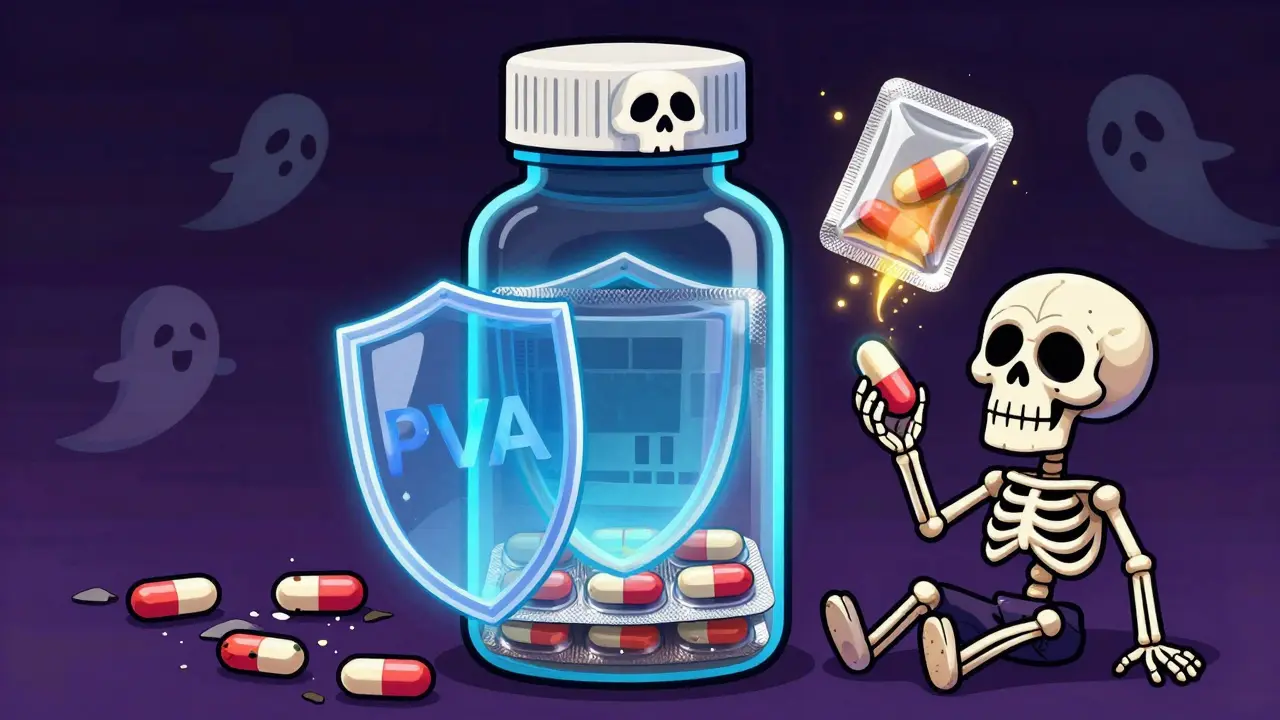
Manufacturers don’t leave pills to chance. They use three layers of protection - and you should too. The first layer is the film coating. Not all coatings are the same. Most pills use HPMC (hydroxypropyl methylcellulose), which is okay but not great. The better option? PVA (polyvinyl alcohol) coatings like Opadry® amb II. Studies show PVA coatings block moisture three times better than HPMC. In one test, uncoated and HPMC-coated tablets lost all their clavulanate (a key antibiotic component) after 10 days outside packaging. PVA-coated ones? Still fully potent.
The second layer is packaging. HDPE (high-density polyethylene) bottles look sturdy, but they’re like a screen door in a hurricane - they stop liquid water but let vapor slip right through. Aluminum blister packs? Better. They’re sealed and light-blocking. But even blister packs aren’t enough if the pill inside isn’t properly coated. The best packaging combines a strong barrier (like foil-foil blisters) with a desiccant inside.
The third and most overlooked layer? Desiccants. Those little white packets labeled “Do Not Eat” aren’t just filler. They’re moisture sponges. Silica gel - the most common type - can absorb up to 40% of its own weight in water. In a 500-pill bottle, every time you open it, you let in fresh humid air. Over a year, that’s over 250 air exchanges. Without a desiccant, moisture builds up fast. With one? It traps that moisture before it touches your pills. Wisesorbent’s testing showed that with the right-sized silica gel pack, moisture levels in a bottle rose by less than 1% over 24 months - even in 40°C heat.
What You Can Do at Home
You don’t need a lab to protect your meds. Here’s what works:
- Keep pills in their original bottle. Don’t dump them into plastic pill boxes unless you’re using them daily. Even then, only fill the box for the next 7 days max.
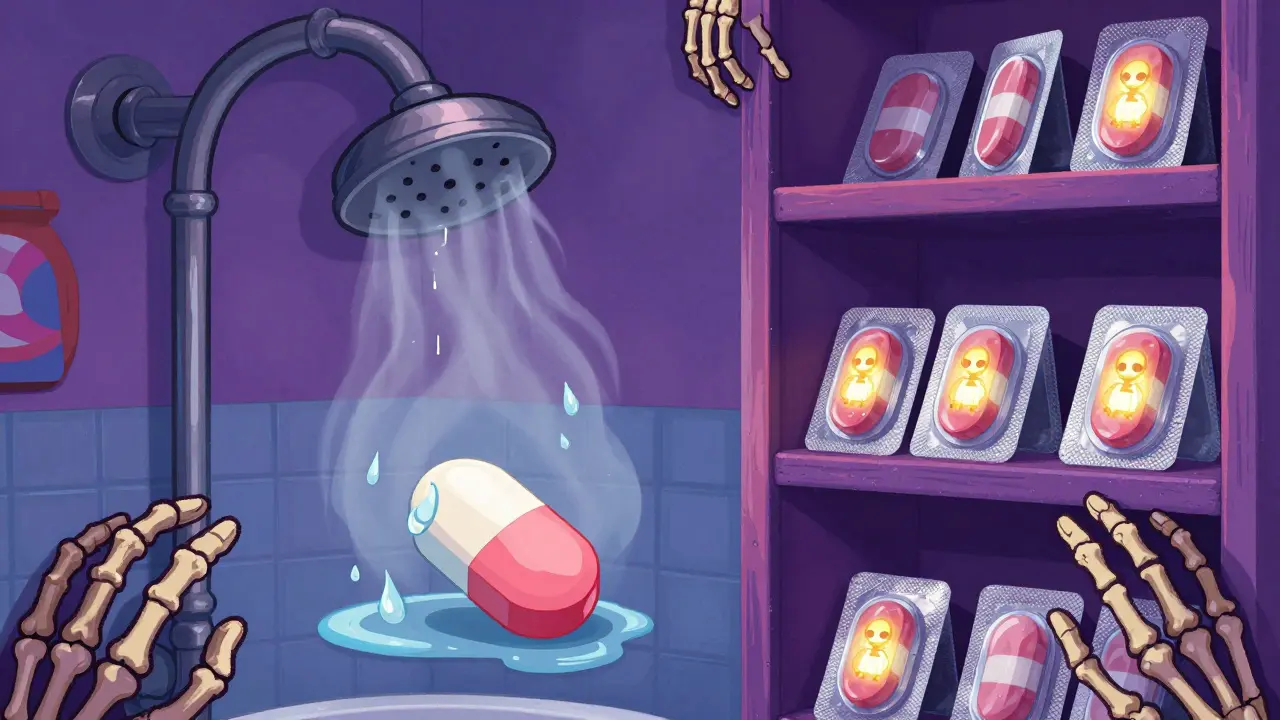
- Never store pills in the bathroom. Showers create steam. Humidity rises. That’s the worst place for meds. A cool, dry closet or bedroom drawer is better.
- Check for desiccants. If your bottle has a little packet, leave it in. Don’t throw it out. If it doesn’t have one, ask your pharmacist. Many now offer bottles with desiccants - especially for moisture-sensitive drugs like antibiotics or vitamin C.
- Don’t transfer to unlabeled containers. A Tupperware jar might look neat, but it offers zero moisture protection. If you need to organize, use a sealed, opaque container with a silica gel pack inside.
- Replace desiccants if they’re saturated. If the packet feels hard or clumpy, it’s full. Ask your pharmacy for a replacement. Some pharmacies even sell refillable silica gel packs.
What Pharmacists Are Doing Right (and Wrong)
Pharmacists know this stuff inside out. In fact, 85% of pharmaceutical companies now use at least two of the three layers - coating, packaging, and desiccants. But not all do. A 2023 survey found that 30% of generic manufacturers still rely on plain HDPE bottles without desiccants - especially for low-cost meds. That’s a gamble. In tropical countries like Brazil or India, this leads to frequent returns and complaints. On Reddit’s r/Pharmacy, users report that since switching to PVA-coated antibiotics, complaints dropped from five per month to almost zero.
Some pharmacies now offer “moisture-safe” packaging upgrades for a small fee. Ask if your prescription is available in foil blister packs with a desiccant. It’s worth it for anything you take long-term - like blood pressure pills, thyroid meds, or antidepressants. These are often moisture-sensitive, even if the label doesn’t say so.
Signs Your Pills Are Damaged
You don’t need a microscope to tell if your meds are compromised. Watch for:
- Sticking together - pills clumping like wet sand
- Discoloration - white pills turning yellow, or capsules looking cloudy
- Odd smells - vinegar, mold, or chemical odors
- Cracking or crumbling - pills that fall apart when you touch them
- Change in taste - if your pill tastes sour or bitter, it’s degraded
If you see any of this, don’t take it. Call your pharmacy. They’ll replace it. And if it’s a critical medication - like insulin, heart pills, or seizure meds - get a new prescription immediately. Damaged pills aren’t just less effective. They can be dangerous.
Cost vs. Benefit: Is It Worth It?
Some people think, “Why spend more on fancy packaging?” But the math is simple. A bottle with a desiccant and PVA coating might cost $1-$3 more. But if your antibiotic fails and you need another course? That’s $50-$100 in extra cost - plus lost work, doctor visits, and risk of complications. In humid regions, moisture damage causes up to 12% of medication waste. That’s money and health down the drain.
For long-term users - people on chronic meds - the upgrade pays for itself. A single failed dose of a blood thinner or epilepsy drug could mean hospitalization. That’s not a risk worth taking.
What’s Next? The Future of Moisture Protection
The industry is moving fast. New coatings are being developed that don’t just block moisture - they actively absorb it. Some companies are testing color-changing labels that turn red when moisture gets too high. Others are making biodegradable desiccants from plant-based materials. In five years, you might get a pill bottle that tells you, via a QR code, whether your meds are still good.
But for now, the best defense is simple: know the three layers. Ask your pharmacist about coating and desiccants. Store your meds properly. And don’t ignore that little packet. It’s not trash. It’s your medicine’s bodyguard.
Can I keep pills in a pill organizer for more than a week?
It’s not recommended. Pill organizers expose meds to air and humidity every day. Even if the box is sealed, it doesn’t have a desiccant. For long-term storage, keep pills in their original bottle. Only use the organizer for daily doses, and refill it weekly. If you need to store meds longer, use a sealed container with a silica gel pack.
Do all pills need desiccants?
Not all, but many do. Moisture-sensitive drugs include antibiotics (like amoxicillin), vitamin C, thyroid meds, some antidepressants, and any medication with extracts or natural ingredients. If you’re unsure, ask your pharmacist. If your bottle doesn’t have a desiccant and you live in a humid area, request one - most pharmacies can add it.
Is it safe to use silica gel packets from other products (like shoes or electronics)?
No. Silica gel in consumer products isn’t pharmaceutical-grade. It may contain dust, chemicals, or dyes that aren’t safe to be near medicine. Only use desiccants made for pharmaceutical use - they’re tested for purity and safety. Your pharmacy can provide them.
What if my pill bottle has no desiccant at all?
Ask your pharmacist if they can dispense the same medication in a bottle with a desiccant. Many pharmacies now offer this option - especially for patients in humid climates. If they can’t, consider buying a small, sealed container with a pharmaceutical-grade silica gel pack and transferring your pills only when you’re ready to use them.
Can I store pills in the fridge to avoid moisture?
Only if the label says to. Most pills don’t need refrigeration. In fact, taking them in and out of the fridge causes condensation - which adds moisture. Unless your medicine specifically requires refrigeration (like some insulin or liquid antibiotics), keep it at room temperature in a dry place. The bathroom is the worst; a closet or drawer is best.
Freddy King
February 19, 2026 AT 01:19Let’s be real - most people don’t even know what HPMC is, let alone why PVA is superior. The fact that 30% of generic manufacturers still use HDPE bottles without desiccants is a systemic failure wrapped in a regulatory loophole. This isn’t just about pills; it’s about pharmaceutical negligence masked as cost-cutting. We’re literally gambling with bioavailability here. And don’t get me started on how the FDA doesn’t mandate moisture barrier testing for OTC meds. It’s a public health blind spot.
Also, silica gel packets from shoes? Yeah, that’s a meme. But the real tragedy is that pharmacies don’t proactively offer upgraded packaging. They wait for complaints. That’s reactive, not preventative. If this were a vaccine, we’d have congressional hearings. For aspirin? Eh, whatever.
Hariom Sharma
February 19, 2026 AT 19:40Bro, I live in Mumbai and this hit different. Saw my uncle’s blood pressure meds turn sticky last monsoon. Thought they were just old. Turned out they were useless. Now I ask for foil blisters every time. Even my pharmacist was like, ‘Oh you’re the first one to ask.’
PS: Just got a refill with a desiccant. Felt like winning the lottery. 🙌
Nina Catherine
February 21, 2026 AT 00:45OMG I didn’t know desiccants were that important!! I’ve been throwing them out like trash for years 😅
Just checked my vitamin C bottle and there’s a little packet - I’m leaving it in now. Also moved my meds from the bathroom to my nightstand. Feels like such a small change but I’m already less anxious about it. Thanks for this!!
Tommy Chapman
February 21, 2026 AT 08:31Of course the government lets this happen. You think they care if your antibiotics turn to mush? Nah. They’d rather you get sick and buy more pills. Capitalism in action. And don’t even get me started on how Big Pharma pushes cheap packaging so they can sell more. It’s not ignorance - it’s intentional.
Also, if you’re in the US and still using HDPE bottles? You’re being played. Demand better. Or move to Canada.
aine power
February 21, 2026 AT 21:22PVA > HPMC. Desiccants > air. Blister > bottle. Done.
Irish Council
February 22, 2026 AT 06:05They’re watching us. Every time you open a bottle, they track the humidity. The desiccant isn’t there to protect your pills. It’s there to collect data on your compliance. The QR code future? That’s the real endpoint. You think you’re saving money by skipping upgrades? You’re signing up for the algorithm.
Laura B
February 23, 2026 AT 15:46This was super helpful! I’ve been storing my antidepressants in a drawer but never thought about the desiccant. Just checked - mine didn’t have one. I’m calling my pharmacy tomorrow to ask if they can switch me. Appreciate the practical tips!
Robin bremer
February 23, 2026 AT 17:04bro i just threw away my desiccant like 2 weeks ago 😭 i feel so bad now
also my pill organizer is full of mold?? is that a thing?? 🤢
Jayanta Boruah
February 24, 2026 AT 14:17While the technical assertions presented in this discourse are largely accurate, one must acknowledge that the economic determinants governing pharmaceutical packaging are not solely attributable to negligence or malfeasance, but rather to complex supply-chain optimization protocols, regulatory arbitrage, and economies of scale inherent in global generics manufacturing. The assertion that 30% of manufacturers eschew desiccants is statistically plausible, yet the causal inference that this constitutes a public health crisis requires more granular epidemiological data than is presented herein. Furthermore, the anecdotal evidence from Reddit’s r/Pharmacy, while emotionally compelling, lacks peer-reviewed validation. A more rigorous approach would involve meta-analysis of stability studies under controlled humidity conditions across multiple geographic zones - a methodology not yet employed in this analysis.
Taylor Mead
February 24, 2026 AT 20:48Love this breakdown. Honestly, I never thought about how much air gets in every time you open a bottle. 250 exchanges a year? Wild.
I’m gonna start asking for PVA-coated meds now. My mom’s on thyroid meds and I’ve been worried about this. Thanks for making it easy to understand without dumbing it down.
Maddi Barnes
February 26, 2026 AT 00:31So let me get this straight - we’re being told to treat our pills like they’re fine wine, but the system that makes them won’t even give us a damn silica packet unless we beg? 😒
I mean, I get it. Pharma doesn’t want you to know your $50/month drug could be 80% useless by month 3. They want you to think it’s ‘your body’ that’s failing. Meanwhile, your bottle’s basically a humidity sauna.
Also, why is it that only the rich get foil blister packs? Is this a new tiered healthcare system? 🤔
Benjamin Fox
February 26, 2026 AT 08:15USA best country for meds period. No one else has this level of transparency. If you can’t handle humidity then move to Arizona. Problem solved. 🇺🇸