Future Biosimilars: Upcoming Patent Expirations and Market Entry
 Mar, 8 2026
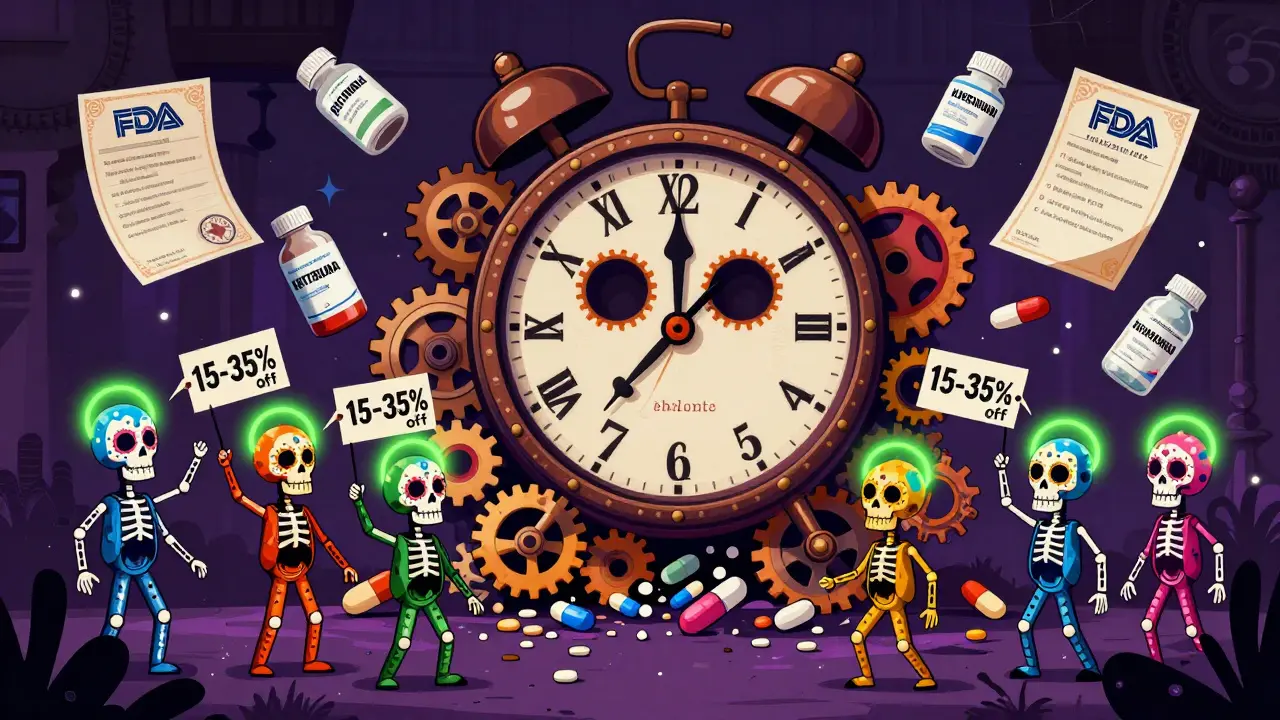
The next five years could change how millions of Americans pay for life-saving drugs. Between 2025 and 2030, over $200 billion in annual sales from top biologic medications will lose patent protection. This isn’t just a legal event-it’s a seismic shift in healthcare costs, and biosimilars are the key players stepping in.
What Exactly Are Biosimilars?
Biosimilars aren’t generics. You can’t make a biosimilar the same way you make a generic pill. While generics copy small-molecule drugs with simple chemical structures, biosimilars replicate complex biological products made from living cells. Think of it like cloning a tree: even with the same seeds, soil, and sunlight, no two trees grow exactly alike. Biosimilars must match their reference product-like Keytruda or Humira-with no clinically meaningful differences in safety, purity, or potency. The FDA requires over 100 analytical tests, animal studies, and sometimes clinical trials to prove they’re nearly identical. It’s not just chemistry-it’s biology.
The Patent Cliff Is Here
The big names are falling. In 2025, Eylea (aflibercept), used for macular degeneration, lost its exclusivity. By 2028, Keytruda (pembrolizumab), Merck’s cancer immunotherapy that brought in $25.5 billion in 2024, will be open to biosimilar competition. That’s not a small number-it’s more than the GDP of many small countries. Other major targets include Cosentyx (secukinumab) in 2029, Eliquis (apixaban) in 2029, and Enbrel (etanercept) in 2023, which already saw 12 biosimilars enter the market.
These aren’t random expirations. They’re the result of a 12-year exclusivity window granted under the Biologics Price Competition and Innovation Act (BPCIA) of 2009. Now, the clock is ticking for dozens of top-selling biologics. The FDA’s Purple Book, updated daily as of December 2025, lists 47 approved biosimilars and 12 that are interchangeable-meaning pharmacists can substitute them without doctor approval. That number is climbing fast.
Who’s Making Them and Where?
It’s not just big pharma. Companies like Sandoz (Novartis), Samsung Bioepis, Biocon Biologics, and Celltrion are leading the charge. Sandoz acquired Biocon’s biosimilars business in August 2024 for $3.9 billion, becoming the market leader with 28% global share. Samsung Bioepis invested $450 million in a single facility in Incheon, South Korea, built just for biosimilar production. These aren’t cheap experiments-they’re billion-dollar bets.
Why now? Because the payoff is huge. Biosimilars typically launch at 15% to 35% below the reference drug’s price. Sandoz’s Enbrel biosimilar launched at a 35% discount in 2023. Pfizer’s Ibrance biosimilar is expected to enter at 20-25% off. In contrast, the U.S. pays 2-3 times more for biologics than Europe, where biosimilar adoption exceeds 70% in some categories. That gap is shrinking.
Why the Slow U.S. Adoption?
Despite approval, biosimilars aren’t rushing into hospitals. Why? Three big reasons:
- Reimbursement disincentives: Medicare Part B pays providers based on the Average Sales Price (ASP). If a biosimilar costs $1,000 and the original costs $1,500, the provider still gets paid 106% of the ASP-meaning they make more profit selling the expensive version. That’s not a bug-it’s the system.
- Patent thickets: Merck holds 237 patents on Keytruda, with expirations stretching to 2035. These aren’t all about the drug itself-they cover delivery devices, manufacturing methods, even packaging. Litigation can delay entry for years, as seen with Eliquis, where patent settlements pushed competition back by four years.
- Provider hesitation: Some doctors are cautious. While most studies show biosimilars perform like the originals, a few patients experienced unexpected immune reactions when switching between rituximab biosimilars and the reference product, according to the FDA’s Oncology Center of Excellence. That’s rare, but it sticks in memory.
Hospital systems are starting to act. Kaiser Permanente mandated biosimilar substitution for all new filgrastim prescriptions in 2024. Mass General Brigham saw biosimilar use jump from 12% to 68% after enforcing mandatory substitution. CVS Caremark reported a 22% drop in prior authorization denials for biosimilars in Q2 2025. Change is happening-but it’s slow.
The Real Savings Are Coming
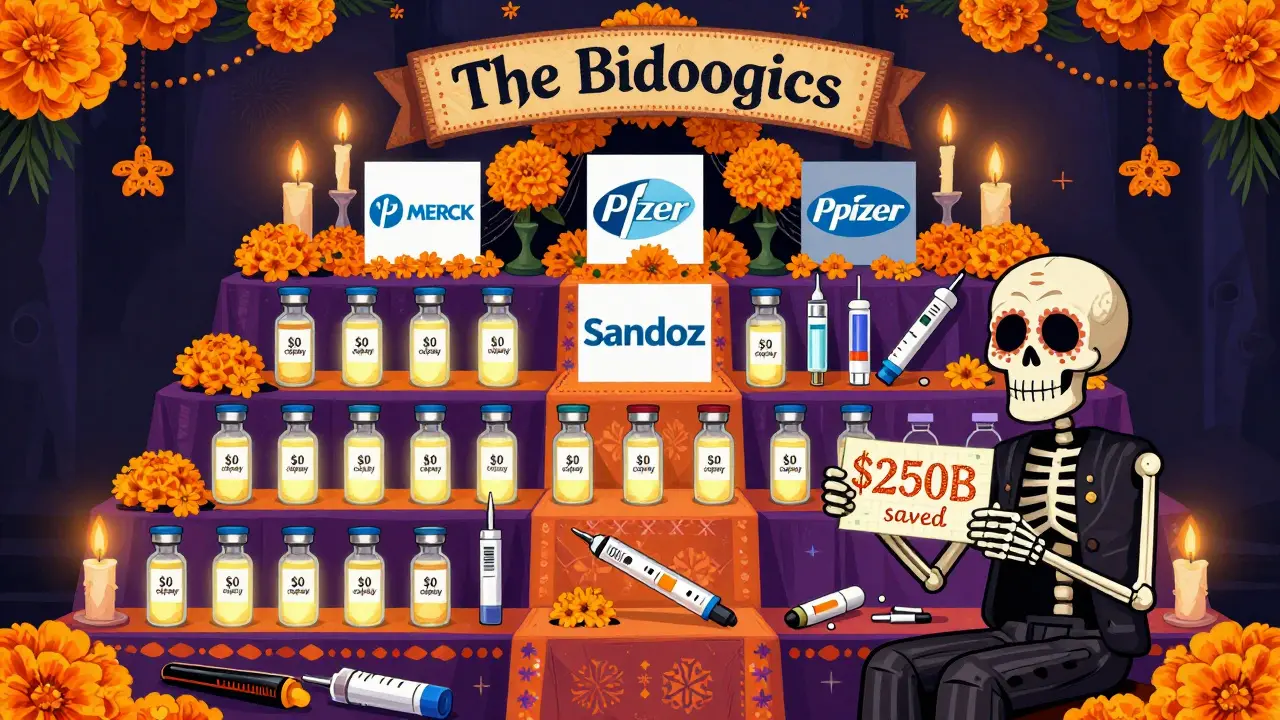
The numbers are staggering. The RAND Corporation projects biosimilars will save the U.S. healthcare system $250 billion over the next decade. The Congressional Budget Office estimates Medicare alone will save $51 billion between 2026 and 2035. That’s money that could fund cancer screenings, mental health services, or insulin for the 37 million Americans with diabetes.
And it’s not just about cost. Payers are pushing hard. Cigna’s 2025 Medicare Advantage plans offer $0 copays for biosimilars versus $50 for the brand. Centene Corporation now requires biosimilar use for all new patients on tumor necrosis factor inhibitors. These aren’t just policies-they’re market signals. If you’re a patient on Humira, you’ll likely be switched to a biosimilar by 2026. If you’re on Keytruda, you’ll have options by 2028.
Therapeutic Differences Matter
Not all biosimilars are equal. Oncology biologics like Keytruda, Opdivo, and Rituxan are the hardest to copy. They’re large, complex proteins with tiny sugar molecules (glycosylation) that affect how they work. A biosimilar for Eylea must match the exact glycosylation pattern of the original to work in eye disease. One wrong sugar chain, and it could trigger inflammation or reduce effectiveness.
That’s why the FDA requires so much data. Biosimilar developers spend 7-10 years and $150-250 million per product just to get approval. Compare that to a generic pill, which can be developed in 18 months for under $5 million. The complexity is why biosimilar entry is slower in cancer and autoimmune diseases than in diabetes or blood thinners.
What’s Next?
By 2030, the global biosimilars market is projected to hit $80 billion, up from $12.7 billion in 2024. The U.S. will account for nearly half of that growth. The FDA is making it easier: its 2025 draft guidance on “Analytical Similarity for Highly Complex Biologics” aims to speed up approvals for next-gen biosimilars, including antibody-drug conjugates. The Purple Book now requires real-time patent updates, cutting down on litigation delays.
Big pharma is adapting too. Regeneron partnered with Alvotech in January 2025 to co-develop biosimilars for Eylea. Pfizer created Viatris with Mylan to handle biosimilar commercialization. Even Merck, the maker of Keytruda, is preparing its own authorized generic version for 2028.
For patients, this means lower costs. For providers, it means simpler formularies. For the system, it means sustainability. The question isn’t whether biosimilars will enter the market-it’s how fast we’ll let them.
Are biosimilars as safe as the original biologics?
Yes. The FDA requires biosimilars to demonstrate no clinically meaningful differences in safety, purity, or potency compared to the reference product. This includes extensive analytical testing, animal studies, and sometimes clinical trials. Over 47 biosimilars are approved in the U.S., and real-world data from hospitals like Kaiser Permanente and Mass General Brigham show equivalent outcomes in patient response and adverse events. While rare cases of immune reactions have been reported during switching-especially with rituximab-these are exceptions, not the rule.
Why are biosimilars cheaper than biologics?
Biosimilars don’t need to repeat expensive clinical trials proving safety and efficacy from scratch. Instead, manufacturers rely on the original product’s data and only conduct studies to prove similarity. This cuts development time and cost dramatically. While developing a biosimilar still costs $150-250 million and takes 7-10 years, that’s far less than the $1-2 billion it takes to launch a new biologic. These savings are passed on as discounts of 15-35% off the original price.
Can pharmacists substitute biosimilars without a doctor’s approval?
Only if the biosimilar is designated as "interchangeable" by the FDA. As of December 2025, 12 biosimilars have this status, including versions of Humira, Enbrel, and insulin glargine. For these, pharmacists can switch the product at the pharmacy without contacting the prescriber, just like with generic pills. For non-interchangeable biosimilars, a new prescription is required. This distinction is critical-it affects how quickly patients gain access to lower-cost options.
Will biosimilars replace all biologics in the next decade?
Not all, but a large share. Analysts predict biosimilars will capture 45-65% of the market for expiring biologics within 24 months of entry. In autoimmune diseases like rheumatoid arthritis, biosimilars already make up 80% of new prescriptions for Humira. For cancer drugs like Keytruda, adoption may be slower due to provider caution and complex treatment regimens. But with payer mandates and price pressure, biosimilars will become the default for most new patients by 2030.
How do I know if I’m getting a biosimilar?
Your prescription label or pharmacy receipt will list the product name. Biosimilars have a four-letter suffix added to the brand name-for example, adalimumab-afzb for a Humira biosimilar. Your doctor or pharmacist should inform you if you’re being switched. If you’re unsure, ask: "Is this the reference product or a biosimilar?" Most insurers now require biosimilars for new prescriptions, so you’re likely already on one without realizing it.
What You Need to Do Now
If you’re on a biologic like Humira, Keytruda, or Eylea, expect a change. Payers are pushing hard for biosimilars. Your insurer may automatically switch you. Your doctor may recommend it. The savings are real-sometimes thousands per year. Don’t panic. These aren’t experimental drugs. They’re rigorously tested, approved, and already used by millions. Ask your provider: "What’s the biosimilar option?" and "Will my insurance cover it?" You’re not losing anything-you’re gaining affordability without sacrificing quality.
Katy Shamitz
March 10, 2026 AT 08:54Wow, I just read this and I’m honestly shocked no one’s talking about how insane it is that we’re letting Big Pharma get away with this for over a decade. I mean, $200 billion? That’s literally the entire budget of half the states. And now we’re supposed to be grateful for 15% off? Please. The real win is when biosimilars hit 50%+ discounts-and they will. I’ve seen it in Europe. We’re just lagging because of greed, not science.
Nicholas Gama
March 10, 2026 AT 17:26Mary Beth Brook
March 11, 2026 AT 12:45Neeti Rustagi
March 12, 2026 AT 04:51It is truly remarkable how the United States continues to lag behind in adopting biosimilars despite overwhelming evidence of their safety and efficacy. In India, where I come from, biosimilars have been the backbone of affordable oncology care for nearly a decade. The regulatory rigor here is commendable, but the commercial barriers are staggering. Perhaps it is time to reevaluate reimbursement structures not as a profit mechanism, but as a public health imperative.
Dan Mayer
March 13, 2026 AT 02:38rafeq khlo
March 13, 2026 AT 23:38The economic implications of biosimilar adoption are profoundly underappreciated. The current reimbursement paradigm incentivizes higher-cost agents, creating a perverse market distortion. Furthermore, the litigation delays induced by patent thickets represent a systemic failure of intellectual property law to serve public health. The 12-year exclusivity window was never intended to be a perpetual monopoly extension.
Jazminn Jones
March 14, 2026 AT 13:24The data on glycosylation patterns in oncology biosimilars remains insufficiently granular. The FDA’s reliance on analytical similarity is a statistical illusion-biological systems are nonlinear, and minor structural variations can cascade into clinical divergence. Until we have longitudinal real-world outcome studies across diverse populations, substitution remains a gamble.
George Vou
March 14, 2026 AT 16:05Scott Easterling
March 15, 2026 AT 17:24Mantooth Lehto
March 17, 2026 AT 13:44Melba Miller
March 18, 2026 AT 22:28The real story here isn’t the cost-it’s the power shift. For the first time, patients have leverage. Insurers are forcing switches. Providers are being trained. Pharmacies are auto-substituting. This isn’t just a market change-it’s a patient empowerment movement. And the industry? They’re scrambling to rebrand themselves as ‘partners’ in affordability. It’s beautiful. And terrifying.
Janelle Pearl
March 20, 2026 AT 21:52I’ve been on a biosimilar for over a year now, and honestly? I didn’t even notice the difference. My doctor explained everything, and I felt so heard. It’s rare to feel like your care is being handled with both science and kindness. If you’re nervous about switching, talk to your provider. You’re not alone, and you’re not taking a risk-you’re choosing better care.
Ray Foret Jr.
March 21, 2026 AT 20:18