Palliative Care in Cancer: How to Control Pain and Improve Quality of Life
 Nov, 27 2025
When someone is fighting advanced cancer, the goal shifts from curing the disease to keeping them as comfortable and present as possible. This is where palliative care comes in-not as a last resort, but as a vital part of treatment from the moment a serious diagnosis is made. It’s not about giving up. It’s about making sure every day matters, and that means tackling pain head-on while supporting the whole person-not just the tumor.
Why Pain in Cancer Isn’t Normal-And Why It Must Be Treated
It’s a myth that pain is just part of having cancer. About 70 to 90% of people with advanced cancer will feel significant pain at some point. Yet, studies show that nearly half of them still don’t get proper relief. Why? Fear. Misunderstanding. System gaps. Some patients worry opioids will make them addicted. Some doctors hesitate to prescribe enough. Some clinics don’t have the staff trained to ask the right questions.
The truth? Eighty to ninety percent of cancer pain can be controlled with today’s tools-if they’re used correctly. That’s not a guess. It’s from the National Cancer Institute’s PDQ guidelines. This isn’t about comfort alone. Uncontrolled pain steals sleep, kills appetite, isolates people from loved ones, and makes it harder to tolerate treatments like chemo or radiation. When pain is managed, people can eat again. Talk again. Laugh again.
How Doctors Measure Pain-And Why It Matters
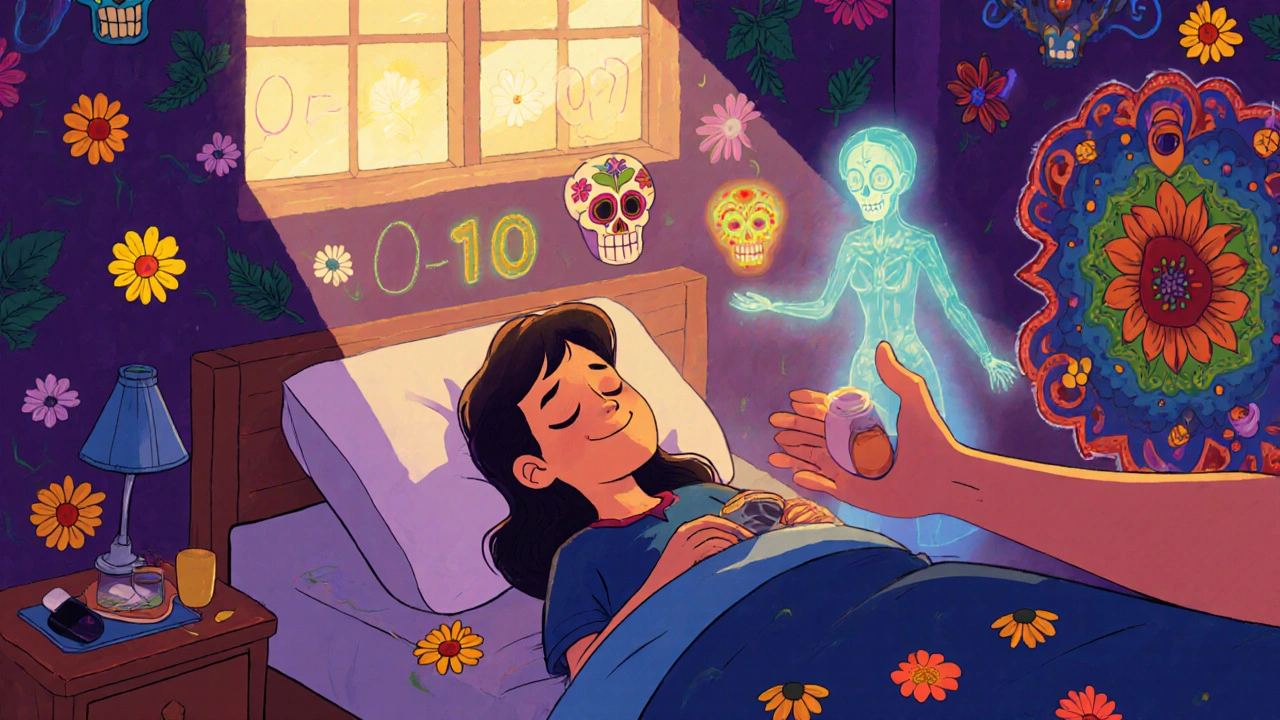
Pain isn’t something you can see on a scan. That’s why doctors rely on simple, proven tools. The most common? The 0-to-10 scale. Zero means no pain. Ten means the worst pain you can imagine. It’s not fancy, but it works. And it’s mandatory. The National Comprehensive Cancer Network (NCCN) says every cancer patient must be screened for pain at diagnosis and every follow-up.
But numbers alone aren’t enough. Doctors need to know: Where is it? Is it sharp, burning, or aching? Does it get worse when you move or lie down? Does it keep you from walking, eating, or sleeping? They’ll ask about what helps-heat, rest, medication-and what makes it worse. This isn’t just paperwork. It’s how they build a plan that fits you.
Tools like the Brief Pain Inventory or McGill Pain Questionnaire give a fuller picture. They track how pain affects mood, relationships, and daily function. These aren’t just surveys-they’re lifelines for the care team to see what’s really going on.
The Three-Step Ladder for Pain Relief
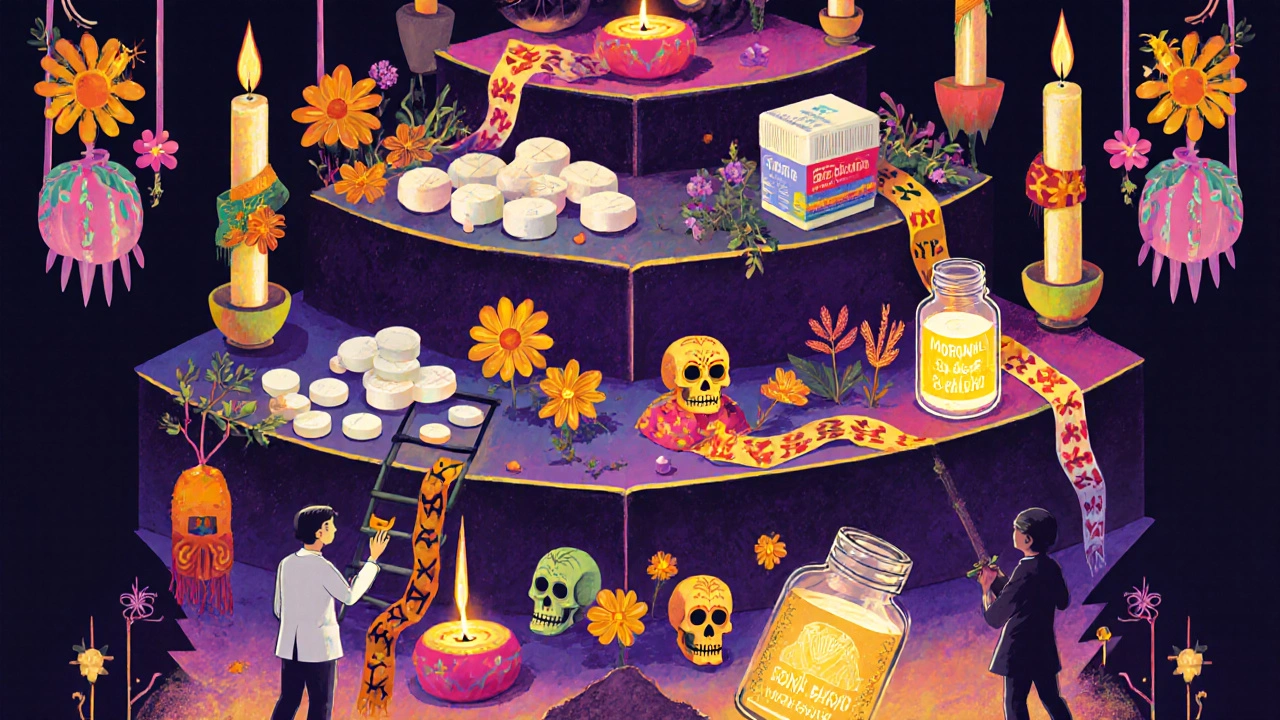
Back in 1986, the World Health Organization laid out a clear path: the three-step analgesic ladder. It’s still the foundation today.
Step 1: Mild pain - Start with over-the-counter meds. Acetaminophen (up to 4,000 mg a day) or NSAIDs like ibuprofen (400-800 mg every 6-8 hours). These work well for bone aches or mild inflammation. But they won’t touch deep, nerve-related pain.
Step 2: Moderate pain - Add a weak opioid. Codeine or tramadol, often combined with acetaminophen. These help when the first step isn’t enough. But they have limits. If pain keeps climbing, you move to the next step-fast.
Step 3: Severe pain - Strong opioids like morphine, oxycodone, or hydromorphone. Morphine is the most common starting point. A typical dose? 5 to 15 mg every 4 hours by mouth. But here’s the key: it’s not just for when pain hits. It’s given on a schedule, around the clock, to keep levels steady. Then, if pain spikes between doses, a quick-release “breakthrough” dose-usually 10-15% of your total daily dose-is given.
Titration isn’t guesswork. NCCN guidelines say to increase doses by 25-50% every 24 to 48 hours until pain drops below 3/10. And you’re checked within 24 hours. No waiting. No delays.
When Opioids Aren’t Enough-or Too Much
Opioids are powerful, but they’re not the only tool. Sometimes, the pain isn’t from the tumor itself-it’s from damaged nerves. That’s neuropathic pain. It feels like electric shocks, burning, or tingling. For that, doctors add adjuvant meds:
- Gabapentin or pregabalin for nerve pain (100-1,200 mg three times a day)
- Duloxetine, an antidepressant that also blocks pain signals (30-60 mg daily)
- Dexamethasone, a steroid that reduces swelling around tumors (4-16 mg daily)
For bone metastases, radiation is often paired with drugs like zoledronic acid. A single 8 Gy radiation dose can bring relief in days. It’s targeted, fast, and often avoids the need for higher opioid doses.
But opioids can cause side effects-constipation, drowsiness, nausea. And sometimes, they make pain worse over time. That’s opioid-induced hyperalgesia. It happens in 15-20% of long-term users. When that occurs, doctors don’t just crank up the dose. They switch opioids. Morphine to hydromorphone. Oxycodone to fentanyl. They use equianalgesic tables to calculate the right starting point-usually 50-75% of the expected dose, because your body doesn’t fully tolerate the new drug right away.
Quality of Life Isn’t Just About Pain
Palliative care doesn’t stop at pills and patches. It looks at the whole person. Are you anxious? Depressed? Is your family overwhelmed? Do you feel like a burden? Are you still able to do the things that give you joy-reading, listening to music, sitting in the sun?
Studies show that when a dedicated palliative care team joins early-within 8 weeks of diagnosis-patients report a 20-30% improvement in quality of life. Some even live longer. A 2022 ASCO review found metastatic cancer patients who got early palliative care lived 2.5 months longer on average than those who didn’t. Not because they got more chemo. Because they got better care.
That team includes nurses, social workers, chaplains, psychologists. They help with advance care planning. They connect families to support groups. They help navigate insurance for home care, oxygen, or specialized equipment. They answer the hard questions: “How long do I have?” “What happens if I stop treatment?” “Can I die at home?”
Barriers Still Stand in the Way
Even with great guidelines, real-world barriers remain. A 2017 study in Canada found 40% of oncology nurses hadn’t been trained in current pain management practices. Patients often don’t speak up. Sixty-five percent fear addiction. Others, especially in Asian or Hispanic communities, stay quiet because showing pain is seen as weakness.
Regulations don’t always help. In some places, strict opioid rules make doctors scared to prescribe enough. Insurance often won’t cover non-drug therapies like acupuncture, massage, or counseling-despite strong evidence they help.
And then there’s the system. Too many clinics don’t have palliative care teams on call. Patients wait days for a consult. Pain gets worse. The NCCN says any cancer center should have immediate access to palliative care. But that’s not universal.
What’s New? Technology and Personalized Care
Things are changing. Smartphone apps now let patients log pain levels in real time. A 2021 study showed this improved documentation accuracy by 22%. Doctors see trends faster. Adjustments happen sooner.
Genetic testing is starting to play a role. Some people metabolize opioids slowly because of CYP450 gene variants. Testing can tell doctors if a standard dose will be too weak-or too strong. This isn’t routine yet, but it’s coming.
And research is moving beyond opioids. Twelve new non-opioid drugs are in Phase II or III trials targeting cancer-specific pain pathways-like nerve compression or bone destruction. These could offer relief without sedation or addiction risk.
Artificial intelligence is being tested to predict pain flare-ups before they happen. Imagine an alert that says, “Based on your history, your pain is likely to spike in 12 hours. Preemptive dose recommended.” That’s not sci-fi. It’s being built now.
What You Can Do
If you or someone you love has cancer:
- Ask for a pain assessment at every visit. Don’t wait for them to ask.
- Track your pain: note when it happens, what it feels like, what helps.
- Speak up about side effects. Drowsiness isn’t normal if it stops you from being present.
- Request a palliative care consult early-even if you’re still getting treatment.
- Know your rights. You deserve relief. You’re not being weak for asking.
Palliative care isn’t about dying. It’s about living-with dignity, with comfort, with moments that matter. Pain doesn’t have to be your constant companion. There are tools. There are people who know how to use them. You just have to ask.
Is palliative care the same as hospice?
No. Hospice is for people who are no longer seeking curative treatment and have a life expectancy of six months or less. Palliative care can start at diagnosis and continue alongside treatments like chemotherapy or surgery. You don’t have to give up hope to get palliative care-you just have to want to feel better.
Will opioids make me addicted?
For people with cancer pain, addiction is extremely rare. The goal is physical dependence-not addiction. Dependence means your body adapts to the drug, so stopping suddenly causes withdrawal. That’s manageable with tapering. Addiction is compulsive use despite harm, which almost never happens in cancer patients taking opioids as prescribed. Fear of addiction is one of the biggest reasons pain goes untreated-and it’s not based on evidence.
Can I still get treatment if I start palliative care?
Absolutely. Palliative care works with your oncology team. It doesn’t replace treatment-it supports it. Better pain control means you can tolerate chemo better. Less nausea means you can eat and stay stronger. Many people continue active treatment for years while receiving palliative care.
What if my doctor won’t prescribe enough pain medicine?
Ask for a referral to a palliative care specialist or pain clinic. They’re trained in complex cases and can advocate for you. If your hospital doesn’t have one, ask your oncologist to contact a nearby center. You have the right to effective pain management under international and national guidelines. Don’t accept “we can’t do more” as an answer.
Are there non-drug ways to help cancer pain?
Yes. Radiation helps bone pain. Nerve blocks can block signals. Physical therapy keeps you moving. Massage and acupuncture reduce muscle tension and anxiety. Meditation and guided imagery lower stress, which can make pain feel worse. Even music therapy has been shown to reduce pain perception. These aren’t alternatives-they’re partners to medication.
Final Thought: Pain Is Not a Sign of Failure
Too many people think managing pain means they’re giving up. It doesn’t. It means they’re fighting smarter. Every person deserves to live their last days-or months-or years-without suffering. That’s not a luxury. It’s a standard of care. And it’s within reach.
George Hook
November 28, 2025 AT 02:48Let me tell you something I learned when my mom was in hospice-pain isn't just a number on a scale. It's the way she stopped laughing at my terrible jokes because it hurt too much to breathe. The first time they gave her morphine, she looked at me like I'd just handed her back her life. Not cured, not fixed-but present. And that mattered more than any scan result. The system fails so many people because we treat pain like a side effect instead of the core crisis. It's not about addiction fears. It's about dignity. And if your doctor won't listen, find someone who will. There are protocols. There are experts. You don't have to suffer in silence just because the system is broken.
It's not about giving up. It's about refusing to let the disease steal every last thing that makes you you.
I wish someone had told me this six months earlier.
Don't wait until you're desperate to ask for help.
They can help. They just need you to speak up.
And if you're scared? So am I. But we're still here. And that counts.
Don't let fear silence you.
Not today. Not ever.
jaya sreeraagam
November 29, 2025 AT 10:13As someone from India where palliative care is still a luxury for the few, I want to say this: your post is a gift. In my city, my aunt spent her last weeks screaming because no one knew how to manage her pain-no morphine, no guidelines, just prayers and silence. We thought it was normal. We thought suffering was part of dying. But you're right-it's not. It's negligence. And it's avoidable. I'm sharing this with every oncology nurse I know. The three-step ladder? We need it here. The NCCN guidelines? We need them printed in every clinic. The fact that 65% of patients in my community stay quiet because showing pain is weak? That’s cultural trauma, not strength. Thank you for naming it. We don’t need more heroes-we need more systems. And you just gave us a blueprint.
From one fighter to another-keep talking. We’re listening.
P.S. I typed this on my phone during a 3-hour train ride. Sorry for the typos. But the message? Crystal clear.
Katrina Sofiya
November 30, 2025 AT 13:58I am so moved by this. As a nurse who’s worked in oncology for 18 years, I can tell you-every single time we get pain management right, the whole family breathes easier. Not just the patient. The siblings. The spouses. The kids who are too scared to cry in front of their parent. When pain is controlled, people start holding hands again. They start telling stories. They start laughing-even if it’s quiet. That’s not just comfort. That’s healing. And yes, opioids aren’t perfect. Yes, constipation is a pain. But the alternative? A person fading away in silence? No. Not acceptable. I’ve seen families fight for weeks to get their loved one a proper dose. I’ve seen doctors hesitate. I’ve seen insurance deny acupuncture because it’s ‘alternative.’ But here’s the truth: when we treat the whole person, not just the tumor, outcomes improve. Quality of life improves. And yes-sometimes, life itself improves. I’ve had patients live longer because they stopped being in constant agony. So if you’re reading this and you’re afraid to ask for help? Please, I beg you-ask. Ask again. Ask louder. You are not a burden. You are a human being who deserves peace.
And if your doctor says no? Find another one. You have that power.
kaushik dutta
December 1, 2025 AT 15:27Let’s be brutally honest here. The WHO ladder is outdated. It’s a 1986 relic in a 2024 world of precision medicine. We’re still using morphine as the gold standard when we have fentanyl patches, intrathecal pumps, and gene-based metabolism profiling. And don’t get me started on gabapentin being prescribed like candy without checking renal function. You want to talk about barriers? The real barrier is medical inertia. Oncologists are trained to fight cancer-not manage pain. Palliative care is still treated as a consult, not a core service. And let’s not ignore the elephant in the room: opioid stigma is a global public health crisis. In India, doctors are terrified to prescribe even low-dose opioids because of regulatory audits. In the U.S., it’s insurance denials. In Europe, it’s cultural aversion. This isn’t a medical problem-it’s a systemic failure. And until we restructure training, reimbursement, and regulation, we’re just rearranging deck chairs on the Titanic. The tools exist. The evidence is overwhelming. But the will? Still missing.
And yes-I just said all that in one breath. Because this issue deserves no less.
doug schlenker
December 3, 2025 AT 02:47I’ve been on both sides-patient and caregiver. My dad had pancreatic cancer. We didn’t ask for palliative care until he couldn’t walk to the bathroom. By then, he was already broken. I wish we’d known earlier. The difference between pain that’s managed and pain that’s ignored? It’s the difference between a person and a shadow. I didn’t know about the 0-10 scale until the nurse explained it. I didn’t know breakthrough doses existed. I thought if he wasn’t screaming, he was fine. He wasn’t screaming. He was just quiet. And that was worse.
I’m not mad at anyone. Just… sad that we didn’t know. And now I’m telling everyone I know. If you’re reading this and you’re scared to ask for help-don’t be. Ask. Even if it feels awkward. Even if you think you’re being a bother. You’re not. You’re human. And you deserve to feel safe in your own body.
Thank you for writing this. I needed to read it.
Olivia Gracelynn Starsmith
December 3, 2025 AT 03:02When I was in chemo I started logging pain every night on my phone. Not because I was told to. Because I was tired of saying ‘it’s fine’ when it wasn’t. The first time my oncologist saw the graph-she paused. Said ‘I had no idea it was this bad.’ That’s the problem. We don’t track it. We don’t quantify it. We just endure. And then we wonder why we feel so alone. The apps help. The scales help. The fact that we have tools? That’s progress. But the real win? When your doctor listens. Not just hears. Listens. And changes something. That’s the magic. That’s what makes you feel seen. Not just treated. Seen.
And if your doctor won’t? Find someone who will. You’re worth it.
Skye Hamilton
December 3, 2025 AT 04:33Okay but what if the pain meds make you feel like a zombie? What if you’re so drowsy you miss your granddaughter’s birthday? What if you’re so nauseous you can’t even smell your favorite soup? Is that ‘quality of life’? I’ve seen people on high-dose opioids who couldn’t hold a conversation. Who forgot their own name. Who stared at the ceiling for hours. That’s not living. That’s just… existing. And they call that ‘palliative’? I call it chemical sedation disguised as care. Maybe we’re focusing too much on killing the pain and not enough on preserving the person. Maybe the real goal isn’t ‘zero pain’-it’s ‘meaningful presence.’ And sometimes that means tolerating a little discomfort to stay awake, to laugh, to remember who you are. I’m not saying don’t treat pain. I’m saying don’t trade your soul for a number on a scale.
Maria Romina Aguilar
December 4, 2025 AT 15:03…I just… I don’t know… I mean, I read all of this… and… I’m… not sure… I think… maybe… it’s… possible… that… some… people… don’t… want… to… be… ‘comfortable’… because… they… feel… guilty… for… being… alive… while… others… aren’t…? And… maybe… the… pressure… to… ‘feel better’… is… just… another… kind… of… violence…? And… what… if… the… real… pain… isn’t… physical… at… all…? And… what… if… the… system… is… just… trying… to… fix… what… can’t… be… fixed…? I… just… wonder… if… we’re… missing… something… bigger…? I… don’t… know… I’m… just… thinking… out… loud…? I… didn’t… mean… to… be… negative…? I… just… felt… like… I… had… to… say… something…?
Brandon Trevino
December 5, 2025 AT 18:19Let’s cut through the feel-good rhetoric. The 70-90% pain statistic is cherry-picked. It conflates transient discomfort with chronic, debilitating pain. The NCCN guidelines are not law-they’re recommendations. And morphine isn’t the gold standard-it’s the default because it’s cheap. Most oncologists don’t titrate properly. They give 5mg q4h and call it a day. That’s not care-that’s negligence. And don’t get me started on the ‘2.5-month survival benefit’ from early palliative care. That’s from a single 2010 study. Replication? Minimal. Confounding variables? Abundant. Patients who get early palliative care are often healthier, more educated, and have better access to care. Of course they live longer. It’s not the morphine. It’s the privilege. And the ‘non-drug therapies’? Acupuncture? Massage? These are placebo-enhancing rituals with weak evidence. Don’t confuse comfort with cure. And don’t confuse compassion with clinical competence. This post is a beautifully written pamphlet. But it’s not medicine. It’s marketing.
Denise Wiley
December 6, 2025 AT 14:18I just want to say-I cried reading this. Not because I’m sad. Because I’m so damn proud of how far we’ve come. My sister had ovarian cancer. She didn’t want to die. But she didn’t want to suffer either. We asked for palliative care on day one. The team came in. They didn’t talk about death. They talked about her favorite songs. Her dog. Her garden. They adjusted her meds so she could sit outside for 20 minutes every afternoon. That’s all she asked for. And they gave it to her. That’s not magic. That’s care. Real care. And if you’re reading this and you think you’re being selfish for wanting to feel better-you’re not. You’re being human. And you deserve every bit of comfort this world can give you. I’m so glad you wrote this. I’m sharing it with everyone I know. Because no one should have to suffer alone.
Hannah Magera
December 7, 2025 AT 00:20So… if someone has cancer… and they’re in pain… what do they do first? Do they call their doctor? Or do they go to a pain clinic? Can anyone get palliative care? Or do you need a special referral? Is it covered by insurance? What if you live in a small town? Is there a website or phone number to call? I just want to know how to help someone. Like… step by step. I don’t know where to start. Can someone explain it simply? Like… for a person who doesn’t know anything about medicine?
George Hook
December 8, 2025 AT 05:49They start by asking. That’s it. Not calling. Not Googling. Just saying out loud: ‘I’m in pain. I need help.’ That’s the hardest step. After that? Tell them you want a pain assessment. Ask for the palliative care team. If they say ‘we don’t have one,’ ask them to call a nearby hospital. If they say ‘we can’t do more,’ say ‘I know you can. Show me how.’ You don’t need to be loud. You don’t need to be angry. You just need to be persistent. And if you’re too tired to speak? Someone else can speak for you. A family member. A friend. A nurse. A chaplain. You’re not alone. You never were.
And if you’re scared they’ll think you’re weak? Good. Let them think that. Because you’re not weak. You’re brave. And you’re worth the effort.
I’m still here. And I’m still fighting.
So are you.