How to Request Translator Services for Medication Counseling
 Dec, 19 2025
When you or a loved one is prescribed a new medication, understanding how to take it isn’t just helpful-it’s life-saving. But if English isn’t your first language, that understanding can slip through the cracks. Without a qualified interpreter, even simple instructions like "take one tablet twice daily" can become confusing, dangerous, or even deadly. The good news? You have a legal right to a professional interpreter during medication counseling-and pharmacies are required by law to provide it, free of charge.
Why Language Help Isn’t Optional
In 2012, a study from the University of California San Francisco found that patients with limited English proficiency (LEP) were three times more likely to make serious medication errors than English-speaking patients. These aren’t small mistakes. They’re missed doses, wrong amounts, dangerous drug interactions-all because the patient didn’t fully understand what they were being told. Federal law backs this up. Section 1557 of the Affordable Care Act, updated in 2025, says any pharmacy or clinic that takes federal funds (which includes most Medicaid and Medicare providers) must offer free language assistance. That means interpreters, translated materials, or both. And it’s not just a suggestion-it’s enforced. Since 2016, the U.S. Department of Health and Human Services has settled 47 cases against healthcare providers for failing to provide language services. One national pharmacy chain paid $1.2 million in 2022 for not giving LEP patients proper counseling.What Counts as a Qualified Interpreter?
Not every bilingual person is qualified to interpret medication instructions. A friend who speaks Spanish? A cousin who works at the pharmacy? A staff member who says they know some French? These aren’t enough. Professional interpreters must:- Have formal training in medical terminology (at least 40 hours, according to the American Translators Association)
- Pass certification exams in both English and the patient’s language
- Understand how to translate dosage instructions, side effects, and warnings accurately
- Follow strict confidentiality rules
How to Ask for Help-The Right Way
You don’t have to wait for the pharmacist to offer help. If you need an interpreter, say it clearly:"I need a professional interpreter for my medication counseling. I don’t understand English well enough to safely take this medicine."Don’t say: "Can you just explain it in Spanish?" or "My daughter can help." That opens the door for unqualified help. You have the right to a trained, certified interpreter. Pharmacies must respond immediately. In California, the law is even clearer: if a pharmacist can’t communicate clearly with you, they must use an interpreter-either in person or over the phone-before giving you your prescription. And you don’t pay a cent.
Three Ways Pharmacies Provide Interpreters
There are three main ways pharmacies connect you with an interpreter. Each has pros and cons:1. Phone Interpreting (Most Common)
Services like RxTran or Language Line connect you via phone in under 30 seconds, 92% of the time, according to pharmacy logs. It’s cheap-around $2.50 per minute-and available 24/7. But it’s not perfect. A 2019 study at Massachusetts General Hospital found that 32% of elderly LEP patients got confused during phone calls. Without seeing the pharmacist’s face or gestures, it’s harder to pick up on tone or urgency.2. Video Remote Interpreting (Best Balance)
This is growing fast. By 2023, 65% of healthcare facilities used video interpreting. You see the interpreter on a tablet or screen. You can see their facial expressions, hand gestures, and even read lips if needed. Cost: $3-$5 per minute. Better than phone. Less expensive than in-person. Works well for complex discussions like checking side effects or explaining a new insulin regimen.3. In-Person Interpreters (Gold Standard)
Nothing beats face-to-face. The pharmacist can point to a pill bottle, show a dosing cup, or demonstrate how to use an inhaler while the interpreter translates. This is especially important for older adults, people with low literacy, or those taking multiple medications. But it’s not always possible. In-person interpreters are expensive ($45-$75/hour) and mostly available in big cities. Smaller rural pharmacies often rely on phone or video.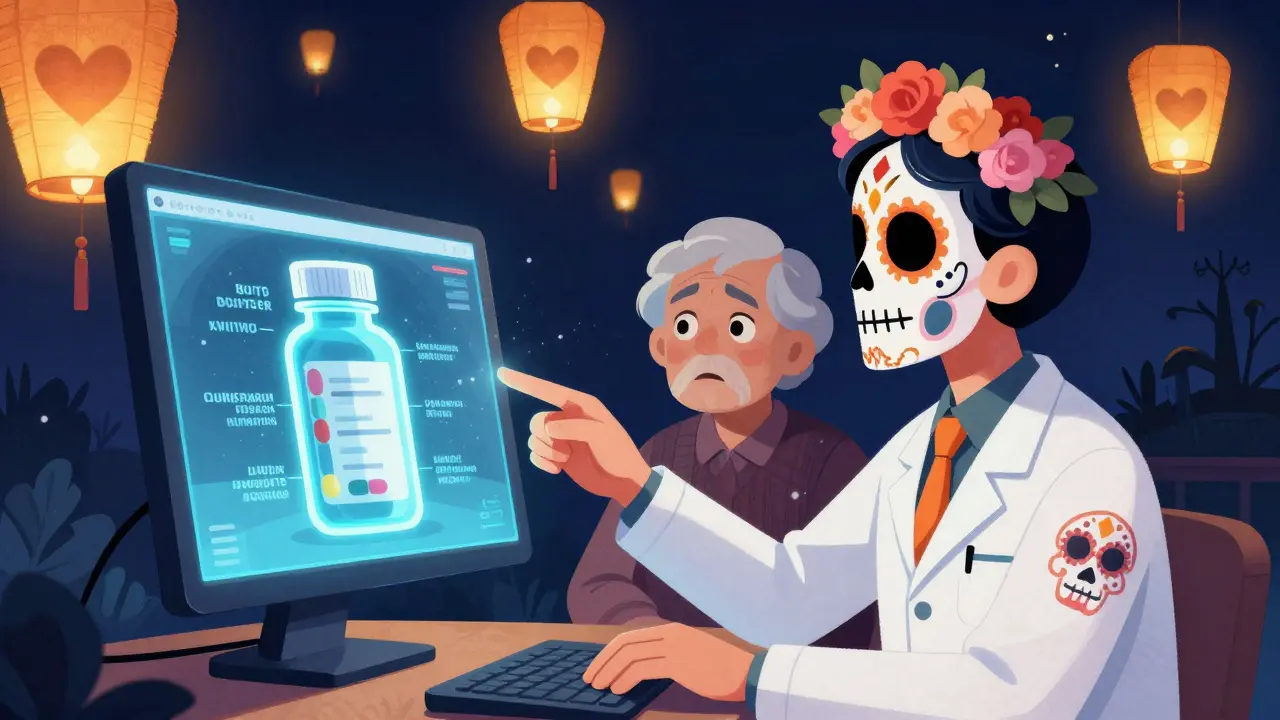
What’s Already Translated? Know Your Rights
Many pharmacies use pre-translated materials for common medications. California’s SafeRx program, for example, has official, government-approved translations of prescription directions (called SIGs) in five languages: Spanish, Chinese, Korean, Russian, and Vietnamese. These are printed right on the label. But here’s the catch: translations aren’t perfect. A 2022 survey by California’s Department of Consumer Affairs found that 38% of Russian-speaking patients said the dosage instructions were confusing because the grammar didn’t match how medical terms are used in Russian. That’s why you should never assume the label is enough. Always ask for live counseling-even if the label is in your language.What to Do If the Pharmacy Refuses
If a pharmacist says, "We don’t have an interpreter right now," or "We can’t afford one," they’re breaking the law. Here’s what to do:- Ask to speak with the pharmacy manager.
- State clearly: "I am legally entitled to a professional interpreter under federal law. I will not take this medication until I understand it fully with a qualified interpreter."
- If they still refuse, file a complaint with the Office for Civil Rights (OCR) at HHS.gov. You can do it online in minutes.
What Pharmacists Must Do
Pharmacists aren’t just handing out pills. They’re responsible for making sure you understand your meds. Here’s what they’re supposed to do:- Ask every patient: "What language do you prefer to speak?" (This is now standard practice in most chain pharmacies.)
- Use only approved interpreter services: phone, video, or in-person. No family, no untrained staff.
- Document everything: language requested, type of service used, duration, and interpreter’s name or ID number.
- Use the correct billing code: T-1013 for language services, paired with the medical visit code.
What’s Changing in 2025?
New rules took effect on January 1, 2025:- AI translation tools (like Google Translate) are now banned for use on prescription labels and medication counseling materials unless a human reviews them first.
- Medicaid now reimburses pharmacies 75% of interpreter costs for children in non-English-speaking households (up from 50%).
- California is adding translations for Tagalog and Arabic, after identifying those as the fastest-growing languages among LEP pharmacy patients.
Real Stories, Real Risks
One Reddit user, a pharmacist with 12 years of experience, wrote: "We use RxTran’s phone service daily. But our Mandarin interpreters often don’t know the word for 'sustained-release.' So they just say 'slow pill.' Patients think they can crush it. That’s dangerous." Another patient, a Vietnamese grandmother in Los Angeles, said: "The label said 'take one in the morning.' I thought that meant once a day. The interpreter told me it was twice. I didn’t know I was supposed to ask." These aren’t rare cases. They’re systemic failures.Your Next Steps
1. Always ask for a professional interpreter before taking any new medication. 2. Don’t accept family members, friends, or untrained staff as interpreters-even if they seem fluent. 3. Write down your questions before your appointment: "What does this do?" "What happens if I miss a dose?" "What foods or drugs should I avoid?" 4. Request a printed copy of the translated instructions in your language. 5. Report refusal to HHS’s Office for Civil Rights. Your voice protects others. You don’t need to be fluent in English to get safe, accurate care. You just need to know your rights-and use them.Can I be charged for an interpreter during medication counseling?
No. Federal law under Section 1557 of the Affordable Care Act prohibits pharmacies from charging patients for language assistance services. This includes phone, video, or in-person interpreters. If a pharmacy tries to charge you, it’s a violation of civil rights law.
What if the pharmacy says they don’t have an interpreter available?
They are still required to provide one. Most pharmacies use on-demand phone or video services that connect in under a minute. If they claim they can’t access one, ask to speak to a manager. If they still refuse, document the date, time, and name of the staff member, then file a complaint with the U.S. Department of Health and Human Services’ Office for Civil Rights. This is a common violation-and it’s being actively enforced.
Are translated prescription labels enough?
No. Translated labels are helpful, but they’re not a substitute for live counseling. Labels can’t explain interactions, side effects, or what to do if you feel unwell. A 2022 study found that 38% of Russian-speaking patients found their translated dosage instructions confusing because the grammar didn’t match medical conventions in their language. Always ask for a live interpreter to go over your medication in person or over video.
Can I use my child or a friend as an interpreter?
While you can choose to use them, pharmacies are not allowed to rely on family or friends as interpreters for medication counseling. Using untrained people increases the risk of serious medication errors by 49%, according to a 2021 study in JAMA Pediatrics. Pharmacists are legally required to use certified interpreters. If you’re offered a family member, you have the right to say no and request a professional.
Which languages have official translated medication instructions?
California’s SafeRx program officially translates prescription directions into Spanish, Chinese, Korean, Russian, and Vietnamese. These are printed on labels in state-approved pharmacies. Other states may have similar programs, but they’re less standardized. The U.S. government does not require all pharmacies to offer translations in every language-but they must provide a live interpreter in any language you speak.
Can AI tools like Google Translate be used for medication instructions?
As of January 1, 2025, federal guidelines prohibit using AI tools like Google Translate for prescription labels or medication counseling materials unless a certified medical interpreter reviews and approves them first. AI often mistranslates medical terms-like confusing "twice daily" with "two pills at once"-which can lead to dangerous overdoses. Human review is required.
How do I know if an interpreter is qualified?
A qualified interpreter has completed at least 40 hours of medical terminology training and passed a certification exam. They should be able to explain terms like "adverse reaction," "contraindication," or "take on an empty stomach" accurately. If the interpreter struggles with basic medical words or seems unsure, ask the pharmacy to provide someone else. You can also ask the pharmacy for the interpreter’s certification ID number.
Dev Sawner
December 20, 2025 AT 02:00It is imperative to underscore that the legal obligation to provide professional interpretation services is not merely a regulatory nicety-it is a non-negotiable component of equitable healthcare delivery under Title VI of the Civil Rights Act and Section 1557 of the ACA. The statistical correlation between language barriers and medication errors is not anecdotal; it is empirically validated and ethically indefensible. Any institution that fails to comply is not merely negligent-it is complicit in medical malpractice.
Moses Odumbe
December 20, 2025 AT 18:52Jedidiah Massey
December 21, 2025 AT 15:40The structural inadequacy of current interpreter deployment models remains a critical failure point in pharmacovigilance. While phone and video modalities offer scalability, the absence of multimodal contextual cues-facial affect, proxemic alignment, and paralinguistic emphasis-compromises semantic fidelity, particularly in polypharmacy contexts. The 32% confusion rate among elderly LEP patients in the Mass General study is not merely a logistical issue-it is a systemic epistemic breakdown.
Allison Pannabekcer
December 23, 2025 AT 12:02I’ve worked in community health for 15 years, and I’ve seen too many families too afraid to speak up. I get it-you’re tired, overwhelmed, maybe scared. But you don’t have to be alone. If you don’t feel understood, say it again. Say it louder. Bring someone with you. Write it down. Ask for the manager. You’re not being difficult-you’re protecting your life. And if you’re a pharmacist reading this? Stop assuming fluency. Start asking. Every. Single. Time.
Sarah McQuillan
December 24, 2025 AT 17:15Let’s be real-this whole 'language access' thing is just another woke government overreach. Why should taxpayers pay for interpreters for people who chose to move here and didn’t learn English? We’re not a multilingual country. We’re an English-speaking nation. If you can’t speak the language, maybe you shouldn’t be taking complex meds. It’s not that hard to learn 'once a day'.
Mark Able
December 24, 2025 AT 23:35Wait, so you’re telling me I can’t just have my 14-year-old niece translate my insulin instructions? She’s bilingual! She’s in AP Bio! Why do we need some $5-a-minute robot? This is ridiculous. I’ve been doing this for years. My cousin’s friend works at CVS and he’s fluent in Tagalog-he’s been helping me since 2018. Why is this even an issue?
William Storrs
December 26, 2025 AT 13:08You got this. Seriously. If you’re reading this and you’re scared to ask for help-you’re not alone. But you’re stronger than you think. That pharmacist doesn’t get to decide if you live or die. You do. Say the words. Write them on your hand if you have to. 'I need a professional interpreter.' Say it like you mean it. And if they say no? Walk out. File the complaint. You’re not just helping yourself-you’re helping every person who comes after you. Keep going. You’re doing amazing.
James Stearns
December 27, 2025 AT 10:10It is deeply troubling that the public continues to conflate linguistic accommodation with cultural capitulation. The notion that a professional interpreter is somehow 'excessive' or 'costly' reflects a profound misunderstanding of the ethical obligations inherent in the healer-patient relationship. One cannot ethically dispense pharmaceuticals without ensuring comprehension. The 49% error rate with untrained interpreters is not a statistic-it is a moral indictment.
Guillaume VanderEst
December 28, 2025 AT 06:01Just had this happen in Vancouver last month. Pharmacist said they'd use Google Translate. I said 'nope' and asked for the real interpreter. Took 90 seconds on video. She pointed to the inhaler, showed the puff count, and even mimed the breath hold. My mom cried. We all did. That’s what care looks like. Not apps. Not cousins. Not 'we’re busy.' Real people. Real help.