Understanding Drug Labels: A Complete Medication Label Breakdown
 Jan, 15 2026
Every time you pick up a prescription or grab a bottle of ibuprofen from the shelf, you’re holding a document that could save your life-or hurt you if you don’t know how to read it. Drug labels aren’t just stickers on bottles. They’re legal documents, safety manuals, and instruction guides all rolled into one. And yet, most people glance at them like they’re reading a foreign language. If you’ve ever been confused about how much to take, when to take it, or why a warning says "avoid alcohol," you’re not alone. In fact, nearly 7 out of 10 patients say they struggle to understand their labels. This guide breaks down every part of a medication label-prescription and over-the-counter-so you know exactly what you’re looking at, what matters most, and what to do if something doesn’t make sense.
What’s on a Prescription Drug Label?
Prescription labels follow a strict format set by the U.S. Food and Drug Administration (FDA). They’re designed for doctors and pharmacists first, not patients. That’s why they can feel overwhelming. But even if the full prescribing information is meant for professionals, you still need to know the basics.
Look for these key pieces on your prescription bottle:
- Generic name (e.g., metformin) and brand name (e.g., Glucophage) - These tell you what drug you’re taking. The generic is the active ingredient; the brand is the company’s version.
- Strength (e.g., 500 mg) - This tells you how much of the drug is in each pill, tablet, or dose.
- Form (e.g., tablet, capsule, liquid) - This tells you what shape the medication comes in.
- Quantity (e.g., 30 tablets) - How many pills are in the bottle.
- Directions (e.g., Take one tablet by mouth twice daily) - This is your dosing schedule. Watch out for abbreviations like q.d. (once daily) or b.i.d. (twice daily). Many people misread these.
- Prescriber’s name - Who ordered the medication.
- Pharmacy name and phone - Always keep this handy. If something’s unclear, call them.
- Expiration date - Don’t use medication past this date. It may not work, or worse, it could be unsafe.
- National Drug Code (NDC) - A unique 10- or 11-digit number that identifies the exact product, manufacturer, and package size. Useful if you need to report a problem or check recalls.
But here’s the problem: the label doesn’t always say why you’re taking it. A prescription for lisinopril might just say "take one tablet daily." It won’t tell you it’s for high blood pressure unless your doctor explains it. That’s a gap. Research shows patients who know the reason for their medication are 42% less likely to make mistakes.
What’s on an Over-the-Counter (OTC) Drug Label?
OTC drugs-like pain relievers, allergy meds, or cough syrups-follow a simpler, patient-friendly format called the Drug Facts label. It’s required by the FDA and designed for you to read and understand.
Here’s what you’ll find on every OTC bottle:
- Active ingredient - The chemical that makes the medicine work. For example, acetaminophen or loratadine. This is the most important part. Don’t take multiple products with the same active ingredient-you could overdose.
- Purpose - What the active ingredient does. Example: "Pain reliever/fever reducer."
- Uses - What symptoms it treats. Example: "Temporarily relieves minor aches and pains due to headache, toothache, menstrual cramps, or the common cold."
- Warnings - When NOT to take it. This includes allergies, health conditions (like liver disease), interactions with other drugs, and risks like drowsiness or stomach bleeding. Pay close attention here.
- Directions - How much to take, how often, and for how long. Stick to the instructions. More isn’t better.
- Inactive ingredients - Fillers, dyes, flavors. Important if you have allergies. For example, some people react to red dye #40 or lactose.
- Other information - Storage instructions (e.g., "keep at room temperature") and sometimes a barcode.
Many people don’t realize that OTC meds can be dangerous if mixed. Taking Tylenol (acetaminophen) with a cold medicine that also contains acetaminophen can cause liver damage. Always check the active ingredient list.
Why Prescription Labels Are So Hard to Read
Prescription labels were never meant to be patient-friendly. They were built for doctors and pharmacists who have years of medical training. That’s why you’ll see abbreviations like q.i.d. (four times a day) or po (by mouth). These are common in medical settings but confusing to most people.
A 2022 survey found that 68% of patients had trouble understanding their prescription labels. Older adults are hit hardest: over half of Medicare beneficiaries say the print is too small, and many struggle with complex wording. One patient in a Reddit thread said, "I’ve been a nurse for 12 years and still struggle to quickly find the dose on some labels."
Even the layout is a problem. Important details like dosage instructions are often buried in tiny text. The FDA admits this. In fact, their own guidelines say prescription labeling isn’t designed for patient understanding.
That’s why pharmacists play a crucial role. A 2021 study showed that when a pharmacist took just five extra minutes to explain the label to a patient, medication errors dropped by 29%. If you’re confused, don’t be shy. Ask your pharmacist to walk you through it. They’re trained to do this.
Common Mistakes People Make Reading Labels
Here are the most frequent errors-and how to avoid them:
- Confusing similar-sounding names - Hydroxyzine (for allergies) vs. hydralazine (for blood pressure). These sound alike but do very different things. The FDA recommends "tall man lettering" (like predniSONE vs. predniSOLONE) to help, but not all labels use it.
- Misreading abbreviations - "q.d." means once daily. "b.i.d." means twice daily. "t.i.d." is three times. Avoid assuming. If you’re unsure, ask.
- Ignoring warnings - "Do not use if you have kidney disease" or "May cause drowsiness" aren’t suggestions. They’re safety rules.
- Using expired meds - Some medications lose potency. Others, like insulin or liquid antibiotics, can become toxic.
- Not checking active ingredients - Taking two cold medicines that both contain pseudoephedrine can raise your blood pressure dangerously.
Also, don’t assume your label is the same as someone else’s-even if you both take the same drug. Dosage varies by weight, age, kidney function, and other factors. Your prescription is tailored to you.
What You Should Always Check Before Taking Any Medication
Before you swallow anything, run through this quick checklist:
- Is this my name? Double-check the patient name on the label. Pharmacies make mistakes.
- Is this the right drug? Does the name match what your doctor told you?
- Is the dose correct? Does it match your prescription? If your doctor said 10 mg but the bottle says 25 mg, call the pharmacy.
- Do I know why I’m taking this? If you’re not sure, ask your doctor or pharmacist. Knowing the reason improves adherence and safety.
- Is the expiration date still good? If it’s expired, don’t use it.
If any of these don’t line up, don’t take it. Call your pharmacy. It’s better to be safe than sorry.
What’s Changing in Drug Labeling (2025-2026)
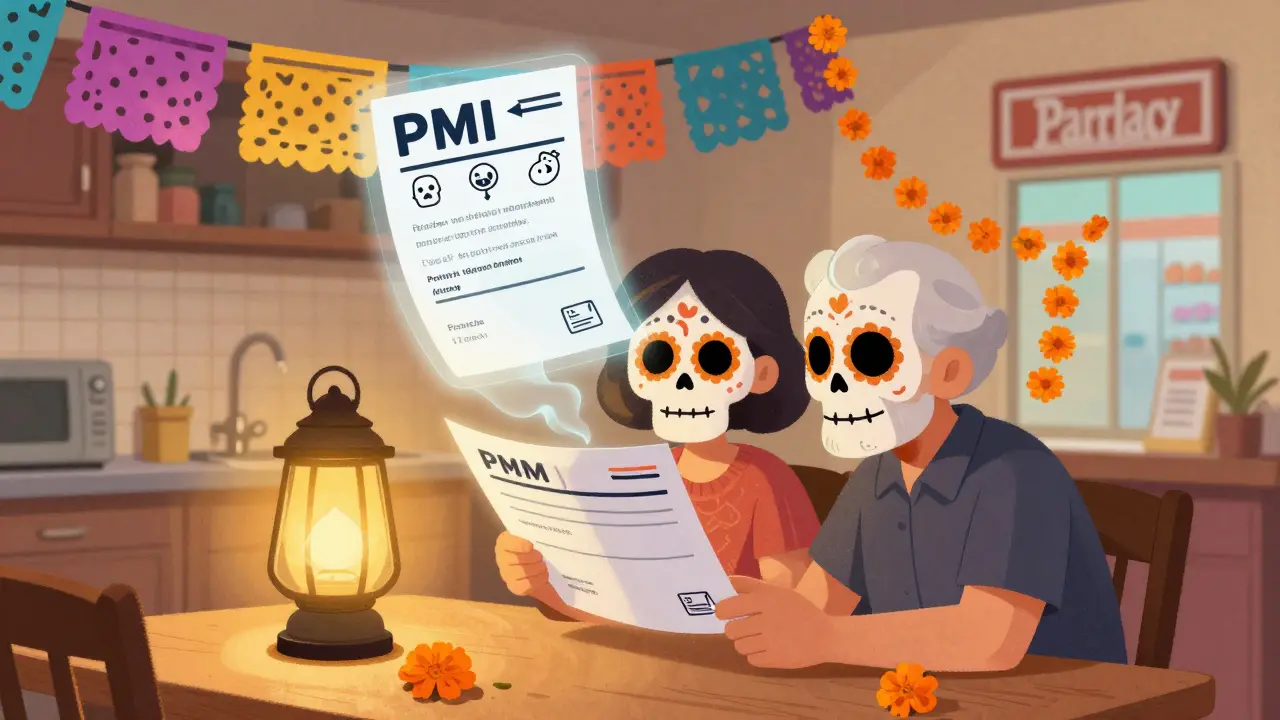
The FDA is finally listening. After years of criticism, they’re rolling out a new standard called Patient Medication Information (PMI). This is a one-page, plain-language document that will come with certain high-risk prescriptions starting in 2026.
PMI will include:
- What the drug is for
- How to take it (in simple steps)
- When not to take it
- Common side effects
- What to do if you miss a dose
It’ll look like a clear, easy-to-read guide-not a legal document. Think of it like the Drug Facts label, but for prescriptions.
Also, more drugs will come with Instructions for Use (IFU)-especially injectables, inhalers, and complex devices. These include diagrams and step-by-step photos to show you exactly how to use them.
And it’s not just the FDA. The United States Pharmacopeia (USP) is pushing for standardized labeling across all pharmacies. Independent pharmacies are already ahead-63% have added patient-friendly enhancements. Chain pharmacies? Only 41% have made changes. But with new FDA rules coming, that gap is closing fast.
What to Do If You Still Don’t Understand Your Label
You don’t have to figure it out alone. Here’s what to do:
- Call your pharmacist - They’re paid to explain this stuff. No judgment. No rush.
- Ask your doctor - If the label says "take with food," but you don’t know what "with food" means, ask. Does it mean during a meal? After? With a snack?
- Use a pill organizer - Pre-filled ones with clear labels help avoid mix-ups.
- Ask for large-print labels - Most pharmacies will print a larger version if you ask.
- Use a medication app - Apps like Medisafe or MyTherapy let you scan your label and set reminders. They also flag potential drug interactions.
If you’re caring for an elderly parent or someone with low health literacy, sit with them while they read their label. Read it out loud. Ask them to repeat the instructions back to you. If they get it wrong, call the pharmacy together.
Final Thought: Your Label Is Your Safety Net
Medication errors cause about 7,000 deaths in the U.S. every year. Most of them are preventable. They happen because people don’t understand what they’re taking. You don’t need a medical degree to read a label. You just need to slow down, ask questions, and never assume.
Next time you get a new prescription, don’t just toss the bottle in the cabinet. Take five minutes. Read the label. Ask one question. That small step could keep you out of the ER-or worse.
What’s the difference between generic and brand-name drugs?
Generic drugs contain the same active ingredient as brand-name drugs and work the same way. The only differences are the inactive ingredients (like fillers or dyes), packaging, and price. Generics are usually much cheaper and are just as safe and effective. The FDA requires them to meet the same quality standards.
Can I cut or crush my pills if they’re hard to swallow?
Only if the label or your pharmacist says it’s okay. Some pills are designed to release medicine slowly (extended-release). Crushing them can cause a dangerous overdose. Others have coatings that protect your stomach or ensure absorption. Always check before altering your medication.
Why does my label say "take with food"? What does that mean?
"Take with food" means eat something before or while taking the medicine. It helps reduce stomach upset or improves absorption. A light snack like toast or crackers is usually enough. Don’t take it on an empty stomach unless instructed otherwise.
What should I do if I think my label is wrong?
Don’t take the medication. Call your pharmacy immediately. Mistakes happen-wrong dose, wrong drug, wrong patient name. Pharmacies have systems to catch these, but they rely on you to speak up. Keep the bottle and the original prescription handy when you call.
Are expired medications dangerous?
Some lose effectiveness over time, especially liquids, insulin, or antibiotics. Others, like nitroglycerin or epinephrine, can become unsafe. The FDA recommends not using expired medications, especially for serious conditions. If you’re unsure, ask your pharmacist. Don’t risk it.
Can I take two different medications if they have the same active ingredient?
Never. Taking two products with the same active ingredient-like acetaminophen in both a painkiller and a cold medicine-can lead to overdose. Always check the "Active Ingredient" section on OTC labels and ask your pharmacist if you’re unsure.
Sarah Mailloux
January 16, 2026 AT 16:05Amy Ehinger
January 17, 2026 AT 02:38Crystel Ann
January 18, 2026 AT 06:43Niki Van den Bossche
January 20, 2026 AT 04:21Jan Hess
January 20, 2026 AT 17:56Iona Jane
January 21, 2026 AT 20:08Jaspreet Kaur Chana
January 23, 2026 AT 08:32Haley Graves
January 24, 2026 AT 10:34ellen adamina
January 25, 2026 AT 10:07Gloria Montero Puertas
January 25, 2026 AT 15:58Tom Doan
January 26, 2026 AT 13:36Sohan Jindal
January 27, 2026 AT 23:14Frank Geurts
January 28, 2026 AT 07:36Mike Berrange
January 29, 2026 AT 03:11Jami Reynolds
January 30, 2026 AT 03:24