Hatch-Waxman Act: How It Changed Generic Drugs and Saved Billions
When you pick up a generic pill at the pharmacy, you’re benefiting from the Hatch-Waxman Act, a 1984 U.S. law that balanced innovation and access by creating a fast-track path for generic drugs to reach the market. Also known as the Drug Price Competition and Patent Term Restoration Act, it’s the reason 90% of prescriptions in America are filled with generics today—saving consumers over $300 billion every year.
This law didn’t just make cheaper drugs possible—it fixed a broken system. Before Hatch-Waxman, brand-name companies could block generics by holding onto patents, even after the original drug’s effectiveness was proven. The Act let generic makers file an ANDA pathway, a streamlined application that proves a generic drug works the same as the brand, without repeating expensive clinical trials. That’s how companies could bring out copies of drugs like Lipitor or Nexium at a fraction of the cost. It also gave brand-name makers a small extension on their patents to make up for time lost during FDA review—so innovation didn’t get punished.
But it wasn’t just about price. The Hatch-Waxman Act created rules that still shape how drugs are tested, approved, and swapped today. It’s the reason you can’t always switch your immunosuppressants, like cyclosporine or tacrolimus, between generic brands without your doctor’s approval—because even tiny differences in how they’re absorbed can be dangerous for transplant patients. It’s why some states have NTI substitution laws, rules that block automatic generic swaps for drugs with a narrow therapeutic index, like warfarin or levothyroxine. And it’s why generic drug recalls happen—because the same manufacturing shortcuts that lower costs can also create risks if not tightly controlled.
Today, the Hatch-Waxman Act is still the backbone of how we get affordable medicines. It’s why you can buy a $4 generic version of a drug that once cost hundreds. But it’s also why debates still rage over patent tricks, biosimilars, and whether the system favors big pharma too much. Whether you’re on a generic statin, a fertility pill, or a migraine treatment, the rules set in 1984 are still working behind the scenes to decide what’s in your bottle—and how much you pay for it.
Below, you’ll find real-world guides on how this law affects your meds—from safe pill splitting to generic recalls, from drug substitutions to bioequivalence studies. These aren’t abstract policies. They’re the reason your prescriptions work the way they do.
FDA Office of Generic Drugs: Role, Responsibilities, and Structure Explained
The FDA Office of Generic Drugs ensures safe, affordable generic medications reach patients by reviewing applications, enforcing standards, and managing timelines under GDUFA and Hatch-Waxman. Learn how it works and why it matters.
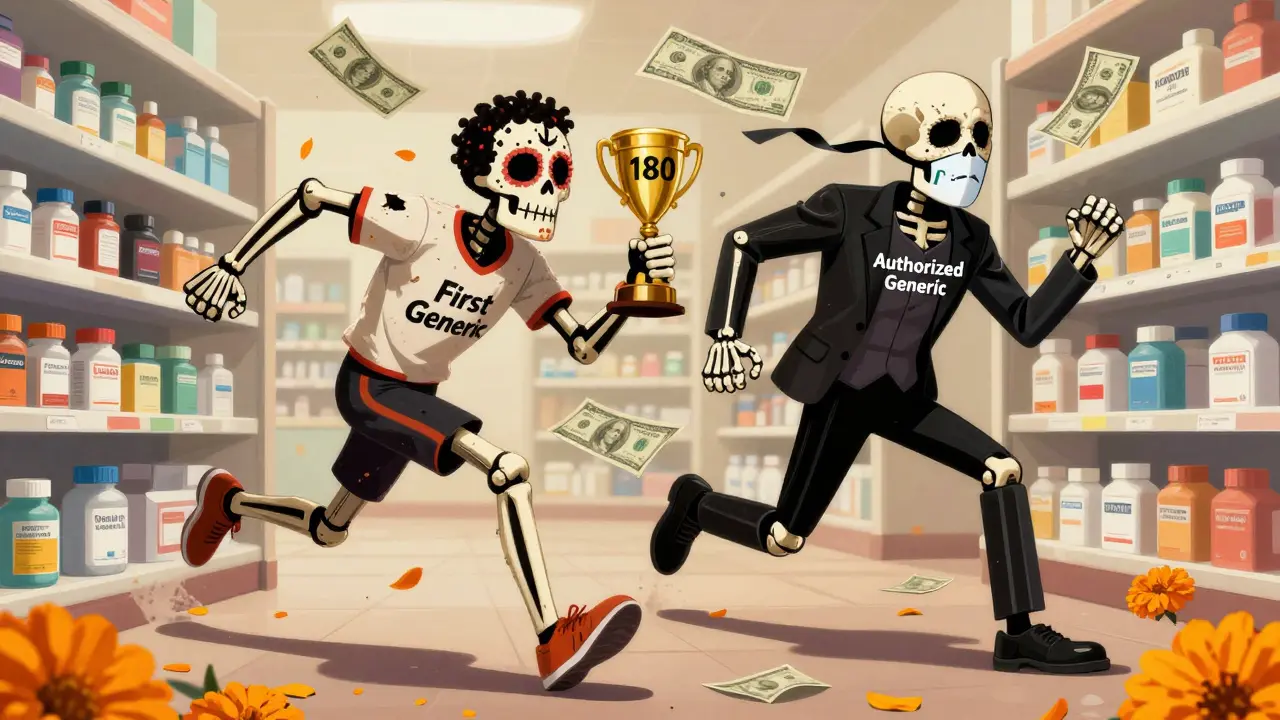
First Generic vs Authorized Generic: How Timing of Market Entry Shapes Drug Prices
First generics are supposed to slash drug prices after patents expire - but authorized generics, launched by brand companies on the same day, steal their market share and keep prices high. Here’s how timing changes everything.
Paragraph IV Certifications: How Generic Drug Companies Challenge Patents Before Market Entry
Paragraph IV certifications let generic drug companies challenge brand-name patents before launch, speeding up affordable drug access. Learn how the Hatch-Waxman Act enables this system-and why it’s saving billions.
Recent Patent Cases and Generic Delays: 2023-2025 Examples
Despite FDA approval, generic drugs in the U.S. face average delays of 3.2 years due to patent litigation, with complex drugs and oncology treatments hit hardest. Learn how patent thickets, the 30-month stay, and supply chain issues block affordable access.