Paragraph IV Certifications: How Generic Drug Companies Challenge Patents Before Market Entry
 Jan, 23 2026
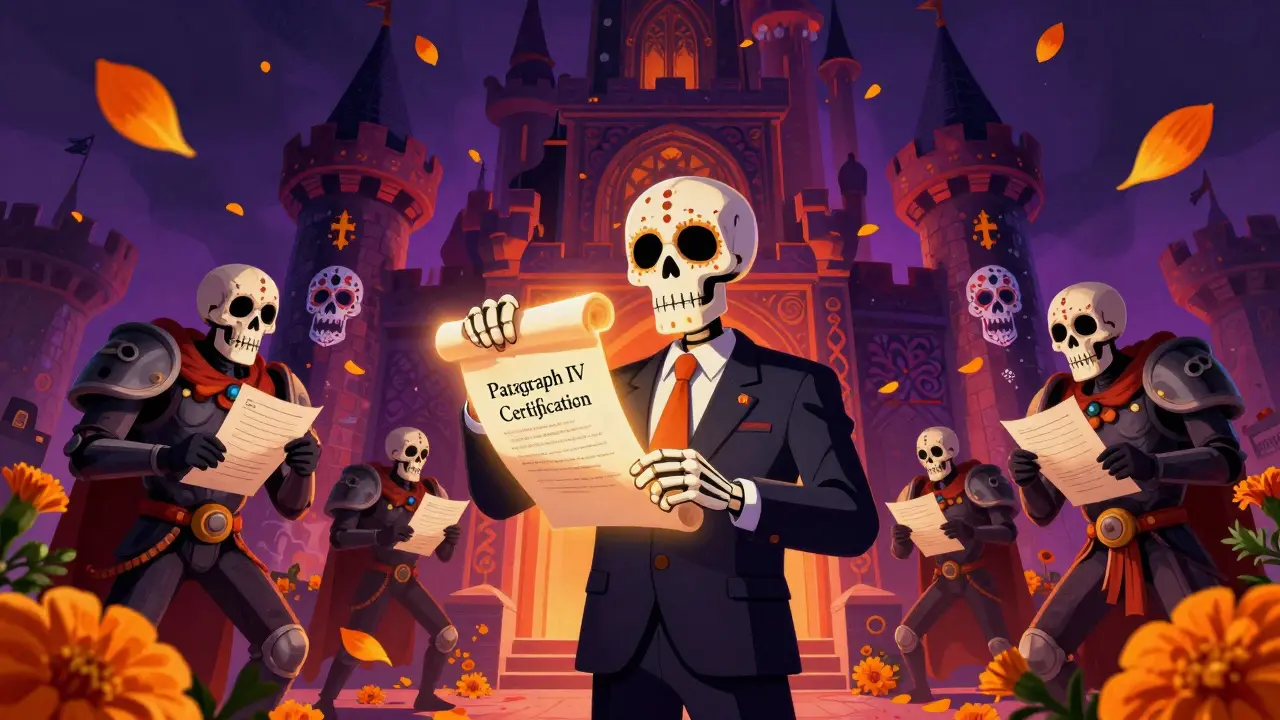
When a brand-name drug hits the market, it comes with a patent that blocks generics for years. But there’s a legal loophole-actually, it’s a carefully designed tool-that lets generic drug makers challenge those patents before they even make the drug. This is called a Paragraph IV certification, and it’s the single biggest reason why generic drugs are so cheap today.
What Is a Paragraph IV Certification?
A Paragraph IV certification is a formal statement filed by a generic drug company when it submits an Abbreviated New Drug Application (ANDA) to the FDA. It says: “One or more of the patents listed for this brand drug are either invalid, not infringed by our product, or unenforceable.” This isn’t just a claim-it’s a legal trigger. Under the Hatch-Waxman Act of 1984, filing this certification is treated as an artificial act of patent infringement. That means the brand-name company can sue before the generic drug is made or sold.
Why does this matter? In almost every other industry, a patent holder waits until someone actually copies their product before taking legal action. In pharma, the generic company has to prove the patent doesn’t stand up-not the other way around. It flips the script. And it’s intentional. The law was built to balance innovation with access. Without this mechanism, generics might wait years to enter the market, and patients would pay inflated prices far longer.
How the Process Works: The 20-45-30 Rule
The system runs on strict deadlines. Here’s how it plays out:
- Day 1: The generic company files its ANDA with the FDA and includes a Paragraph IV certification.
- Within 20 days: The generic must send a detailed notice letter to the brand-name company and the patent holder. This isn’t a formality-it must explain the legal and scientific reasons why the patent doesn’t apply.
- Within 45 days: If the brand company wants to block the generic, it must file a patent infringement lawsuit. If they don’t act in this window, the generic can proceed without legal risk.
- If sued: The FDA puts a 30-month stay on approving the generic. This pause gives the courts time to decide if the patent is valid. But this isn’t always 30 months-delays, appeals, or settlements can stretch it to 36 months or more.
These deadlines aren’t suggestions. Miss one, and the whole process collapses. That’s why generic companies hire teams of patent lawyers, pharmacologists, and regulatory experts just to get this right.
The Big Prize: 180 Days of Market Exclusivity
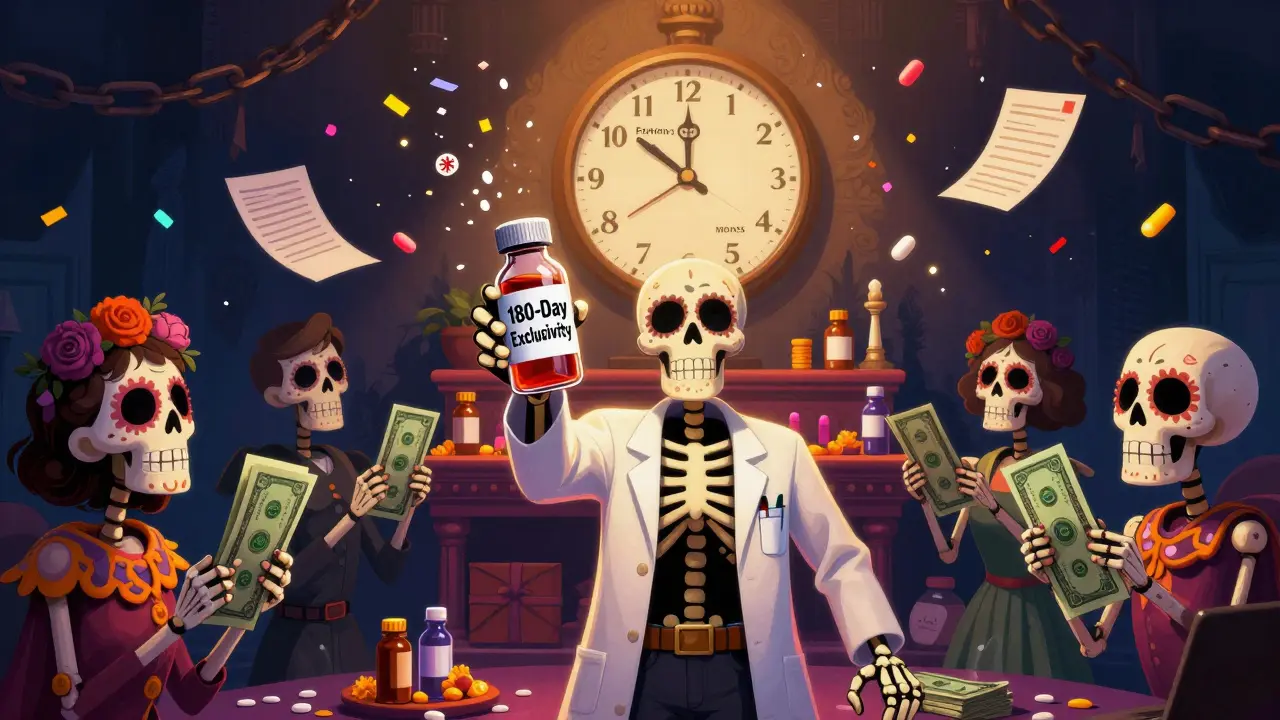
There’s a reason so many generic companies risk millions in legal fees. The first one to successfully file a Paragraph IV certification gets 180 days of exclusive rights to sell the generic version. No competition. No price drops from other generics. Just pure profit.
In 2023, that exclusivity period generated $4.7 billion in extra revenue for the first-filing generic companies. For a blockbuster drug like Humira-which had 28 Paragraph IV challenges in 2024-those 180 days can mean hundreds of millions in revenue. That’s why companies like Teva, Mylan, and Sandoz compete fiercely to be first. But it’s not easy. Only about 58% of Paragraph IV challenges succeed as of 2025, up from 41% in the 2000s, thanks to court rulings that narrowed patent eligibility.
Why Brand Companies Fight So Hard
Brand-name drugmakers don’t sit back. They’ve learned to game the system. Since 2005, the average number of patents listed for a single drug in the FDA’s Orange Book has jumped from 7.2 to 17.3. This is called “patent thickets”-layering patents on everything from the chemical structure to the pill coating to the way it’s taken. Each patent must be challenged separately. One lawsuit might fail, but the next one could delay the generic for another year.
Some brands also use “product hopping”-slightly reformulating the drug right before a generic is set to launch, then getting a new patent on the reformulated version. In 2024, 31% of Paragraph IV targets were affected by this tactic. It’s not illegal, but it’s designed to delay competition.
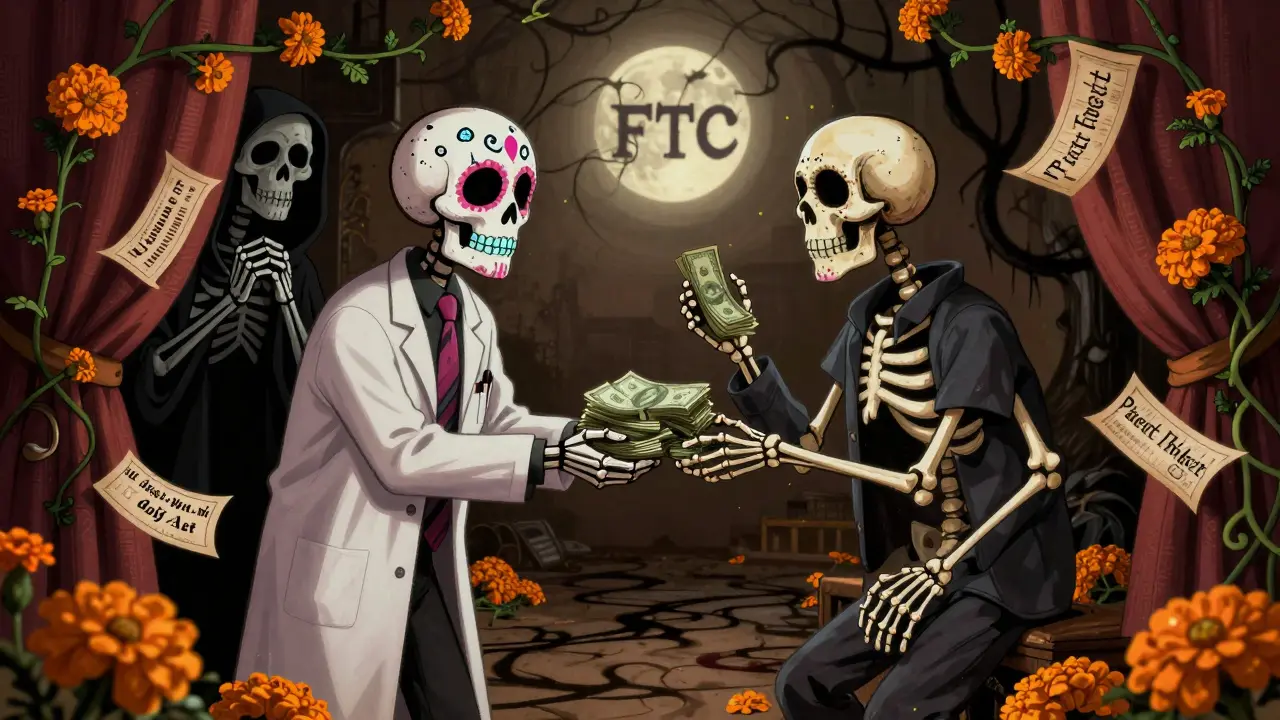
And then there’s “pay-for-delay.” In 68% of Paragraph IV cases, the brand and generic companies settle before trial. But many of those settlements include deals where the generic agrees to delay its launch for months or years in exchange for cash payments. The FTC has sued 17 such deals since 2023, calling them anti-competitive. One settlement averaged $187 million paid from brand to generic-money that could’ve gone to patients in lower drug prices.
Carve-Outs and Skinny Labels: The Sneaky Workaround
Not every patent covers the whole drug. Sometimes, a patent only protects one use-say, treating migraines-but the drug is also approved for treating high blood pressure. A generic company can file a “Section viii carve-out,” meaning they ask for approval only for the non-patented use. They sell the same pill, but the label says “for high blood pressure only.”
This trick is used in 37% of Paragraph IV filings. It lets generics enter the market faster without triggering a lawsuit. The brand can’t stop them because they’re not infringing on the patent-they’re just not marketing the patented use. It’s legal, smart, and increasingly common.
The Cost of Playing the Game
Challenging a patent isn’t cheap. Generic companies spend an average of $12.3 million per Paragraph IV challenge. Legal fees, expert witnesses, patent analysts, software tools-all add up. Many firms spend $150,000 to $500,000 a year just on patent litigation software to track Orange Book patents across hundreds of drugs.
And if the case drags on? A 30-month stay can stretch to 36 months or more. During that time, the generic company is stuck. They’ve spent millions, but can’t sell. That’s $8.7 million in holding costs per delayed product, according to a 2024 survey. Some companies gamble on “at-risk” launches-starting to sell before the court decides. In 2024, 22% of challengers did this. If they win, they make $83 million in pre-launch revenue. If they lose? They owe up to $217 million in damages.
Who’s Winning? Who’s Losing?
The numbers tell the story:
- 43% of the $128.7 billion U.S. generic market in 2024 came from Paragraph IV-challenged drugs.
- Since 1984, these challenges have saved U.S. consumers $2.2 trillion.
- In 2024, 1,247 Paragraph IV certifications were filed-up from just 187 in 2003.
- Tea, Mylan, Sandoz, and Hikma filed the most challenges last year.
- AbbVie (Humira), Eli Lilly (Trulicity), and Pfizer (Eliquis) faced the most challenges.
Patients win because prices drop. Taxpayers win because Medicare and Medicaid pay less. Insurance companies win. But the brand companies? They lose market share-and sometimes, they lose billions in revenue. That’s why they fight so hard.
What’s Next?
The FDA is pushing back. In October 2022, new rules required generic companies to be more precise when amending their Paragraph IV certifications after a court ruling. And in 2026, the FDA plans to require brand companies to justify every patent they list in the Orange Book. Analysts predict this could cut patent thickets by 30-40%.
The FTC is also stepping up. They’re targeting pay-for-delay deals harder than ever. If they succeed, generics could enter the market 4-6 months sooner on average.
For now, Paragraph IV certifications remain the most powerful tool generic drug makers have to bring down prices. It’s complex. It’s expensive. It’s risky. But for patients waiting for affordable meds, it’s worth it.
Marie-Pier D.
January 24, 2026 AT 01:19Alexandra Enns
January 25, 2026 AT 01:18Josh McEvoy
January 25, 2026 AT 04:16Heather McCubbin
January 26, 2026 AT 06:25Sawyer Vitela
January 28, 2026 AT 01:23Shanta Blank
January 28, 2026 AT 01:57Tiffany Wagner
January 28, 2026 AT 11:16Chloe Hadland
January 29, 2026 AT 22:02