Recent Patent Cases and Generic Delays: 2023-2025 Examples
 Dec, 5 2025
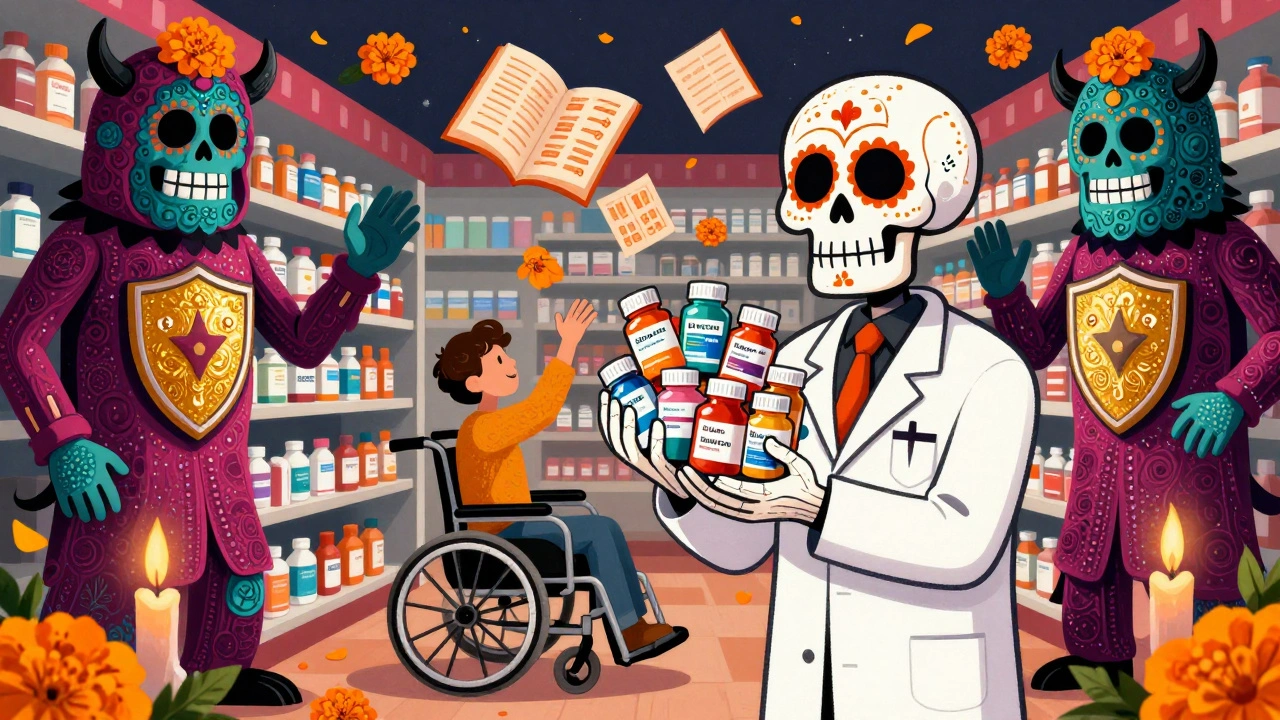
By 2025, thousands of patients in the U.S. were still paying full price for brand-name drugs-even though the FDA had already approved cheaper generic versions. The reason? Patent litigation was holding up launches longer than ever before. It wasn’t a glitch. It wasn’t bad luck. It was a system designed to delay competition, even when the patents were weak or expired.
Why Approved Doesn’t Mean Available
The FDA approved 63 first generics in 2025. That sounds like progress. But here’s the catch: the average time between FDA approval and actual market availability was 3.2 years. That’s not a typo. It’s not a delay. It’s a freeze. Patients with diabetes, heart disease, or cancer were stuck with $487 monthly bills for brand drugs when generics should’ve cost $85. Pharmacists were getting the same question over and over: “Why is the generic approved but not in stock?” The answer lies in the Hatch-Waxman Act’s 30-month stay. When a generic company files an ANDA with a Paragraph IV certification-meaning they say a patent is invalid or won’t be infringed-the brand-name company can sue. That lawsuit triggers a 30-month clock. The FDA can’t give final approval until that clock runs out, even if the court rules in favor of the generic. In 2024, 68% of all generic applications included this kind of patent challenge. In 2025, the average drug had 14.7 patents listed in the Orange Book. That’s up from 12.3 in 2020. More patents. More lawsuits. More delays.The Humira Effect: How One Drug Changed the Game
AbbVie’s Humira didn’t just dominate the market-it rewrote the rules. The basic patent expired in 2016. But AbbVie filed over 240 patents around it, creating a legal thicket so thick that no generic could enter until 2023. Even then, it took years of court battles. This became the playbook. Companies started stacking patents like bricks: method-of-use, formulation, manufacturing process, packaging. Each one could trigger a new 30-month stay. Dr. Aaron Kesselheim of Harvard called it “extending monopolies beyond the 20-year term by an average of 3.7 years per drug.” The result? Oncology drugs faced the longest delays-4.1 years on average. Cardiovascular generics took 2.8 years. Simple oral pills? Still 2.3 years. Meanwhile, in Europe, where patent laws don’t allow the same kind of litigation stacking, generics hit the market in just 1.7 years after approval.Complex Generics Get Hit Hardest
It’s not just about pills. Injectables, inhalers, and complex formulations face even tougher hurdles. In 2025, 89% of delayed complex generics were blocked by patent litigation. Compare that to 63% of simple oral solids. Why? Because complex generics require more testing, more manufacturing precision, and more patent scrutiny. But the real problem? Supply chains. Thirty-seven percent of delayed generic launches between 2023 and 2025 were tied to shortages of active pharmaceutical ingredients (APIs). Many of these came from India and China. When geopolitical tensions or factory inspections disrupted supply, even approved generics couldn’t be made. Fourteen of the 15 oncology drugs with shortages during that period were injectables. Hospitals were forced to ration. Patients missed treatments. And the FDA? They could approve the drug-but couldn’t fix the factory.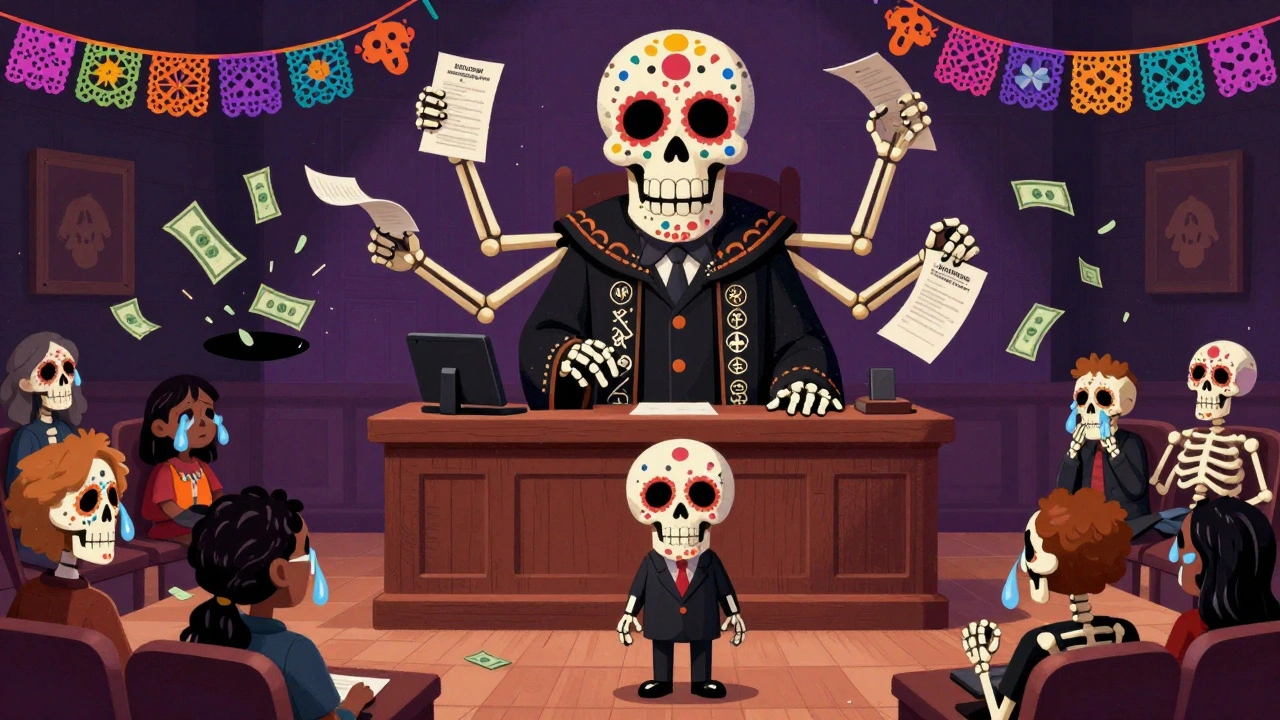
Who Pays the Price?
The financial toll is staggering. The top 10 drugs losing exclusivity in 2025 represented $78.3 billion in annual brand sales. Stelara, Dupixent, Prolia-each one could’ve saved Medicare Part D hundreds of millions if generics had launched on time. The Congressional Budget Office estimated patent delays cost Medicare $3.2 billion in 2025 alone. Small generic companies got crushed. Sixty-three percent of delayed generics came from manufacturers with less than $500 million in annual revenue. Legal fees averaged $12.7 million per case in 2025-up from $9.3 million in 2023. Most couldn’t afford to fight. Bigger players like Teva and Sandoz could. They diversified their API suppliers from 1.8 on average in 2022 to 3.4 by 2025. They hired teams of patent lawyers. They filed citizen petitions to challenge improper listings. But even then, the FDA took 18.2 months on average to respond.The FDA’s Hands Are Tied
The FDA can approve a drug. They can inspect a factory. They can fast-track reviews with AI tools that cut review times by 22% for non-litigated cases. But they can’t touch patent law. Dr. Patrizia Cavazzoni, director of the FDA’s drug center, admitted in May 2025: “Patent litigation remains outside our regulatory authority.” That’s why the agency started pushing for transparency. They began cleaning up the Orange Book, removing patents that didn’t clearly relate to the drug’s use. They also launched the National Priority Voucher program to speed up reviews-but again, it didn’t help when a lawsuit was active. The 30-month stay remained the iron gate. In 2025, the FTC filed seven enforcement actions against companies using “patent thicketing” to block competition. One case against Jazz Pharmaceuticals over Xyrem led to a settlement forcing earlier generic entry. But these are rare exceptions. Most cases drag on for years.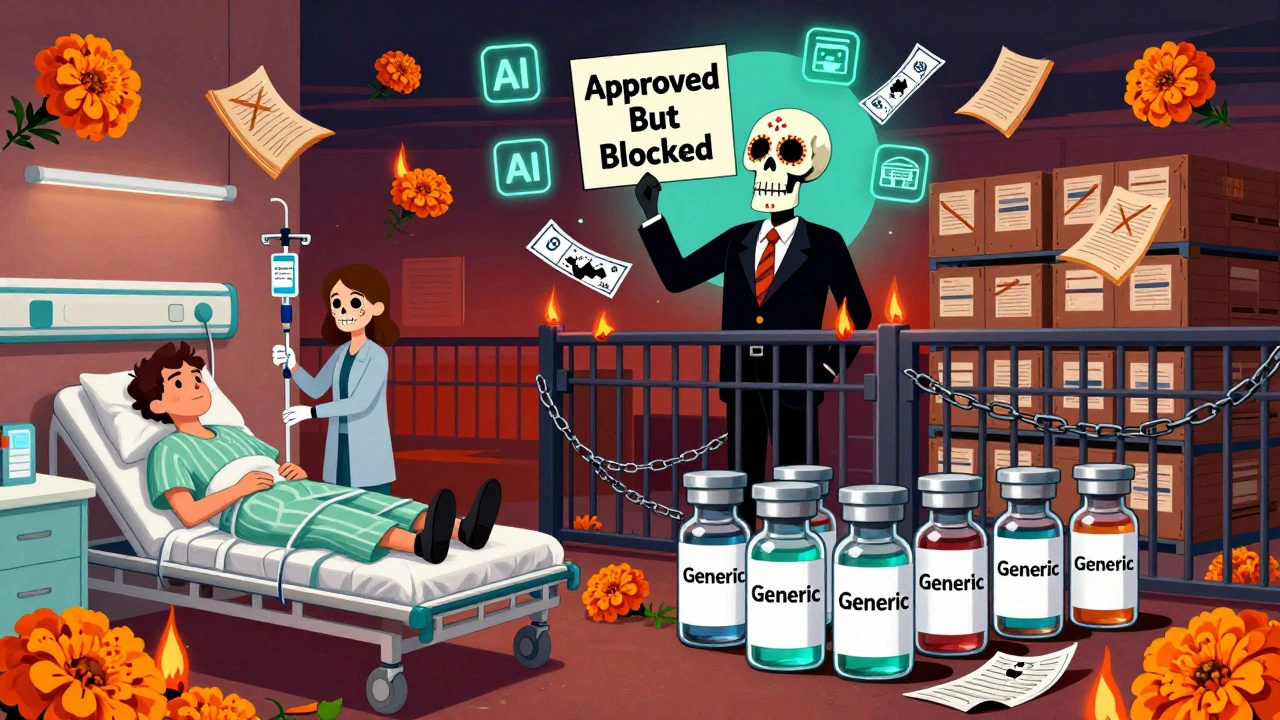
What’s Changing in 2025-2026?
There are signs of pressure. The CREATES Act, designed to let generics get samples of brand drugs for testing, stalled in Congress. But companies are adapting. Generic manufacturers now start patent research 48 to 60 months before expiration. They’re building legal teams before they even file an ANDA. The rise of biosimilars is also shifting the landscape. Seventeen biosimilars were approved by Q3 2025, including ones targeting Humira. But each one now faces an average of 9.7 patents challenged-up from 5.2 in 2020. The same tactics are being copied. And then there’s the public outcry. Patients For Affordable Drugs Now documented 412 cases where people skipped doses because generics weren’t available. Pharmacists reported patients crying in line, asking why their insulin still cost $300 when the FDA said a generic was approved two years ago.What Can You Do?
If you’re a patient: Ask your pharmacist if a generic is approved but not available. If they say yes, ask why. Request a list of the brand-name drug’s patents from the FDA’s Orange Book. You might be surprised how many are weak or expired. If you’re a prescriber: Know the difference between FDA approval and market availability. When a patient can’t get a generic, it’s not because there isn’t one. It’s because the system is broken. If you’re in the industry: Diversify your supply chain. Build legal readiness early. Track patent expirations like a clock. The window to enter is shrinking.Is There Hope?
Yes. But it’s slow. The new FDA Commissioner, Dr. Peter Bach, has signaled he’ll push for faster Orange Book updates and stricter rules on patent listings. If implemented, this could cut generic delays by 8 to 12 months by 2027. But it won’t fix the core problem: the law lets companies use patents as shields, not just protections. The system was meant to balance innovation and access. Today, it’s tilted hard toward delay. Until Congress rewrites the rules-or the courts start striking down patent thickets-patients will keep paying more, waiting longer, and wondering why the system that’s supposed to help them is working against them.Why are generic drugs approved by the FDA but not available in pharmacies?
Even after FDA approval, generic drugs can be blocked from market entry by patent litigation from brand-name manufacturers. When a generic company challenges a patent with a Paragraph IV certification, the brand company can sue, triggering a 30-month legal stay that prevents the FDA from granting final approval-even if the patent is weak or expired. This delay can last years, despite the drug being approved.
What is the 30-month stay in patent law?
The 30-month stay is a provision under the Hatch-Waxman Act that automatically delays FDA approval of a generic drug for 30 months after a brand-name company files a patent infringement lawsuit against the generic applicant. This period begins when the generic company submits a Paragraph IV certification. The stay ends only if the court rules in favor of the generic, the patent expires, or the 30 months pass-regardless of whether the patent is valid.
Which drugs are most affected by patent delays?
Oncology drugs face the longest delays-averaging 4.1 years between FDA approval and market launch. Complex generics like injectables and inhalers are also heavily impacted, with 89% of delays tied to patent litigation. High-revenue drugs like Eliquis, Trulicity, Steglatro, and Xarelto have been repeatedly delayed despite approval, often due to multiple patent filings by brand companies.
How do patent thickets delay generic entry?
Patent thickets involve filing dozens of overlapping patents on minor changes-like dosage forms, delivery methods, or manufacturing processes-to create legal barriers. Each patent can trigger a new 30-month stay. For example, Humira had over 240 patents filed around it, extending its market exclusivity nearly a decade past its original patent expiry. This strategy makes it too costly and risky for generic companies to enter, even if the core patent has expired.
Are biosimilars facing the same delays as generics?
Yes, and even more so. Biosimilars face more complex patent landscapes because they’re biologic drugs, not chemical compounds. The average number of patents challenged per biosimilar application rose from 5.2 in 2020 to 9.7 in 2025. Companies like AbbVie use the same thickening tactics with biosimilars as they did with Humira, leading to extended exclusivity periods. While 17 biosimilars were approved by Q3 2025, many still face multi-year litigation delays before reaching patients.
What role does the FDA play in patent delays?
The FDA approves drugs based on safety and efficacy but has no authority over patent disputes. It can’t force a patent to be invalidated or shorten the 30-month stay. However, the FDA has started cleaning up the Orange Book by removing improperly listed patents and improving transparency. It also uses AI to speed up reviews for non-litigated applications, but these tools don’t affect cases blocked by lawsuits.
How do supply chain issues contribute to generic delays?
While patent litigation is the main cause of delay (72% of cases), supply chain problems are a growing secondary factor. In 37% of delayed generic launches between 2023 and 2025, shortages of active pharmaceutical ingredients (APIs) were cited. This is especially common for injectables and complex formulations, where API sourcing is limited to a few global suppliers. When geopolitical tensions or factory inspections disrupt supply, even approved generics can’t be manufactured.
What’s being done to fix patent-related delays?
The FTC has filed enforcement actions against companies using patent thickets, like the 2025 settlement with Jazz Pharmaceuticals over Xyrem. The FDA is improving Orange Book transparency and pushing for faster removal of weak patents. Congress considered the CREATES Act to help generics access drug samples for testing, but it stalled. Industry experts and patient groups are pushing to cap the number of patents that can be listed per drug and shorten the 30-month stay. Real change will require legislative action.
Jackie Petersen
December 7, 2025 AT 01:08They’re lying to us. The FDA doesn’t care. Big Pharma owns Congress. You think this is about patents? Nah. It’s about control. They want you dependent. They want you paying $500 for insulin while CEOs fly to the Bahamas. Wake up. This isn’t a glitch-it’s the plan.
And don’t even get me started on India and China supplying the APIs. You think they’re not playing us? Every pill you take is a hostage situation.
They’re not fixing it. They’re profiting from it.
Annie Gardiner
December 7, 2025 AT 23:51Isn’t it funny how we call it ‘patent protection’ when it’s really just legal extortion? Like, if you invent a hammer, you get 20 years. But if you invent a hammer and then patent the color of the handle, the angle of the grip, the way it’s packaged, and the sound it makes when you swing it… that’s not innovation. That’s theater.
We’ve turned medicine into a hostage negotiation where the hostage is your diabetic uncle.
And somehow we still call this capitalism?
Kumar Shubhranshu
December 8, 2025 AT 05:36India makes 70% of global generics. China makes 40% of APIs. US spends $1.2T on healthcare. Guess who pays the difference?
Simple math.
Patents are just the excuse.
Supply chain is the real bottleneck.
Stop blaming lawyers. Blame your own government for outsourcing everything.
Myles White
December 8, 2025 AT 20:45I’ve been following this for years and honestly, it’s worse than most people realize. The 30-month stay was never meant to be a permanent wall-it was supposed to be a buffer while courts sorted out legitimate disputes. But now, companies file 20 patents on a single drug just to reset the clock over and over. It’s like playing chess with a rule that lets you move the same piece 14 times in a row.
And the worst part? The FDA’s hands are tied not because they’re lazy, but because the law literally forbids them from acting. They can approve a drug in 6 months, but if there’s one patent on the list that’s questionable, they have to wait 30 months-even if a judge says it’s invalid. That’s not regulation. That’s legal paralysis.
Meanwhile, patients are skipping doses, rationing pills, or just giving up. And the people who suffer the most? The ones who can’t afford to be patients. They’re not just paying more-they’re dying slower.
And the solution isn’t just ‘fix the law.’ It’s rebuilding trust in the system. Right now, people don’t believe the FDA even wants to help them. And honestly? After 20 years of this, I can’t blame them.
Brooke Evers
December 10, 2025 AT 08:06I work in a pharmacy and I see this every single day. A woman came in yesterday crying because her insulin was still $300 even though the FDA approved a generic two years ago. She said, ‘I’ve been taking this since I was 12. I’m 42 now. I’ve paid for this drug my whole adult life. Why can’t I just get the cheaper version?’
I didn’t know what to say. I wanted to scream. I wanted to cry with her.
This isn’t about patents or lawsuits. It’s about dignity. It’s about being able to breathe without being terrified of your next bill.
If you’re reading this and you’ve ever had to choose between meds and groceries-you’re not alone. And we need to stop pretending this is just a ‘system issue.’ It’s a moral failure.
Chris Park
December 10, 2025 AT 20:11China controls the supply chain. India controls the generics. US controls the patents. This is a tripartite collusion.
Big Pharma bribes Congress to keep the 30-month stay.
China withholds APIs to drive up prices.
India produces generics but can’t ship them because of US customs delays.
This is not incompetence. This is engineered scarcity.
And the FDA? They’re the janitors cleaning up the mess while the architects laugh in their penthouses.
Saketh Sai Rachapudi
December 11, 2025 AT 15:54US is weak. We let foreigners make our medicine. We let lawyers steal our health. We let corporations own our lives. Why dont we make our own APIs? Why dont we ban foreign supply chains? Why dont we just nationalize pharma? This is not a debate. This is treason.
India? China? They are not our friends. They are our enemies with factories.
Time to stop begging for pills and start making them ourselves. Or die poor.
joanne humphreys
December 11, 2025 AT 20:56I’ve been reading this thread and I just want to say-thank you. Not everyone sees how deeply this affects real lives. I have a friend with rheumatoid arthritis who waited 3 years for a generic version of her drug. She lost her job because she couldn’t keep up with the pain. She had to move back in with her parents. She didn’t cry about it. She just said, ‘I guess my body doesn’t matter as much as their profits.’
I don’t know how to fix this. But I know we can’t look away anymore. If you’re reading this and you’ve ever had to choose between rent and your meds-please know you’re not broken. The system is.
Nigel ntini
December 13, 2025 AT 07:11There’s hope, but it’s not in the courts or Congress-it’s in the people. I’ve seen pharmacies start ‘Generic Availability Lists’-handwritten signs next to the counter showing which approved generics are still blocked. Patients started asking for those lists. Pharmacists started sharing them online. Now there’s a crowdsourced map.
It’s not perfect. But it’s real. It’s human. And it’s spreading.
Maybe the fix isn’t a law. Maybe it’s just us refusing to stay silent.
One question at a time. One pharmacist at a time. One patient at a time.