First Generic vs Authorized Generic: How Timing of Market Entry Shapes Drug Prices
 Feb, 1 2026
When a brand-name drug loses patent protection, you’d think the first company to make a cheaper version would get a big head start. That’s the whole point of the first generic - it’s supposed to be the pioneer, the one that breaks the brand’s monopoly and drops prices fast. But in reality, that head start often gets stolen before it even begins. Enter the authorized generic, a sneaky move by brand-name drug companies that flips the script on generic competition.
What’s the Difference Between a First Generic and an Authorized Generic?
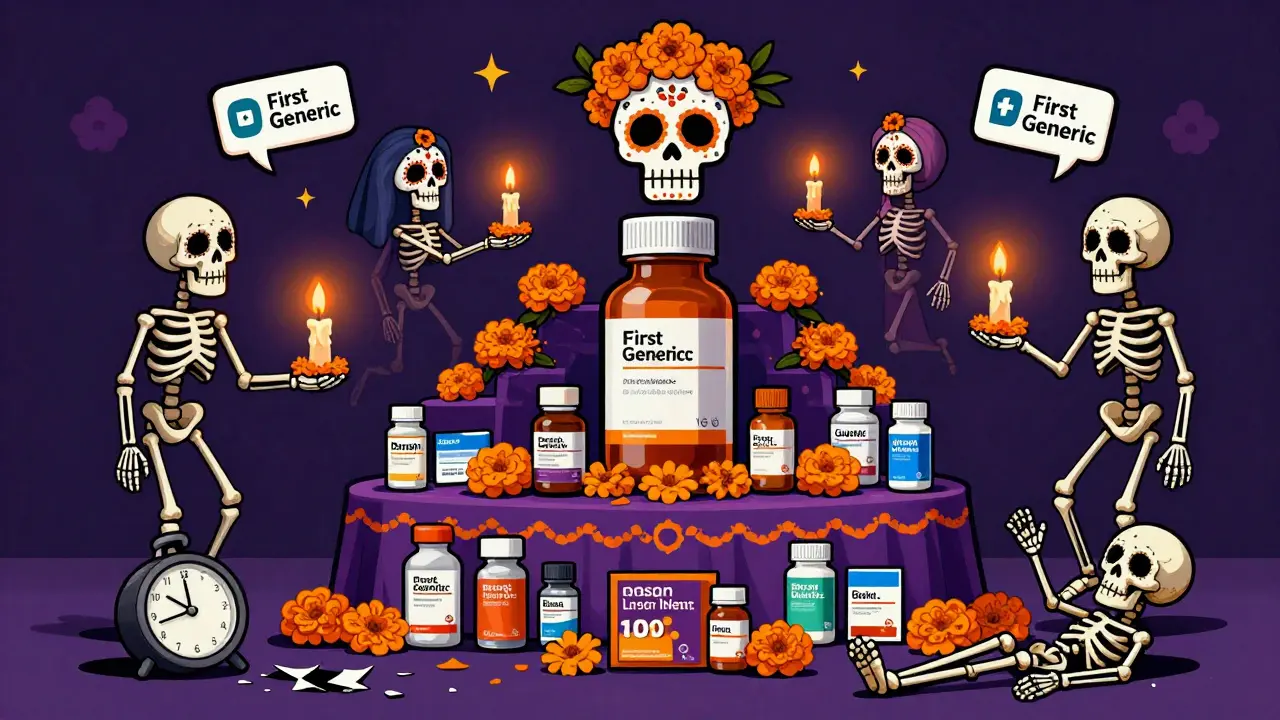
A first generic is the first company to file an Abbreviated New Drug Application (ANDA) with the FDA and successfully challenge a brand-name drug’s patent. If they win, they get 180 days of exclusive rights to sell the generic version. During that time, no other generic can enter the market. That’s a huge deal. For a blockbuster drug like Lyrica or Lipitor, that exclusivity window can mean hundreds of millions in revenue.
An authorized generic is different. It’s made by the same company that makes the brand-name drug - or licensed to a partner - and sold under a generic label. It’s identical in every way: same factory, same ingredients, same packaging. But it doesn’t need an ANDA. It rides on the brand’s original New Drug Application (NDA). That means it can hit the market anytime the brand decides - even the same day the first generic launches.
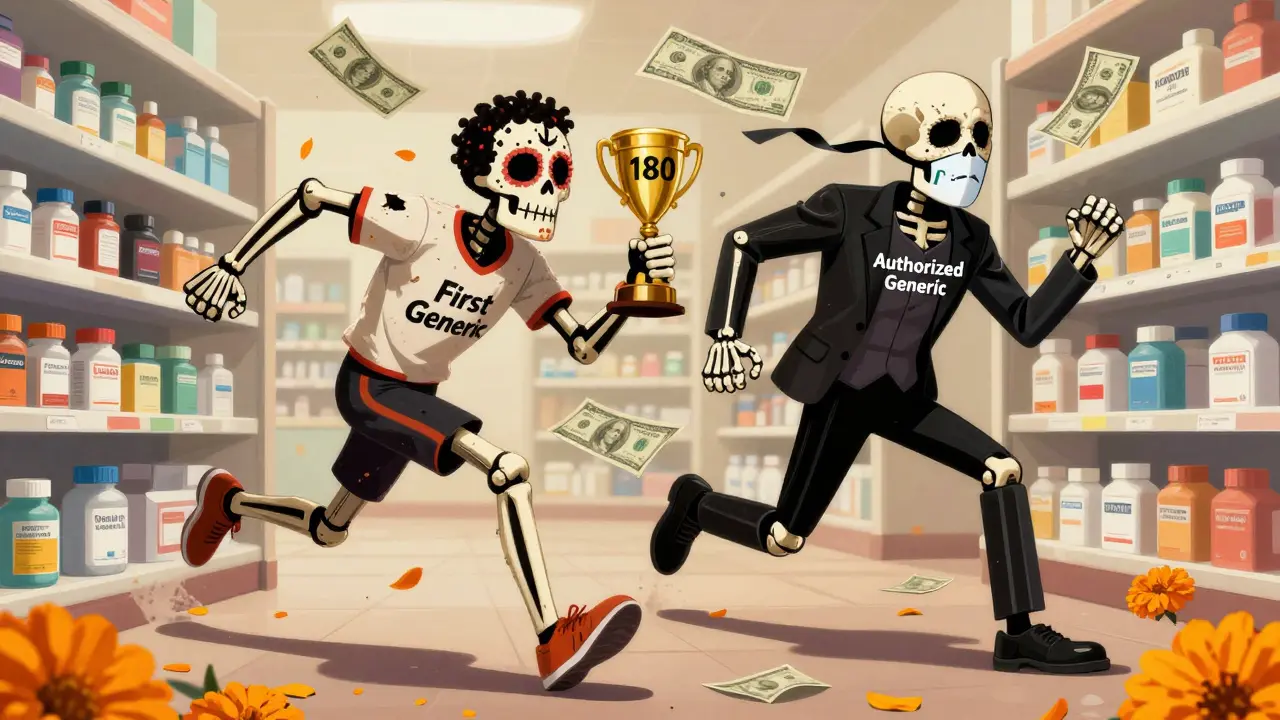
Think of it like this: the first generic is the underdog who finally breaks into the race. The authorized generic is the favorite slipping into the same race wearing a different jersey - and suddenly, there are two of them.
Why Timing Matters More Than You Think
The real battle isn’t about who makes the generic first. It’s about who gets to the pharmacy shelf first - and how many copies show up at the same time.
Research from Health Affairs shows that 73% of authorized generics launch within 90 days of the first generic’s approval. Over 40% launch on the exact same day. That’s not coincidence. That’s strategy.
Take Pfizer and Teva’s battle over Lyrica (pregabalin) in 2019. Teva spent years preparing, litigating patents, and investing millions to be the first to market. When they finally launched, Pfizer dropped its own authorized generic - made in the same plant, identical formula - within hours. Within weeks, Pfizer’s version captured 30% of the market. Teva’s 180-day monopoly? Gone. Revenue dropped by more than half.
This isn’t rare. It’s standard. For drugs like Eliquis, Jardiance, and Neurontin, the brand companies have turned authorized generics into weapons. They don’t wait for the first generic to gain traction. They strike immediately, splitting the market before the first entrant can build momentum.
How This Changes Prices - and Your Pocketbook
Generic drugs usually cut prices by 80-90%. That’s the promise. But when an authorized generic enters during the first generic’s exclusivity period, the price drop shrinks to just 65-75%.
Why? Because now there are two generic options - both priced close to the brand. The brand company doesn’t need to slash prices to compete; it just lets its own generic do the work. The first generic can’t undercut both. So prices stay higher than they should.
The RAND Corporation estimates this tactic costs the U.S. healthcare system billions each year. Patients pay more. Insurers pay more. Medicare pays more. And the whole point of the Hatch-Waxman Act - to speed up affordable access - gets undermined.
Who Benefits? Who Gets Left Behind?
Brand-name companies win. They keep control of the market, even after their patent expires. They use their own manufacturing and distribution networks to flood the market with their generic version - no regulatory delays, no legal risks.
First generic manufacturers lose. They invest years and millions into patent challenges, only to have their reward stolen. Mid-sized generic firms report that the profitable window for first generics has shrunk to 45-60 days in many categories. Some have stopped challenging patents altogether.
Patients? They get more generic choices - but not lower prices. The system looks like competition, but it’s really a controlled release of cheaper drugs that still leave the brand’s profits intact.
The Regulatory Blind Spot
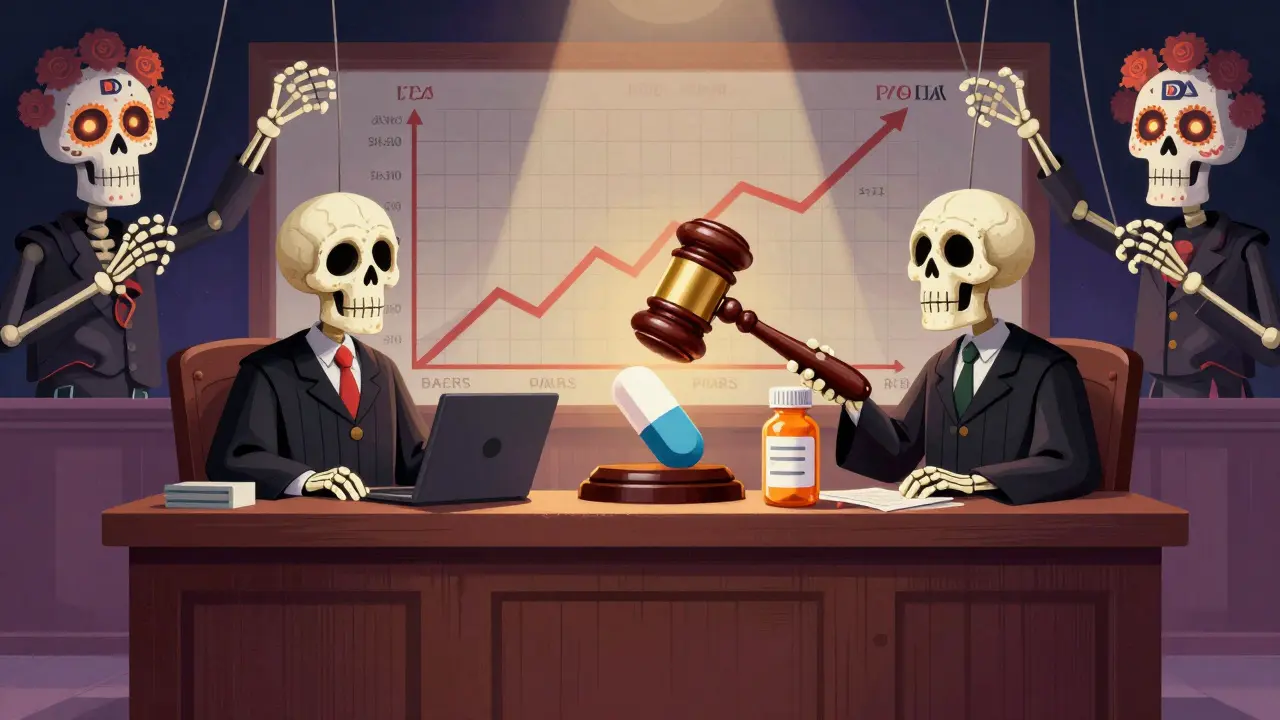
The FDA approves over 80 first generics a year now - more than ever. But their approval process is slow. The average ANDA review takes 10 months. Sometimes it’s three years. Meanwhile, authorized generics can launch in days.
The Inflation Reduction Act of 2022 tried to fix this. It explicitly said authorized generics don’t count as “generic competitors” when Medicare negotiates drug prices. That’s a rare moment of clarity from Congress: they know authorized generics aren’t the same as real competition.
But enforcement? Still weak. The FTC has gone after “pay-for-delay” deals where brand companies pay generics to delay entry. But when the brand company just launches its own generic? No one steps in. It’s legal. It’s profitable. And it’s everywhere.
What’s Next for Generic Drug Entry?
By 2027, authorized generics could make up 25-30% of all generic prescriptions - up from 18% in 2022. That’s not growth. That’s a takeover.
Leading generic manufacturers are adapting. Some are building dual strategies: they still go after first-generic status, but they also partner with brand companies to become authorized generic suppliers. Others are shifting focus to complex generics - injectables, inhalers, patches - where the barriers to entry are higher and authorized generics are harder to launch.
But for most small and mid-sized players, the game is rigged. The incentives built into Hatch-Waxman were meant to reward risk-takers. Now, the biggest risk-takers get outmaneuvered by the very companies they’re trying to beat.
What This Means for You
If you’re on a generic drug, you might think you’re getting the cheapest option. But if that drug was once a brand-name product, there’s a good chance your pharmacy is stocking an authorized generic - and you’re paying more than you should.
Ask your pharmacist: Is this the first generic? Or is it the brand’s version under a different label? If it’s an authorized generic, ask if the true first generic is available. Sometimes it’s in stock - just not on the shelf.
And if you’re paying out of pocket? Compare prices. Authorized generics often cost the same as the brand. The real savings come from the first generic - if it hasn’t been pushed out yet.
The system was designed to save you money. But timing - and corporate strategy - have rewritten the rules. The first generic should be your friend. Right now, it’s fighting an uphill battle.
What is the difference between a first generic and an authorized generic?
A first generic is the first company to get FDA approval to sell a generic version of a brand-name drug after successfully challenging its patent. It gets 180 days of market exclusivity. An authorized generic is made by the brand-name company (or a licensed partner) and sold under a generic label. It doesn’t need FDA approval as a new drug - it uses the brand’s existing approval - and can launch at any time, even the same day as the first generic.
Why do authorized generics hurt first generic companies?
Authorized generics split the market right when the first generic is supposed to have a monopoly. Instead of capturing 70-90% of the market, the first generic might end up with only 45-60%. That slashes their revenue, making their years of legal and regulatory investment unprofitable. Brand companies use this to keep prices higher than they’d be with true competition.
Do authorized generics lower drug prices?
They do lower prices compared to the brand-name version, but not as much as true generic competition. When an authorized generic enters during the first generic’s exclusivity period, prices drop by only 65-75% instead of the usual 80-90%. That means patients and insurers pay more than they should.
How can I tell if my generic drug is an authorized generic?
Check the label. Authorized generics often list the brand-name company as the manufacturer - even if the label says “generic.” You can also ask your pharmacist. If the drug was recently launched and the brand company is listed as the maker, it’s likely an authorized generic.
Is there a way to get the first generic instead of the authorized one?
Yes. Ask your pharmacist to order the first generic if it’s available. Sometimes pharmacies automatically stock the authorized version because it’s cheaper for them to carry. But the first generic may be just as cheap - or even cheaper - and offers better savings for the system overall.
Becky M.
February 2, 2026 AT 10:43so i just found out my blood pressure med is an authorized generic?? like wtf?? i thought i was saving money 😐
jay patel
February 4, 2026 AT 01:54man, this is such a classic case of corporate magic trick - they make you think competition is happening, but really it’s just the same guy wearing a different hat. in india, we don’t have this mess because pharma regulations are actually enforced, but here? the system’s rigged from the start. and don’t get me started on how the FDA just yawns while big pharma plays 4d chess with our prescriptions.
Ansley Mayson
February 4, 2026 AT 22:00first generic gets 180 days? lol. brand companies just slap their own version on the shelf same day. problem solved. capitalism works.
Hannah Gliane
February 6, 2026 AT 15:54so let me get this straight... the company that made the drug for $200 a pill now sells the exact same pill for $15 and calls it 'generic'? 🤡 and we're supposed to be impressed? the only thing being 'generic' here is your brain if you think this is fair. #PharmaScam
Murarikar Satishwar
February 7, 2026 AT 04:34This is a critical issue that affects millions of patients globally. The Hatch-Waxman Act was designed to promote affordable access, and the rise of authorized generics undermines its core intent. It's not just about profits - it's about public health equity. Countries like Canada and Germany have stricter rules to prevent this kind of market manipulation. The U.S. needs to catch up.
Ellie Norris
February 8, 2026 AT 01:01i asked my pharmacist last week if my generic was the real one - she said 'uhhh maybe?' and looked at me like i was asking why the sky is blue 😅 thanks for the heads up, this actually helped me switch to the cheaper one!
Marc Durocher
February 9, 2026 AT 01:15so the brand company just... clones itself? and calls it competition? genius. i’m starting to think the real drug here is the one they’re selling to congress.
clarissa sulio
February 10, 2026 AT 11:15why do we even let these companies play games like this? if it’s the same pill, why not just force the brand to drop the price? this isn’t innovation, it’s exploitation
Monica Slypig
February 11, 2026 AT 08:42obviously the first generic is just a distraction. the real innovation is how pharma keeps making money after patents expire. american capitalism at its finest. no one deserves lower prices anyway.
Vatsal Srivastava
February 12, 2026 AT 12:19you think this is bad wait till you hear about how they extend patents by changing the pill shape slightly
Brittany Marioni
February 12, 2026 AT 18:08Can we please, PLEASE, start demanding transparency? Every generic should be labeled with: 'First Generic' or 'Authorized Generic' - no exceptions. Patients deserve to know what they’re paying for. This isn’t rocket science. It’s basic ethics.
Bridget Molokomme
February 14, 2026 AT 00:53so the brand company is basically saying 'we made it, we own it, and we’ll sell it to you cheaper - but only if you don’t realize we’re the same company'... classic.
phara don
February 14, 2026 AT 08:08wait… so if I buy the first generic, am I helping the little guy? 🤔
Dan Pearson
February 14, 2026 AT 16:33OH MY GOD. I just realized I’ve been paying extra for my diabetes meds because my pharmacy auto-substituted the authorized generic. I’m calling my congressman. This is a national scandal. Someone needs to go to jail. I’m not even mad - I’m just disappointed. Like, how do you sleep at night, Pfizer? How?!