Tacrolimus Neurotoxicity: Understanding Tremor, Headache, and Safe Blood Level Targets
 Dec, 23 2025
Tacrolimus Neurotoxicity Risk Calculator
How This Tool Works
This calculator estimates your risk of tacrolimus neurotoxicity based on your blood level, sodium level, transplant type, and other factors. It uses clinical data from studies of transplant patients to determine your individual risk level.
Note: This tool is for informational purposes only. Always consult with your transplant team before making any changes to your medication regimen.
Your Risk Assessment
Common Symptoms to Watch For
Recommended Actions
When you’ve just had a transplant, the relief of surviving surgery is real. But then the side effects start creeping in - a shaky hand, a pounding headache, trouble sleeping. For many transplant patients, these aren’t just stress reactions. They’re signs of tacrolimus neurotoxicity, a common but often overlooked problem tied directly to the very drug keeping their new organ alive.
What Is Tacrolimus, and Why Is It So Widely Used?
Tacrolimus is a powerful immunosuppressant developed in the 1980s and approved by the FDA in 1994. It’s now the go-to drug for kidney, liver, heart, and lung transplant patients because it works better than older drugs like cyclosporine at preventing rejection. Studies show it cuts acute rejection rates by 20-30%. That’s a huge win. But it comes with a price: neurological side effects that hit 20-40% of patients.
It’s not just about the dose. Even when blood levels are perfectly within the recommended range, some people still develop tremors, headaches, or worse. Why? Because tacrolimus doesn’t treat everyone the same. Genetics, other medications, and even your sodium levels can change how your brain reacts to it.
The Most Common Neurological Symptoms
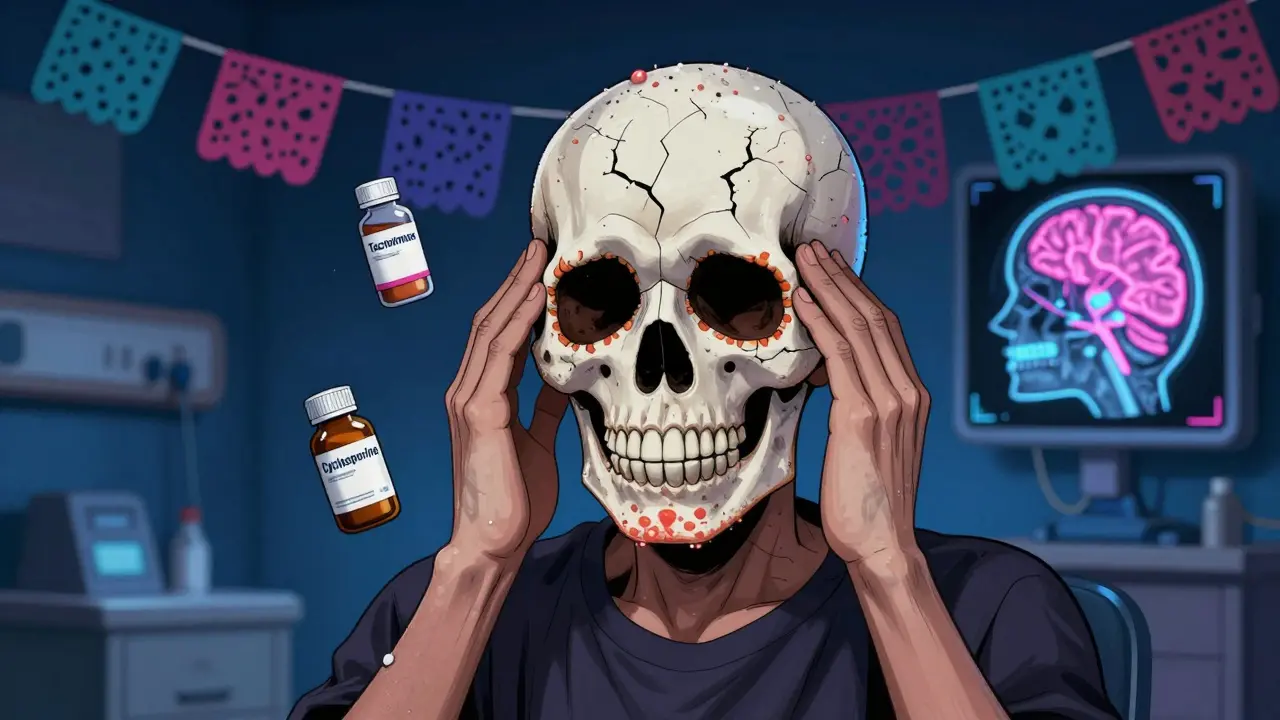
Tremor is the #1 sign of tacrolimus neurotoxicity. Up to 75% of patients who experience side effects report shaky hands - so much so that they can’t hold a cup, write a note, or button their shirt. It’s not just annoying; it’s isolating. One patient on a transplant forum wrote: ‘I stopped eating in public because I couldn’t stop shaking.’
Headaches come in second. These aren’t ordinary tension headaches. Patients describe them as crushing, constant, and unresponsive to ibuprofen or acetaminophen. In surveys, 42% of patients say their headaches interfered with daily life. And here’s the kicker: they often show up even when tacrolimus levels are in the ‘safe’ range - 6-8 ng/mL.
Other symptoms include:
- Insomnia (30-40% of cases)
- Paresthesia - tingling or numbness in fingers and toes (30-40%)
- Weakness, dizziness, or trouble walking (15-20%)
- Confusion, memory issues, or agitation (7-12%)
Less common but far more dangerous are conditions like Posterior Reversible Encephalopathy Syndrome (PRES) and central pontine myelinolysis. PRES shows up on MRI as swelling in the back of the brain. It’s rare - only 1-3% of patients - but it can cause seizures, vision loss, or coma. If you’re on tacrolimus and suddenly can’t see clearly or feel confused, don’t wait. Get checked.
Blood Level Targets: What’s Normal - and When It’s Not Enough
Doctors rely on blood tests to guide tacrolimus dosing. The typical targets are:
- Kidney transplant: 5-15 ng/mL
- Liver transplant: 5-10 ng/mL
- Heart transplant: 5-10 ng/mL
But here’s the problem: these numbers are population averages. They don’t account for individual brain sensitivity. A 2023 study found that 21.5% of patients with neurotoxicity had levels above 15 ng/mL - but nearly half had levels well within range. That means the ‘safe zone’ isn’t safe for everyone.
Some patients develop symptoms at 7 ng/mL. Others tolerate 18 ng/mL without issue. Why? It comes down to biology. Your liver breaks down tacrolimus using an enzyme called CYP3A5. If you have a genetic variant that makes this enzyme super active, your body clears the drug faster - so you need a higher dose to stay protected. But that higher dose also means more drug crossing into your brain. If you’re a slow metabolizer, even a low dose can flood your brain with tacrolimus.
That’s why some experts are calling the current monitoring system ‘fundamentally flawed.’ Blood levels tell you how much drug is in your bloodstream - not how much is in your brain.
Who’s at Highest Risk?
Not all transplant patients face the same risk. Liver recipients have the highest rate of neurotoxicity - 35.7% - compared to 22.4% for kidney, 18.9% for lung, and 15.2% for heart. Why? The liver is where tacrolimus is processed. If the new liver is still adjusting, or if it’s damaged from prior disease, drug levels can spike unpredictably.
Other risk factors:
- Low sodium (hyponatremia) - found in 7 out of 12 studies as a major trigger
- Other medications that affect the brain - like sedatives (midazolam, lorazepam), antibiotics (linezolid), or antipsychotics (risperidone)
- High blood pressure
- Dehydration or kidney problems
One patient’s tremor vanished after correcting a sodium level of 130 mmol/L - no dose change needed. That’s why checking electrolytes isn’t optional. It’s part of the puzzle.
What Happens When Symptoms Show Up?
Too often, doctors miss the connection. In a survey of transplant patients, 55% said it took their team 2-3 weeks to realize their symptoms were drug-related. That delay can turn a mild tremor into full-blown confusion or seizures.
When neurotoxicity is suspected, there are three main moves:
- Dose reduction: Lowering the daily amount by 10-20% often helps. One patient saw tremors disappear within 72 hours after dropping from 0.1 mg/kg to 0.07 mg/kg - still within therapeutic range.
- Switch to cyclosporine: About 42% of patients are switched. Cyclosporine has lower neurotoxicity risk (15-20% less) but higher rejection risk. It’s a trade-off.
- Address other triggers: Fix low sodium, stop interacting drugs, control blood pressure. Sometimes, that’s all it takes.
Most symptoms resolve within 3-7 days of intervention. But if PRES or encephalopathy develops, hospitalization and intensive care are needed. MRI and neurological evaluation are critical.

What’s Changing in Treatment?
For years, doctors had to guess. Now, there’s a shift toward precision dosing. A 2021 study showed that testing for the CYP3A5 gene before starting tacrolimus reduced neurotoxicity by 27%. Patients with the fast-metabolizer gene got higher starting doses. Slow metabolizers got lower ones. Fewer side effects. Same rejection prevention.
But here’s the catch: this testing isn’t widely available. Insurance rarely covers it. Only academic transplant centers offer it routinely. That’s changing. The TACTIC trial - launching in 2024 - will test a new algorithm that combines genetic data, sodium levels, and blood pressure to personalize dosing from day one.
Long-term, new drugs are coming. LTV-1, a next-generation calcineurin inhibitor designed not to cross the blood-brain barrier, is in Phase 2 trials. If it works, it could replace tacrolimus by 2027.
What Patients Should Do
If you’re on tacrolimus:
- Track your symptoms - tremor, headache, sleep issues - in a journal. Note when they started and what you were taking.
- Ask your team if you’ve been tested for CYP3A5. If not, ask why.
- Get your sodium and magnesium levels checked regularly - especially if you’re feeling off.
- Don’t ignore ‘minor’ symptoms. Tremor isn’t ‘just stress.’
- Know your blood level. Ask for a copy of your last test result.
- Bring up any new medications - even over-the-counter ones. Some can dangerously boost tacrolimus levels.
Transplant survival isn’t just about keeping the organ alive. It’s about living well. And neurotoxicity is one of the biggest threats to quality of life after transplant. If your hands shake, your head pounds, or you can’t sleep - speak up. Your symptoms matter. There’s a solution.
Can tacrolimus cause tremors even when blood levels are normal?
Yes. Up to half of patients who develop tremors from tacrolimus have blood levels within the recommended therapeutic range (5-15 ng/mL). This happens because individual differences in genetics, brain permeability, and other factors affect how much drug enters the brain - not just how much is in the blood. A level of 7 ng/mL can be toxic for one person and perfectly safe for another.
What should I do if I get a headache while on tacrolimus?
Don’t assume it’s just stress or dehydration. Headaches that are constant, severe, or unresponsive to painkillers may be a sign of neurotoxicity. Contact your transplant team immediately. They may check your tacrolimus level, test your sodium and magnesium, review your other medications, and consider a dose adjustment. Early action can prevent worse symptoms like confusion or seizures.
Is it safe to stop tacrolimus if I have side effects?
Never stop tacrolimus on your own. Stopping suddenly can trigger acute organ rejection, which can be life-threatening. If side effects are severe, your medical team will safely reduce the dose or switch you to another immunosuppressant like cyclosporine - always under supervision. The goal is to balance protection from rejection with your neurological well-being.
Can other medications make tacrolimus neurotoxicity worse?
Yes. Several common drugs can increase the risk or severity of neurotoxicity. These include antibiotics like linezolid, sedatives like midazolam and lorazepam, antipsychotics like risperidone and olanzapine, and even some pain meds. Always tell your transplant team about every medication - including vitamins, supplements, and over-the-counter drugs - before starting them.
Are there tests to predict if I’ll get neurotoxicity from tacrolimus?
Yes - but they’re not yet standard. Testing for the CYP3A5 gene can identify whether you’re a fast or slow metabolizer of tacrolimus. Fast metabolizers need higher doses, slow ones need lower ones. A 2021 study showed this approach reduced neurotoxicity by 27%. Some academic centers offer this test before transplant. Ask your doctor if it’s available to you.
How long does it take for neurotoxicity symptoms to go away?
Most symptoms improve within 3-7 days after adjusting the dose or switching medications. Tremor and headache often clear fastest. More severe cases, like PRES, may take weeks and require hospital care. The sooner you report symptoms, the faster you’ll feel better. Don’t wait for them to get worse.
Final Thoughts
Tacrolimus saves lives. But it also changes them - sometimes in ways no one talks about. Tremor isn’t just a side effect. It’s a signal. Headache isn’t just stress. It’s a warning. And blood levels? They’re a starting point, not the whole story.
The future of transplant care isn’t just about better organs - it’s about better drugs, smarter dosing, and listening to patients. If you’re on tacrolimus and feeling off, you’re not alone. And you don’t have to just live with it. Speak up. Ask questions. Demand answers. Your brain matters as much as your new kidney or liver.
Payson Mattes
December 23, 2025 AT 16:59Also, why do they only test blood levels? Because they don't want you to know the brain levels are what really matter. And guess who owns the labs? Same people who make the drug. Wake up.
Isaac Bonillo Alcaina
December 23, 2025 AT 18:14Bhargav Patel
December 24, 2025 AT 15:01Steven Mayer
December 25, 2025 AT 18:16Charles Barry
December 25, 2025 AT 19:08Rosemary O'Shea
December 27, 2025 AT 04:58Joe Jeter
December 28, 2025 AT 01:04Sidra Khan
December 29, 2025 AT 08:21siddharth tiwari
December 30, 2025 AT 13:18Adarsh Dubey
December 31, 2025 AT 03:04bharath vinay
December 31, 2025 AT 11:30Dan Gaytan
January 1, 2026 AT 10:19Spencer Garcia
January 2, 2026 AT 08:03Payson Mattes
January 3, 2026 AT 16:40