Federal Food, Drug, and Cosmetic Act: How It Built the Legal Foundation for Generic Drugs
 Dec, 2 2025
The law that made cheap generics possible
In 1937, over 100 people died after taking a liquid antibiotic laced with antifreeze. No one had checked if it was safe. That tragedy forced Congress to act. The result? The Federal Food, Drug, and Cosmetic Act (a U.S. law passed in 1938 that gave the FDA authority to require drug safety testing before sale, FD&C Act). But here’s the twist: the FD&C Act didn’t originally create a path for generic drugs. That came nearly 50 years later - and it changed everything.
Before generics: no shortcuts, no savings
Before 1984, if you wanted to make a copy of a brand-name drug, you had to prove it was safe and effective - from scratch. That meant running full clinical trials, just like the original maker did. It cost millions. It took years. And almost no one did it. Generic drugs made up just 19% of prescriptions back then, but they accounted for only 3% of total drug spending. Why? Because there were hardly any generics to buy.
The brand-name companies had a monopoly. Patients paid more. Insurance plans bled cash. And the FDA was stuck in a loop: approving new drugs, but not letting anyone else make cheaper versions without repeating every single test.
The Hatch-Waxman fix: a deal that worked
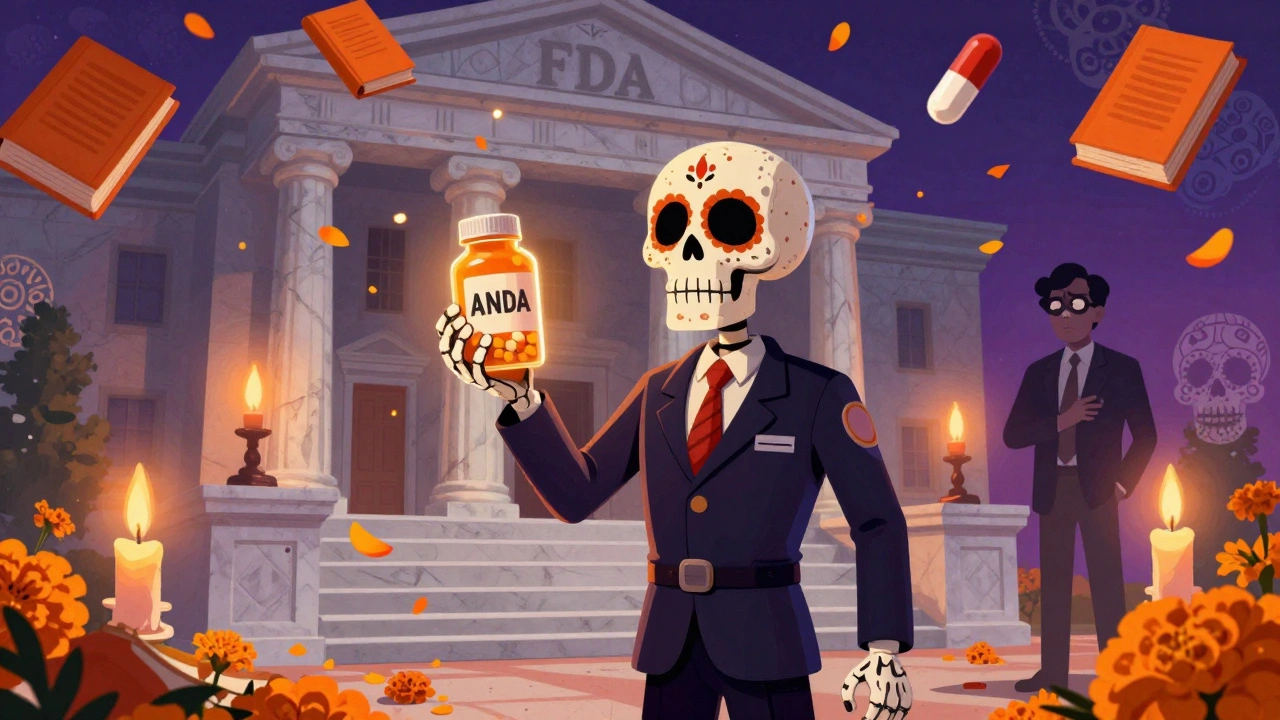
In 1984, Congress passed the Drug Price Competition and Patent Term Restoration Act - better known as the Hatch-Waxman Amendments (a 1984 law that created the ANDA pathway for generic drug approval under the FD&C Act). Named after Senator Orrin Hatch and Representative Henry Waxman, it wasn’t just a tweak. It was a full rebuild.
Here’s how it worked: generic companies no longer had to run clinical trials. Instead, they only needed to prove two things: their drug had the same active ingredient, strength, and form as the brand-name version - and that it got into the bloodstream at the same rate and amount. That’s called bioequivalence (a scientific standard requiring generic drugs to deliver the same amount of active ingredient into the bloodstream as the brand-name drug, within a 80-125% range). If they hit that mark, the FDA approved it.
This new process? The Abbreviated New Drug Application (a streamlined FDA application pathway for generic drugs, authorized under Section 505(j) of the FD&C Act, ANDA). It cut approval time from years to months. It slashed costs by 90%. And it opened the floodgates.
Why the system didn’t break: patents and exclusivity
Brand-name companies weren’t happy. They had spent millions developing their drugs and feared losing their profits. So Hatch-Waxman gave them something back.
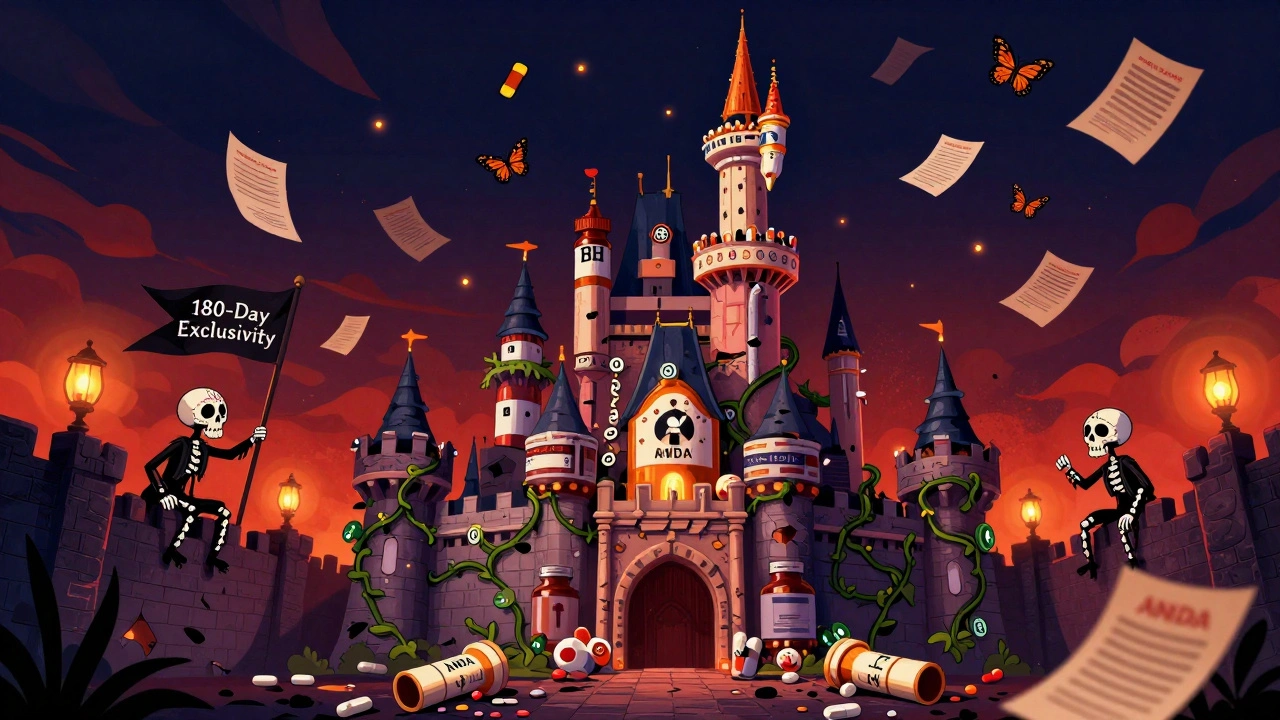
First, it let them extend their patents by up to five years to make up for time lost during FDA review. Second, it created a 180-day exclusivity window for the first generic company to challenge a brand-name patent. That’s a huge incentive. If you’re the first to file an ANDA and beat a patent in court, you get to be the only generic on the market for half a year. No competition. Big profits.
And here’s the clever part: brand-name companies had to list all their patents in the FDA’s Orange Book (official FDA publication listing approved drug products with therapeutic equivalence evaluations, used by generic manufacturers to identify patent barriers). If they didn’t list a patent, generics could skip it. If they listed too many - even weak ones - generics could challenge them. It forced transparency.
The numbers don’t lie: generics saved trillions
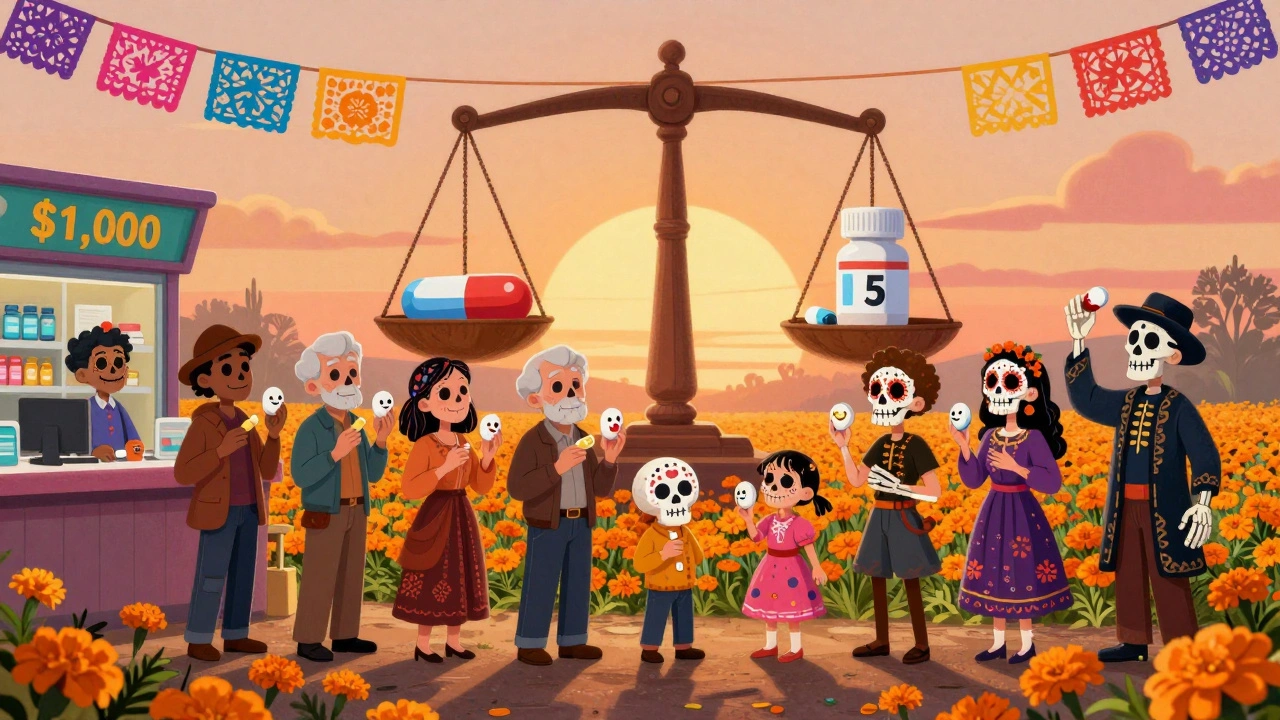
Today, 90% of all prescriptions in the U.S. are filled with generics. They make up just 17% of total drug spending. That’s a $2.2 trillion savings for American patients over the last decade, according to the Federal Trade Commission.
Before Hatch-Waxman, a single course of a brand-name drug could cost $1,000. Now, the generic version? Often under $10. For people on fixed incomes, for Medicare recipients, for families without insurance - that’s life-changing.
And it’s not just savings. It’s access. Insulin. Blood pressure pills. Cholesterol meds. Antibiotics. Most of them are available as generics now because the FD&C Act, through Hatch-Waxman, made it possible.
Where the system still breaks
But it’s not perfect.
Some brand-name companies use tricks to delay generics. One tactic? evergreening (a strategy where brand-name manufacturers file secondary patents on minor changes (like a new coating or dosage form) to extend market exclusivity). They’ll tweak the pill’s color, change the release time, or patent a new delivery method - not because it’s better, but because it blocks generics.
Another? product hopping (a tactic where brand manufacturers discontinue an older drug and replace it with a slightly modified version, forcing patients onto a new, patent-protected product). The 2019 CREATES Act tried to stop this by forcing brand companies to sell samples to generic makers - but enforcement is still patchy.
And then there’s the issue of complex drugs. Inhalers, injectables, biologics - these aren’t easy to copy. The FDA has approved over 20,000 generic drugs, but only a fraction of complex products have generics. Why? Because proving bioequivalence for an inhaler is harder than for a pill. And the FDA is still writing guidance for these. As of 2023, only 42% of complex drug categories have generic competition.
What’s next? Faster, fairer, smarter
The FDA is trying to fix the gaps.
The Generic Drug User Fee Amendments (a funding and performance system where generic manufacturers pay fees to the FDA in exchange for faster review times, first enacted in 2012 and renewed in 2022, GDUFA) has cut review times from over 30 months in the 1990s to under 10 months today. In 2022, 98% of priority ANDAs were approved on time.
The 21st Century Cures Act and GDUFA III are pushing for better standards for complex generics. Draft guidance for nasal sprays and eye drops is coming in 2024. The goal? Make it easier to copy advanced drugs without cutting corners on safety.
And the savings keep growing. The Congressional Budget Office estimates that better generic access will cut federal drug spending by $158 billion over the next decade.
Compliance isn’t optional
Generic makers aren’t free to do whatever they want. The FD&C Act still applies. Every pill, every bottle, every factory has to follow current Good Manufacturing Practices (federal standards for quality control in drug manufacturing, enforced by the FDA to prevent contamination and errors, cGMP).
Between 2020 and 2022, the FDA issued 47 warning letters to generic drug manufacturers. Common issues? Poor quality control and fake data. One company altered test results to show their drug met bioequivalence standards. That’s fraud. And it’s punishable by up to $1.1 million per violation - or jail time.
So while the system is built to encourage competition, it’s also built to keep people safe. That’s the balance.
Why this matters to you
If you’ve ever picked up a $4 prescription at the pharmacy, you’re seeing the FD&C Act in action. Not the 1938 version. Not the 1962 version. The 1984 version - the Hatch-Waxman Amendments - that made it possible.
It’s not just about cost. It’s about choice. About dignity. About not having to choose between medicine and rent.
The FD&C Act didn’t start with generics. But it became the foundation for them. And without that foundation, millions of Americans would still be paying $500 for a pill that costs $5 to make.
Are generic drugs as safe as brand-name drugs?
Yes. The FDA requires generics to have the same active ingredient, strength, dosage form, and route of administration as the brand-name drug. They must also prove bioequivalence - meaning they deliver the same amount of medicine into your bloodstream at the same rate. The FDA inspects generic manufacturing facilities just as often as brand-name ones. In fact, many brand-name companies make their own generics under different labels.
Why are some generics more expensive than others?
When a generic first enters the market, it often has 180 days of exclusivity - meaning no other generics can sell it yet. During that time, the first company may charge more. Once others enter, prices drop fast. If you’re paying more than expected, try switching to a different generic brand or ask your pharmacist about the lowest-cost option. Some insurers even have preferred generics with lower copays.
Can a generic drug be recalled?
Yes. Generic drugs are subject to the same recalls as brand-name drugs. In 2022, the FDA recalled multiple generic blood pressure medications due to contamination with cancer-causing impurities. The same standards apply: if a drug is found to be unsafe, contaminated, or mislabeled, it’s pulled from shelves - regardless of whether it’s branded or generic.
Do generics work the same for everyone?
For the vast majority of people, yes. Bioequivalence testing ensures that generics perform the same in most patients. But in rare cases - like with narrow therapeutic index drugs (e.g., warfarin, lithium, or thyroid meds) - even small differences in absorption can matter. If you switch generics and feel different, talk to your doctor. You may need to stick with one brand or get a prescription that says "dispense as written."
How does the FDA decide which drugs can have generics?
The FDA looks at three things: whether the brand-name drug’s patent has expired, whether it’s listed in the Orange Book, and whether a generic manufacturer can prove bioequivalence. Some drugs, like biologics, are too complex to copy easily - those are called biosimilars and have a separate approval path. For most small-molecule pills and injections, if the patent is gone and the science checks out, a generic can be approved.
What to do next
If you’re on a long-term medication, ask your pharmacist: "Is there a generic available?" Even if your insurance doesn’t push it, you might save hundreds a year. Use the FDA’s Orange Book to check if your drug has multiple generic options - and compare prices. Some pharmacies offer generics for $4 or less through discount programs.
If you’re a patient with a complex condition - like asthma, diabetes, or epilepsy - don’t assume all generics are interchangeable. Talk to your doctor before switching. Keep a list of the generic names you’ve used and how you felt on each. That info helps your provider make better decisions.
And if you ever wonder why your pills look different but cost less - now you know. It’s not magic. It’s law. And that law, built on the FD&C Act, is saving lives every day.
Brian Perry
December 2, 2025 AT 12:15Mindy Bilotta
December 3, 2025 AT 03:42bobby chandra
December 4, 2025 AT 04:44Joykrishna Banerjee
December 4, 2025 AT 19:53Katherine Gianelli
December 5, 2025 AT 22:25Francine Phillips
December 6, 2025 AT 18:01Albert Essel
December 8, 2025 AT 16:20Ethan McIvor
December 10, 2025 AT 05:36Michael Bene
December 10, 2025 AT 23:45Myson Jones
December 11, 2025 AT 07:48vinoth kumar
December 11, 2025 AT 11:42Archie singh
December 13, 2025 AT 01:16