When to Get Baseline CK Testing Before Starting Statins
 Feb, 2 2026
Baseline CK Testing Calculator
Should You Get Baseline CK Testing?
Answer a few questions to determine if baseline CK testing is recommended based on major guidelines.
Results will appear here...
Starting a statin can be a life-saving decision. For millions of people with high cholesterol, these drugs cut heart attack and stroke risk by up to 30%. But muscle pain is the number one reason people quit taking them. And here’s the problem: baseline CK testing isn’t always done - even though it can prevent unnecessary panic, wrong diagnoses, and stopping a drug that’s actually helping.
Why CK Matters More Than You Think
Creatine kinase, or CK, is an enzyme found in muscle cells. When muscles get damaged - from intense exercise, injury, or a reaction to statins - CK leaks into the blood. A blood test measures how much is floating around. Normal levels vary wildly: men might have 145-195 U/L, women 65-110 U/L. But African Americans often have levels 50-100% higher. And 25-30% of healthy people naturally test above the lab’s "normal" range just because they lifted weights last week or got a flu shot in the arm. So why check it before starting a statin? Because if you get muscle pain later and your CK was never measured, your doctor has no idea if the rise is from the statin or from you mowing the lawn three days before the test. Baseline CK gives you a personal reference point. It’s not about catching every case of muscle damage - it’s about knowing what’s normal for you.Who Actually Needs It?
Not everyone needs a baseline CK test. But if you fall into one of these groups, it’s a smart move:- You’re over 75
- You have kidney problems (eGFR under 60)
- You’re on a statin plus a fibrate (like fenofibrate)
- You have hypothyroidism (about 1 in 8 statin users do)
- You’ve had muscle pain with statins before
- You’re starting a high-intensity statin: atorvastatin 40-80 mg or rosuvastatin 20-40 mg
What the Guidelines Actually Say
There’s no global rule. Different countries have different takes:- USA (ACC/AHA 2022): Baseline CK is recommended for high-risk patients, not everyone. Routine monitoring after that? Not needed.
- Europe (ESC/EAS 2019): Optional. They say the benefit is low for most people.
- Canada (RxFiles 2023): Strongly recommend baseline CK. But warn: don’t check it again unless you have symptoms.
- New Zealand (Medsafe 2021): Must test before starting if you’re over 75, have kidney issues, or take statins with fibrates.

The Real Cost of Skipping It
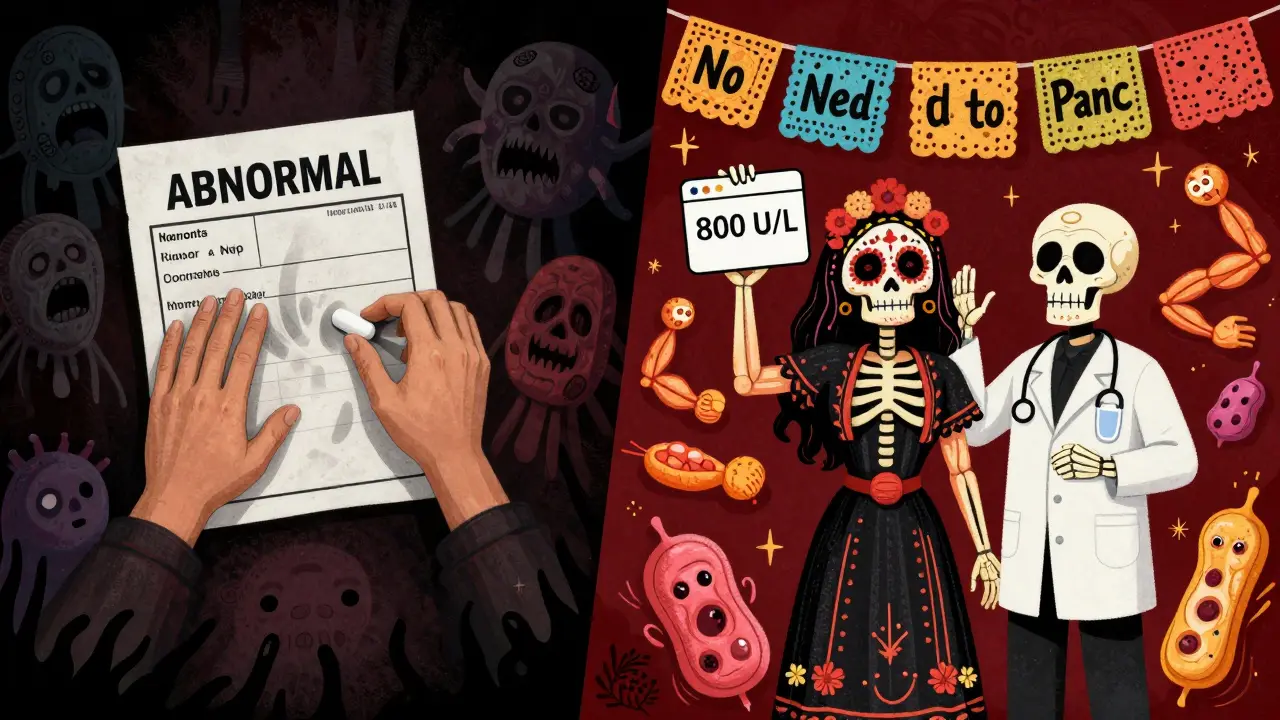
Skipping baseline CK doesn’t just risk misdiagnosis - it costs money. In Canada, baseline CK testing adds up to $14.7 million a year in unnecessary spending. Why? Because labs flag "abnormal" results that are actually normal for that person. Then doctors panic, patients get scared, and statins get stopped. But here’s the twist: when baseline CK is done, and a patient later complains of muscle pain, doctors are 22% less likely to stop the statin unnecessarily. That’s huge. A 2022 study in the American Journal of Managed Care found that avoiding one unnecessary statin discontinuation saves about $2,850 per patient - especially if they’re at risk for heart disease. That’s not just money. It’s reduced risk of heart attack, stroke, and death.What to Do Before the Test
If your doctor orders a baseline CK, don’t just show up. Do this:- Avoid heavy exercise for 48 hours before the blood draw. No lifting, running, or intense yoga.
- Don’t get any intramuscular injections (like vaccines or B12 shots) in the week before.
- Let your doctor know about all medications - especially amiodarone, cyclosporine, or fibrates. These can spike CK levels on their own.
- Write down your activity level from the past 72 hours. That info helps interpret the result.
What Happens If Your CK Is High?
If your baseline CK is elevated, don’t panic. It doesn’t mean you can’t take a statin. It just means you need to be more careful.- CK under 3x the upper limit of normal? You’re likely fine. Start the statin, but watch for symptoms.
- CK between 3-10x ULN with muscle pain? Pause the statin. Get checked by a specialist. Rule out other causes like thyroid issues or vitamin D deficiency.
- CK over 10x ULN? Stop the statin immediately. This is rare - less than 0.1% of users - but can lead to rhabdomyolysis, a dangerous breakdown of muscle that can damage kidneys.
What’s Coming Next?
New tools are on the horizon. Genetic testing can now check for SLCO1B1 variants - a gene change that makes some people 4.5 times more likely to get muscle damage from simvastatin. But this test isn’t widely used yet. It’s expensive, and only helpful for a small group. Point-of-care CK devices are also in trials. Imagine getting your CK result in 10 minutes during your doctor’s visit - no waiting for the lab. That could make baseline testing routine, not optional. But for now, the best tool is still the simple blood test - done right, at the right time.Bottom Line
Baseline CK testing isn’t about fear. It’s about clarity. It’s not needed for everyone. But if you’re older, have kidney issues, take other meds, or have had muscle pain before - get it done. It’s not about catching rare disasters. It’s about avoiding the most common mistake: stopping a life-saving drug because of a false alarm. If you’re starting a statin, ask your doctor: "Should I get a baseline CK test?" If they say no, ask why. If they say yes, make sure you know how to prepare. Your heart will thank you.Is baseline CK testing required before starting statins?
No, it’s not required for everyone. Major guidelines like the American Heart Association recommend it only for high-risk patients - those over 75, with kidney disease, on statin-fibrate combos, or with prior muscle symptoms. For healthy, low-risk people, routine baseline testing adds cost without proven benefit.
Can I skip the baseline CK test if I’ve never had muscle pain?
Maybe. If you’re young, healthy, and starting a low- or moderate-intensity statin like pravastatin or rosuvastatin 10 mg, the risk of muscle injury is very low - under 0.05%. But if you’re on a high-intensity statin like atorvastatin 80 mg, or have other risk factors (kidney issues, thyroid problems), skipping the test could make it harder to tell if future muscle pain is from the drug or something else.
Why do some people have high CK levels even without statins?
Many reasons. Recent exercise, especially weightlifting or running, can spike CK for days. Intramuscular injections, trauma, or even dehydration can raise levels. Ethnicity matters too - African Americans often have naturally higher CK. About 25-30% of healthy people test above the lab’s "normal" range simply because their baseline is higher than average. That’s why a personal baseline is more useful than a lab’s generic number.
What if my baseline CK is high - does that mean I can’t take statins?
Not necessarily. A high baseline CK doesn’t automatically mean you’re at risk for statin side effects. Doctors will look at the number, your health history, and other factors. If your CK is under 3x the upper limit of normal, you can often start the statin with close monitoring. If it’s higher, your doctor may check for other causes like thyroid disease or vitamin D deficiency before deciding.
Should I get CK tested again after starting statins?
Only if you develop muscle pain, weakness, or dark urine. Routine repeat testing isn’t recommended by any major guideline. Studies show checking CK every few months doesn’t prevent muscle damage - it just causes anxiety and unnecessary statin stops. The only time to retest is when symptoms appear - and even then, the baseline number is what matters most.
Are there alternatives to CK testing for monitoring statin safety?
Yes - but they’re not replacements yet. Genetic testing for the SLCO1B1 gene can identify people at higher risk for muscle damage from simvastatin, but it’s not widely available or covered by insurance. The best tool remains patient-reported symptoms. If you feel unexplained muscle pain, tell your doctor. Blood tests like CK are only helpful when symptoms are present - and even then, only if you have a baseline to compare it to.
rahulkumar maurya
February 3, 2026 AT 02:19Let’s be real-baseline CK testing is a luxury most GPs ignore because they’re too busy checking off boxes for CMS. The fact that African Americans naturally have higher CK levels and labs still use ‘normal’ ranges based on white male cohorts? That’s not medicine, that’s colonial science dressed in white coats. And don’t get me started on how ‘low-risk’ is just a euphemism for ‘we don’t care if you die.’
Stop treating patients like data points. If you’re prescribing atorvastatin 80mg, you owe them a baseline. Period. No ‘maybe.’ No ‘if you’re concerned.’ If you’re not measuring, you’re gambling. And your patient’s muscles are the dice.
Demetria Morris
February 5, 2026 AT 00:01I’ve seen too many patients panic because their CK was ‘high’ and their doctor didn’t have a baseline. One woman stopped her statin, had a heart attack six months later. She was 72, had diabetes, and had never been tested. The lab just said ‘abnormal.’ No number. No context. Just fear. This isn’t just clinical-it’s ethical.
Geri Rogers
February 6, 2026 AT 03:46Y’all need to stop treating CK like it’s some mysterious magic number 😤. If you’re lifting weights, get tested after a week of chillin’. If you’re 78 with kidney issues? Test before the statin. Simple. 🙌
And if your doc says ‘nope, not needed’-ask them if they’d skip it for their mom. If they hesitate? Find a new doctor. Your heart’s worth more than a $14 copay.
Samuel Bradway
February 6, 2026 AT 08:14I’m a nurse and I’ve seen this play out a million times. Patient comes in with muscle pain, doc says ‘your CK’s up, must be the statin,’ and poof-drug gets pulled. But no one checks what it was before. Then the patient ends up in the ER with a clot. It’s heartbreaking. Baseline CK isn’t optional for high-risk folks. It’s basic care.
Caleb Sutton
February 8, 2026 AT 08:09They’re lying to you. Baseline CK isn’t ignored because it’s ‘not needed’-it’s ignored because labs and pharma make more money when you stop the statin, get a new one, get another test, get a ‘statin intolerance’ label, then get put on some $800/month combo pill. This is a money machine. The science? A sideshow.
Jamillah Rodriguez
February 8, 2026 AT 15:44So wait… if I’m a 30-year-old athlete with a CK of 1200 and I start a statin, and then my CK goes to 1400… is that bad? 😅 I mean, my legs are literally made of steel. Can someone explain this without using big words? I’m confused now.
Susheel Sharma
February 9, 2026 AT 09:14It is an incontrovertible fact, as demonstrated by multiple meta-analyses, that the absence of baseline creatine kinase measurement constitutes a systemic failure in clinical risk stratification-particularly in populations with elevated myopathic predisposition. The arbitrary dichotomy of ‘high-risk’ versus ‘low-risk’ is not merely statistically unsound, but epistemologically negligent. Moreover, the cultural bias embedded in normative CK ranges, derived predominantly from homogenous cohorts, perpetuates health disparities that are both quantifiable and morally indefensible. One cannot, in good conscience, prescribe a myotoxic agent without first establishing a personal enzymatic baseline. To do so is to practice medicine as a lottery.
Prajwal Manjunath Shanthappa
February 9, 2026 AT 18:55And yet… nobody talks about the fact that 70% of people who stop statins because of ‘muscle pain’… never actually had elevated CK. Ever. Not once. Not even close. So why are we testing at all? It’s a placebo for doctors who feel better when they ‘did something.’ Meanwhile, the real issue? The statin dose is too high. Or the patient’s vitamin D is low. Or they’re dehydrated. Or they’re just old. But no-let’s test CK. Then panic. Then stop the drug. Then wonder why their LDL is 220 again. 🤦♂️