Prescriber Attitudes Toward NTI Drugs and Substitution: What Doctors Really Think
 Jan, 1 2026
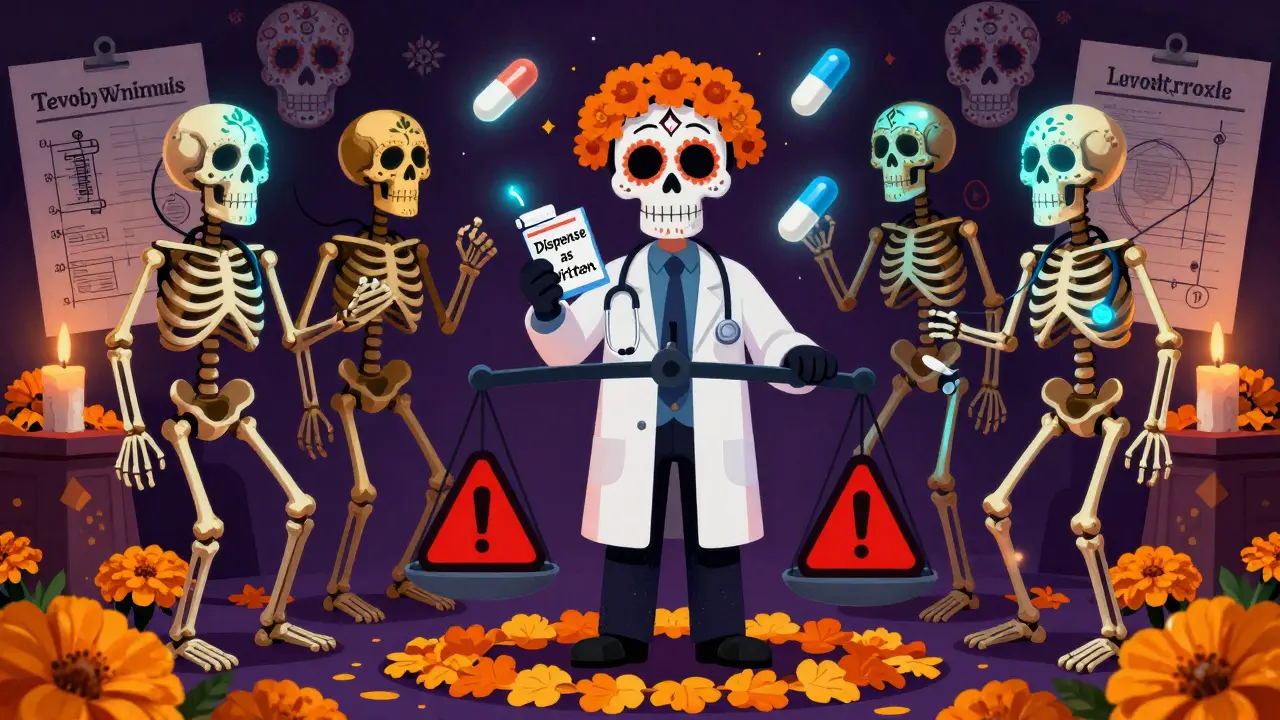
When a doctor writes a prescription for a drug like warfarin, levothyroxine, or tacrolimus, they’re not just picking a medicine-they’re managing a tightrope walk. These are Narrow Therapeutic Index (NTI) drugs, where even a small change in dose or blood level can mean the difference between healing and harm. A 2% drop in concentration might make a transplant patient reject their new organ. A 5% spike could send someone into a dangerous bleed. That’s why, even though generics are cheaper and widely used, many doctors still hesitate to let pharmacists swap them out.
What Makes an NTI Drug So Sensitive?
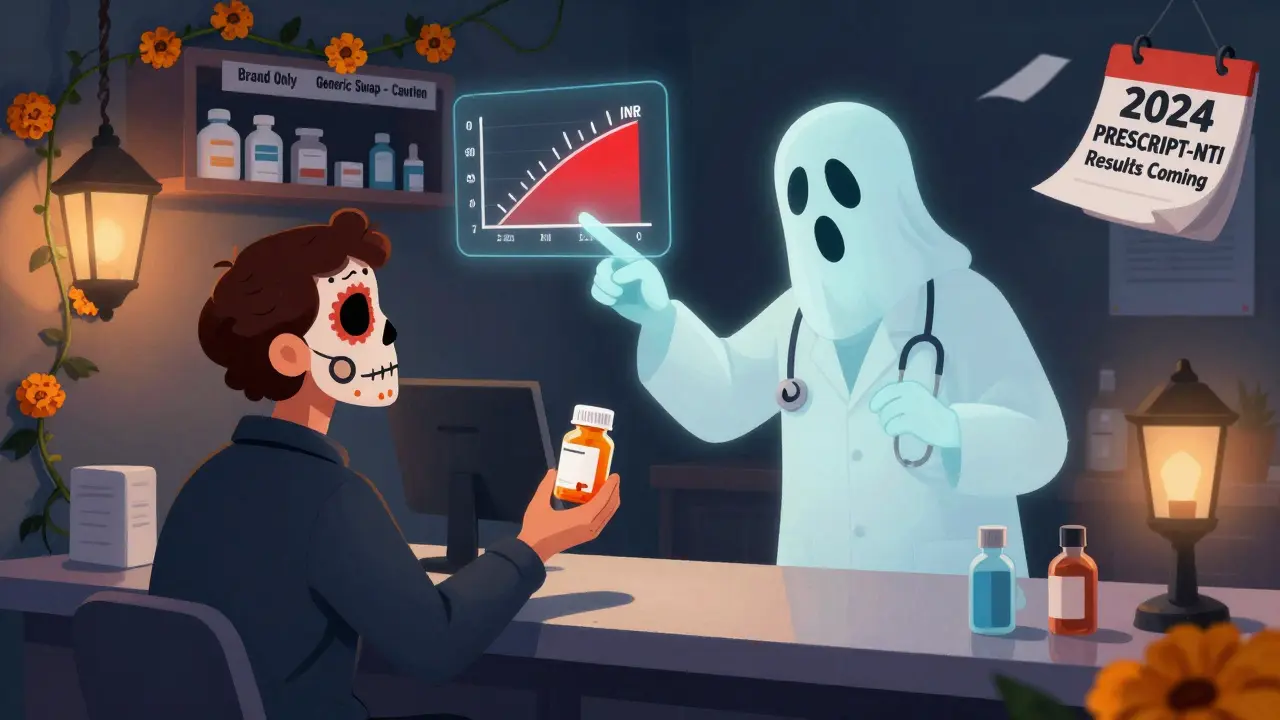
NTI drugs have a razor-thin margin between the dose that works and the dose that causes harm. The FDA defines them as drugs where the ratio between the minimum toxic level and the minimum effective level is two or less. That’s why a generic version of warfarin, even if it’s labeled "bioequivalent," can still trigger a spike in INR levels-something that can land a patient in the ER. The same goes for lithium, used for bipolar disorder. Too little, and the mood stabilizes poorly. Too much, and you get tremors, confusion, or kidney damage.
These aren’t theoretical risks. Between 2015 and 2020, the Institute for Safe Medication Practices recorded over 1,200 medication errors linked to NTI drugs, with nearly 4 in 10 tied to substitution. While only 8% led to serious harm, the ripple effects-extra lab tests, emergency visits, patient anxiety-are real and costly.
Doctors Don’t Trust Generic Swaps-Even When the Data Says They Should
The FDA says 98% of generic NTI drugs perform within 3-4% of their brand-name versions. That sounds reassuring. But doctors aren’t swayed by averages. They’re dealing with individuals.
A 2018 survey of 710 pharmacists found that 94% believed physicians thought generic NTI drugs were just as safe as brand-name ones. But here’s the catch: only 60% of pharmacists substituted generics for refills, even though they almost always did it for new prescriptions. Why? Because doctors told them not to.
Transplant specialists are the most skeptical. A 1997 survey of 59 transplant pharmacists showed that 92% believed bioequivalence tests done in healthy volunteers didn’t reflect how these drugs behave in patients with organ failure. That’s still true today. Tacrolimus, a key transplant drug, still has a 32% brand-name market share in Medicare Part D-far higher than the 8% average for non-NTI drugs.
State Laws Are Split-And So Are Prescribers
Twenty-eight U.S. states have special rules for NTI drug substitution. Some, like Texas and Florida, require prescribers to explicitly say "dispense as written" on the prescription. Others have "affirmative consent" laws, meaning the pharmacist must get the patient’s permission before switching-and often notify the doctor.
States with those consent laws saw 23% fewer generic substitutions for NTI drugs, according to a 2022 analysis. That’s not because patients refused-they didn’t. It’s because doctors pushed back. In one hospital system in Ohio, psychiatrists started requiring written consent for lithium substitutions after two patients had manic episodes following a generic switch.
The American Medical Association says substitution is fine for most patients, as long as you monitor drug levels. But the American Academy of Neurology disagrees. They explicitly warn against automatic substitution for levothyroxine, phenytoin, and warfarin without the prescriber’s input. The Academy of Managed Care Pharmacy opposes state restrictions, saying pharmacists should use professional judgment. Meanwhile, the American Society of Health-System Pharmacists says pharmacists should always notify the doctor before swapping an NTI drug-78% of hospital pharmacists already do.
Communication Breakdowns Are Costing Time and Money
Doctors aren’t against generics. They’re against surprises.
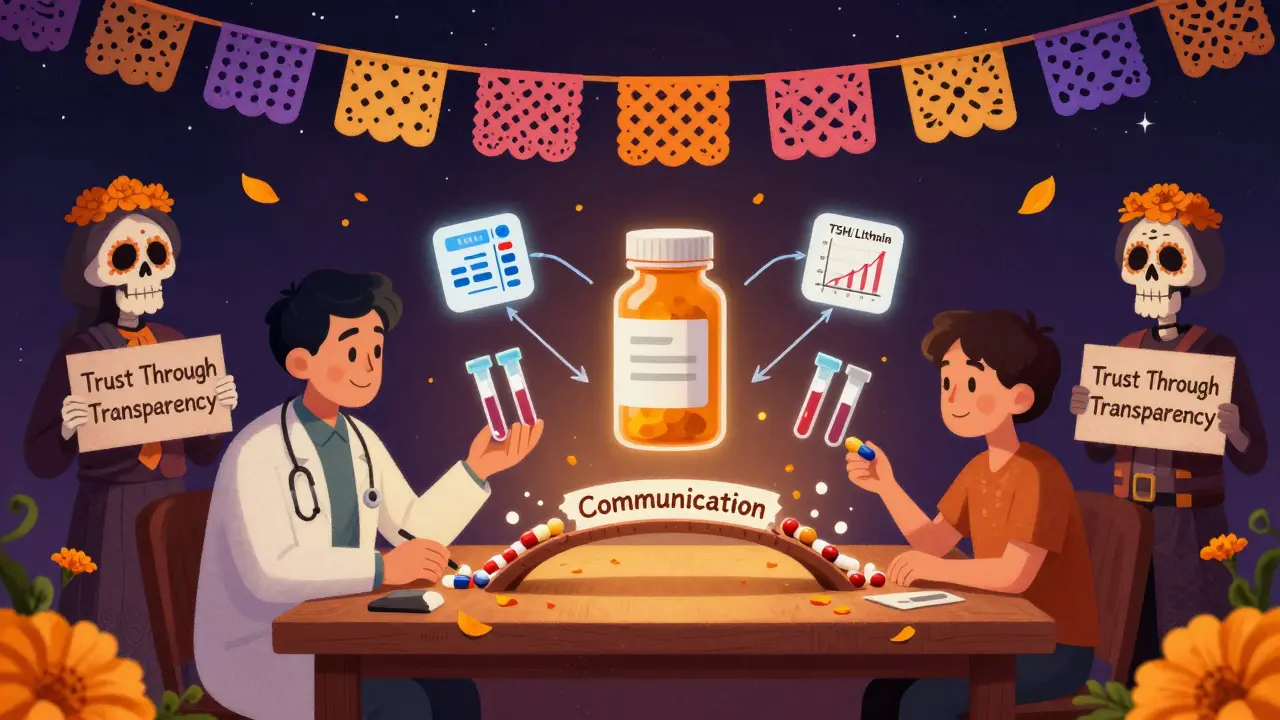
A 2021 study found that 63% of physicians prefer electronic notifications about NTI substitutions-not phone calls. Primary care doctors get about 2.7 notifications a month. Psychiatrists? Up to 5.4. That’s because lithium and anticonvulsants like phenytoin require constant monitoring. Every substitution means another blood test, another call to the lab, another patient to explain why their meds changed.
The American Medical Association reports that 41% of physicians have seen patients confused after a switch. Many think the new pill is weaker-or stronger. That confusion leads to missed doses, panic, and extra office visits. According to MGMA data, each NTI substitution-related visit costs an average of $127. Multiply that by thousands of cases, and it adds up fast.
Why Do Some Doctors Still Prescribe Brand-Name NTI Drugs?
It’s not about price. It’s about control.
A 2023 survey by the American College of Physicians found that 57% of internists would choose the brand-name version when starting a high-risk patient on an NTI drug. Why? Stability. They’ve seen what happens when a patient who’s been stable on brand-name levothyroxine for years gets switched to a generic-and their TSH levels go haywire.
The top five NTI drugs with the highest brand-name persistence are:
- Tacrolimus: 32% brand share
- Warfarin: 28%
- Levothyroxine: 25%
- Phenytoin: 21%
- Lithium: 19%
These aren’t outliers. These are drugs where even small fluctuations matter. And for many doctors, the risk isn’t worth the savings.
What’s Changing-and What’s Not
The FDA updated its NTI drug list in March 2023, adding 12 new drugs and removing 3 based on new data. That’s progress. The American Society of Clinical Oncology now supports generic substitution for oral cancer drugs like cyclophosphamide, as long as therapeutic monitoring is in place. That’s a shift-from fear to cautious trust.
The PRESCRIPT-NTI trial, currently enrolling 1,200 patients across 42 sites, is the first large-scale study to track real-world outcomes after substitution. Preliminary results are due in mid-2024. If the data shows no increase in adverse events, it could change minds.
Meanwhile, Medicare is moving toward mandatory prescriber notification for all NTI substitutions under Part D. That’s a big deal. It means pharmacists will have to reach out to doctors before swapping, not after. It’s not a ban on generics-it’s a demand for coordination.
Industry analysts predict generic use for NTI drugs will rise to 78% by 2028. But that doesn’t mean doctors will stop pushing back. They’ll just be more prepared. Better labeling. Clearer communication. Electronic alerts. Standardized protocols.
The Bottom Line: It’s Not About Generic vs. Brand-It’s About Trust
Doctors aren’t anti-generic. They’re pro-safety. They don’t want to be the one who missed a subtle shift in drug levels that led to a seizure, a rejection, or a bleed. They want to know the drug they prescribed is the drug the patient is taking-and that any change is intentional, documented, and monitored.
Generic substitution for NTI drugs isn’t a yes-or-no question. It’s a process. And the process needs to include the prescriber-not just the pharmacist or the insurer. The data says generics are safe. But safety isn’t just about statistics. It’s about systems. It’s about communication. It’s about trust.
Until those systems improve, many doctors will keep writing "dispense as written"-not because they don’t believe in generics, but because they believe in their patients too much to risk it.
Are generic NTI drugs really as safe as brand-name ones?
The FDA says yes-98% of generic NTI drugs perform within 3-4% of their brand-name counterparts based on post-market data. But safety isn’t just about average performance. For drugs like warfarin or lithium, even a 2% difference in blood concentration can trigger serious side effects. That’s why many doctors prefer to stick with the same version once a patient is stable, and why some states require prescriber approval before substitution.
Why do some states restrict NTI drug substitution?
Twenty-eight states have laws that limit automatic substitution of NTI drugs. These laws often require the prescriber to write "dispense as written" on the prescription, or to get patient consent before switching. States with these rules saw 23% fewer generic substitutions, according to a 2022 study. The goal isn’t to block generics-it’s to ensure that changes are intentional and monitored, especially for drugs where small changes can cause big problems.
Do pharmacists always notify doctors before substituting NTI drugs?
No-but many should. A 2021 survey found that 78% of hospital pharmacists always notify the prescriber before substituting an NTI drug. But in retail settings, notifications are less consistent. Many doctors rely on electronic alerts, and 63% say they prefer those over phone calls. Without clear communication, substitutions can lead to confusion, extra lab tests, and avoidable visits.
Which NTI drugs have the highest brand-name use?
The top five NTI drugs with the highest brand-name persistence are tacrolimus (32% brand share), warfarin (28%), levothyroxine (25%), phenytoin (21%), and lithium (19%). These are drugs where even small changes in blood levels can cause serious harm, and many doctors prefer to keep patients on the same version they’ve been stable on for months or years.
Is there new research changing prescriber attitudes?
Yes. The PRESCRIPT-NTI trial, enrolling 1,200 patients across 42 sites, is tracking real-world outcomes after NTI substitutions. Early results expected in 2024 could show whether generic switches lead to more complications. Meanwhile, the FDA updated its NTI drug list in 2023, adding 12 new drugs and removing 3 based on new evidence. Professional groups like ASCO now support generic substitution for certain oncology NTI drugs-with monitoring. These changes are slowly building confidence, but trust takes time.
What Comes Next?
Prescribers aren’t going to stop caring about NTI drugs. The stakes are too high. The path forward isn’t about banning generics-it’s about building better systems. Electronic alerts. Standardized labeling. Clear communication protocols. Real-world data from studies like PRESCRIPT-NTI.
Doctors want to save money. They just don’t want to save it at the cost of patient safety. And until the system gives them confidence that every substitution is safe, predictable, and communicated, they’ll keep writing "dispense as written." Not out of stubbornness. Out of responsibility.
Todd Nickel
January 1, 2026 AT 19:10It’s fascinating how the FDA’s bioequivalence thresholds don’t account for individual metabolic variance-especially in patients with comorbidities or polypharmacy. A 3-4% swing might be statistically negligible in a cohort of healthy volunteers, but in a 72-year-old with renal impairment on five other meds, that’s the difference between therapeutic stability and a trip to the ICU. I’ve seen patients on stable warfarin for years whose INR spiked after a generic switch, and no, it wasn’t dietary-it was the manufacturer’s excipient blend changing absorption kinetics. The system treats drugs like widgets, but human physiology isn’t a spreadsheet.
And don’t get me started on how pharmacy benefit managers dictate substitutions without clinical context. It’s cost-driven, not care-driven. The real tragedy isn’t the occasional adverse event-it’s the erosion of trust between prescriber and patient when the patient starts second-guessing every refill.
Electronic alerts are a start, but they’re reactive, not proactive. What we need is a unified pharmacovigilance layer that flags NTI substitutions in real time across EHRs, pharmacies, and labs-not just notifications after the fact. Until then, ‘dispense as written’ isn’t resistance-it’s harm reduction.
Also, why do we still call them ‘generics’? That term implies inferiority, when most are chemically identical. Maybe ‘non-brand’ or ‘alternate-source’ would be less emotionally loaded. Language shapes perception, and perception shapes compliance.
And yes, I’ve read the PRESCRIPT-NTI protocol. The sample size is decent, but the endpoints need to include patient-reported anxiety and medication adherence, not just lab values. A patient who’s terrified to take their new pill isn’t ‘safe’ just because their TSH is in range.
Finally, the 28-state patchwork of laws is absurd. We regulate drugs at the federal level for good reason. Why are we letting state legislatures play pharmacologist? This isn’t abortion or gun control-it’s clinical pharmacology. We need national standards based on evidence, not political optics.
Bobby Collins
January 3, 2026 AT 15:48they’re all in on the pharma scam. brand name = more profit. they want you addicted to the expensive stuff. the ‘small difference’ is a lie. they just don’t want you saving money. mark my words.
Layla Anna
January 5, 2026 AT 07:09my aunt switched from brand levothyroxine to generic and her hair started falling out 🥲 she cried for weeks thinking she was dying. then they switched her back and boom-she felt like herself again. i don’t care what the data says, if someone feels different, that matters. we forget that medicine isn’t just numbers, it’s people. and people feel things. 💔
also why does no one talk about how confusing pill colors are? one generic is blue, next month it’s green. my grandma thinks she’s getting the wrong medicine every time. it’s not her fault. it’s the system.
Heather Josey
January 5, 2026 AT 11:56The evidence supporting generic NTI drugs is robust, but evidence alone does not drive clinical behavior. Trust is built through consistency, communication, and continuity of care. The current system fractures all three. Pharmacists are well-trained professionals, and their judgment should be respected-but only when paired with mandatory, real-time prescriber notification and standardized patient education materials. We are not opposing generics; we are advocating for a coordinated, patient-centered model that prioritizes safety without sacrificing affordability. The American Medical Association’s stance is reasonable, but it lacks teeth without enforceable protocols. Let’s not pit providers against each other. Let’s build bridges-through technology, training, and transparency.
And yes, I agree with the point about labeling. If a patient receives a different-looking pill, they deserve a clear, written explanation-not a cryptic pharmacy slip. This is basic patient safety. It’s not rocket science. It’s respect.
Donna Peplinskie
January 6, 2026 AT 01:12Can we just pause and acknowledge how much emotional labor this puts on patients, especially elderly ones or those with cognitive challenges? They’re already overwhelmed by managing chronic conditions, and then they get a pill that looks different-and suddenly they’re terrified they’re being poisoned, or that their doctor made a mistake, or that their insurance is trying to kill them…
And no one tells them it’s the same drug. No one. The pharmacy just hands it over. And then the doctor gets a panicked call at 10 p.m. because their patient Googled ‘generic warfarin side effects’ and read the worst-case scenarios.
Why isn’t there a standardized, one-page handout given to every patient when an NTI drug is switched? With pictures? In multiple languages? With a QR code linking to a short video from their prescriber saying, ‘This is safe, I’ve reviewed it’?
It’s not complicated. It’s not expensive. It’s just… kind.
And kindness? Kindness saves lives too.
Olukayode Oguntulu
January 6, 2026 AT 21:23Capitalist pharmacopeia at its finest. The ontological reduction of therapeutic efficacy to a bioequivalence metric-reductive, ahistorical, and epistemologically bankrupt. The body is not a test tube, nor is pharmacokinetics a linear regression. The hegemony of the FDA’s statistical norms silences the phenomenological reality of the patient’s lived experience. Tacrolimus isn’t a variable; it’s a lifeline. The substitution paradigm is a symptom of neoliberal biopolitics-where the human body is commodified into a cost-benefit algorithm. The physician’s resistance is not ignorance-it is a form of epistemic disobedience against the techno-bureaucratic apparatus that seeks to depersonalize healing. The PRESCRIPT-NTI trial? A performative gesture. It measures outcomes, not meaning. And meaning? Meaning is irreducible.
Also, ‘dispense as written’ is the last bastion of professional autonomy. The pharmacist is not a vending machine. The prescriber is not a clerk. We are healers. And healing is not a supply chain.
jaspreet sandhu
January 8, 2026 AT 01:53people act like generics are dangerous but they’re the same chemicals. if you can’t handle switching pills, you shouldn’t be on these meds. it’s not the drug, it’s your mind. the doctors are scared of losing control. the system is trying to save money and they’re whining. every country in europe does this and they don’t have more deaths. you’re just lazy to monitor your own levels. get over it.
also, warfarin is 70 years old. you think the science is that bad? you’re the problem, not the generic.
Alex Warden
January 8, 2026 AT 06:04if you’re an American doctor and you’re still using brand-name drugs because you’re scared of generics, you’re part of the problem. we’re not in Germany. we’re in the USA. we pay 3x more for everything because of corporate greed and your stubbornness. stop protecting big pharma. switch to generics. monitor the labs. it’s not that hard. your patients can’t afford your ego.
LIZETH DE PACHECO
January 9, 2026 AT 18:09thank you for writing this. as a nurse, I see the fear in patients’ eyes when their meds change. I’ve held hands during panic attacks after a switch. This isn’t about politics or profit-it’s about holding space for people who are already scared. The system needs to do better. And we can. Let’s start with clear communication, not just alerts. Let’s start with compassion.
Lee M
January 10, 2026 AT 01:21The entire debate is a distraction. The real issue isn’t generics or brand-it’s that we’ve outsourced clinical judgment to algorithms and insurers. The doctor who writes ‘dispense as written’ isn’t anti-generic-they’re anti-system. They know the system doesn’t care if you bleed, as long as the invoice is paid. The FDA, the AMA, the pharmacists-they’re all playing roles in a machine that doesn’t prioritize people. The solution isn’t more rules. It’s dismantling the machine. Until then, ‘dispense as written’ is the only protest left.