Medical Power of Attorney and Medication Decisions: Planning Ahead
 Jan, 18 2026
Medication Preference Builder
Create Your Medication Preferences
Specify your preferences for common medication decisions. Clear instructions help your healthcare proxy make decisions that match your values during emergencies.
Imagine you’re in the hospital, unable to speak. Your heart is failing. Your kidneys are shutting down. The doctors ask your family: Should we give her the antibiotics? What about the pain meds? Do we keep her on the ventilator? But no one knows what you’d want. That’s not just a nightmare-it’s a common reality for thousands of families every year. The solution isn’t luck or guesswork. It’s a medical power of attorney-a legal tool that puts control back in your hands, even when you can’t speak for yourself.
What Exactly Is a Medical Power of Attorney?
A medical power of attorney (also called a healthcare proxy or durable power of attorney for health care) is a legal document that lets you name someone you trust to make medical decisions for you if you’re ever too sick or injured to speak for yourself. This isn’t about dying. It’s about making sure your voice still matters when you can’t say it out loud. This document only kicks in if doctors determine you can’t understand your condition or make choices. Until then, you’re still in charge. You can change your mind at any time. You can pick a new agent. You can cancel the whole thing. It’s not a one-time form you sign and forget. It’s a living plan. All 50 states recognize this document. But the rules? They vary. In California, your signature is enough. In New York, you need two witnesses who aren’t related to you or set to inherit anything. Some states require notarization. Others don’t. That’s why you can’t just copy a form from the internet and assume it’s valid. You need the version that works in your state.Why Medication Decisions Are the Most Critical Part
Most people think advance directives are about machines-ventilators, feeding tubes, CPR. But the real daily battles happen over medication. Will you want antibiotics if you get pneumonia at 85? What about painkillers if you’re in severe, chronic pain from cancer? Should your agent be allowed to refuse blood thinners because you once had a bad reaction? Can they stop sedatives if you’re confused but not dying? These aren’t abstract questions. A 2023 study in the Journal of Pain and Symptom Management found patients with a named healthcare proxy had 32% fewer medication-related conflicts during hospital stays. That’s not just less stress-it’s fewer delays in treatment, fewer dangerous errors, fewer family fights. But here’s the catch: agents often get it wrong. A 2022 study showed only 68% of agents accurately guessed what their loved one would want about medication. Why? Because most people never talk about it. They say, “Just do what you think is right.” That’s not enough. You need specifics. Not “I don’t want to be a burden.” Not “I don’t want to be on machines.” You need: “If I can’t swallow, don’t give me pills. Use the IV.” “If I’m in pain but not dying, give me the strongest pain meds available-even if I seem sleepy.” “If I have an infection and my fever is over 102, give me antibiotics, no matter how old I am.”How It’s Different From a Living Will
You’ve probably heard of living wills. They’re the documents that say, “Don’t resuscitate me if I’m in a coma.” They’re useful. But they’re rigid. A living will can’t cover every situation. What if you get a rare infection no one’s seen before? What if a new drug could save your life but isn’t in the form you expected? What if your dementia gets worse faster than anyone thought? A medical power of attorney solves that. Your agent can make decisions on the fly. They can talk to doctors. They can ask questions. They can say, “She told me she’d want this treatment if she had a chance to recover.” Think of it this way: a living will is a map with one route. A medical power of attorney is a GPS that adjusts when there’s traffic. Some people use both. That’s smart. The living will sets clear boundaries. The proxy handles everything else.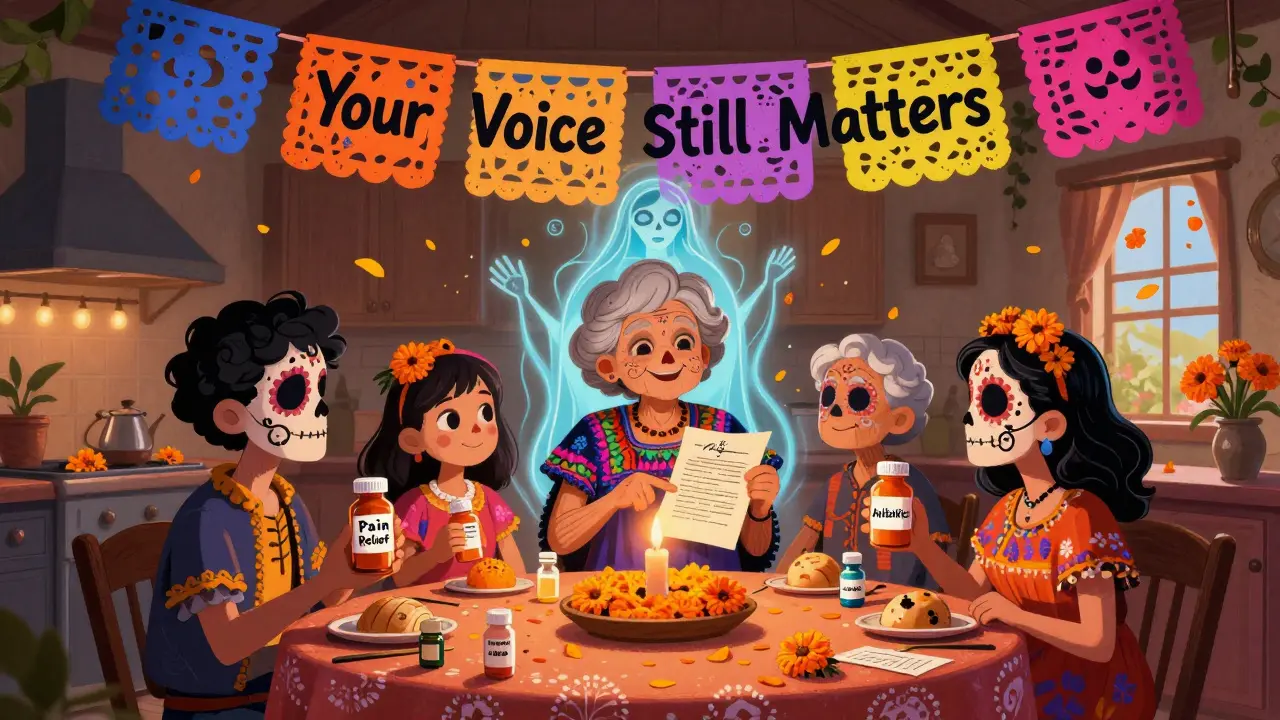
Who Should Be Your Agent?
This isn’t about who’s the oldest, the richest, or the most responsible. It’s about who knows you best. Pick someone who:- Can handle stress without falling apart
- Will stand up to doctors if needed
- Has had honest conversations with you about death and illness
- Isn’t afraid to say “no” to family pressure
How to Actually Do This-Step by Step
This isn’t complicated. But it’s easy to put off. Here’s how to get it done:- Find your state’s form. Go to LawHelp.org or your state’s health department website. All of them offer free, official forms. Don’t buy one from a website. You don’t need to pay.
- Have the talk. Sit down with your chosen agent. Don’t do it over the phone. Don’t do it at Thanksgiving. Do it when you’re both calm. Ask: “If I couldn’t speak, what would you want for me?” Then tell them what you want. Be specific about meds. Pain. Infections. Hospital stays.
- Fill out the form. Follow your state’s rules. Sign. Get witnesses or notarize. Keep the original in a safe but accessible place.
- Give copies to everyone. Give one to your agent. Give one to your doctor. Give one to your hospital. Give one to your closest family member. Ask your doctor to put it in your medical record.
- Review it yearly. If you get a new diagnosis. If your agent moves away. If your views change. Update it. It’s not set in stone.
What Happens If You Don’t Do This?
If you don’t name an agent, the law steps in. And the law doesn’t know you. In most states, your spouse, then adult children, then parents get to decide. But what if you’re divorced? What if your kids fight? What if your parents don’t understand your values? A 2022 survey by The Conversation Project found 41% of agents felt uncertain about medication decisions-even when they had the paperwork. That uncertainty leads to delays. To over-treatment. To under-treatment. To guilt. One real case: a woman in Indiana refused blood thinners because she thought her mother didn’t want “drugs.” But her mother had written, “If I’m at risk for a stroke, give me the blood thinner-even if I’m old.” The agent didn’t know. The stroke happened. The family never forgave themselves.
Technology Is Helping-But Not Replacing Conversation
There are apps now. Like PREPARE, from UCSF. It uses short videos to help you think through tough choices. “If you couldn’t speak, would you want this?” It’s free. It’s good. Hospitals are starting to store these forms electronically. By 2025, Medicare requires all participating hospitals to have your advance directive in your digital chart. But here’s the truth: no app, no form, no digital system can replace a real conversation. AI might help you think. But only you can tell your agent what you really fear. What you really want. What matters most.Final Thought: This Isn’t About Death. It’s About Respect.
Planning ahead isn’t morbid. It’s loving. It’s saying: “I don’t want you to guess. I don’t want you to carry the weight of my choices alone.” Your agent doesn’t need to be a doctor. They don’t need to be perfect. They just need to know you. Start today. Not next month. Not when you’re older. Right now. Sit down. Talk. Write it down. Give them the form. Then hug them. Because you’re not just preparing for a medical crisis. You’re giving them the gift of clarity.Can my agent refuse medication even if the doctor says it’s necessary?
Yes. Your agent has the legal right to refuse any treatment-including medication-if it goes against your wishes as you expressed them. Doctors must follow your agent’s decision unless it violates state law (like refusing life-saving treatment to a minor). But the agent must be acting based on your known preferences, not their own beliefs.
Do I need a lawyer to create a medical power of attorney?
No. All 50 states offer free, official forms online. You don’t need a lawyer unless your situation is complex-like if you have multiple families, significant assets, or psychiatric conditions. For most people, a state form with two witnesses is enough. But if you’re unsure, a free legal aid clinic can review it for you.
Can I name more than one agent?
You can, but it’s not recommended. If you name two people and they disagree, care can be delayed. Some states allow you to name a primary and a backup. That’s better. If your first agent can’t act, the backup steps in. Avoid joint decisions unless you’re certain they’ll always agree.
What if my family disagrees with my agent’s decision?
If your agent is legally appointed and acting according to your wishes, family members cannot override them. Hospitals follow the agent’s decision. If family challenges it in court, they must prove the agent is acting against your known preferences-not just that they don’t like the choice. That’s why clear documentation and conversations are so important.
Does this cover psychiatric medications?
In most states, yes. But some states, like Indiana, have special rules for psychiatric treatment. You may need a separate psychiatric advance directive if you have a history of mental illness. Even if your state doesn’t require it, it’s smart to include specific instructions about antipsychotics, antidepressants, or sedatives in your main form.
How often should I update my medical power of attorney?
At least once a year, or after any major life change: divorce, diagnosis, death of a loved one, or if your agent moves away or becomes unable to serve. Your values may change too. What you wanted at 60 might be different at 75. Revisit your form regularly. It’s not a one-time task-it’s part of your health care routine.
Next Steps: What to Do Today
If you haven’t done this yet, here’s what to do right now:- Go to LawHelp.org and find your state’s form.
- Write down three specific medication preferences you want your agent to know.
- Call the person you trust most and say: “I need to talk to you about what I’d want if I got really sick.”
- Fill out the form this week.
- Give copies to your doctor and your agent.
Edith Brederode
January 18, 2026 AT 20:55This hit me right in the feels 😭 I just signed mine last week after my mom had that scare in the ER. I told my sister, 'If I'm groaning but not screaming, give me the morphine. If I'm silent? Don't wake me up.' She cried. I cried. Then we ate tacos. Best conversation ever.
Arlene Mathison
January 20, 2026 AT 00:02STOP WAITING. Seriously. I know you’re thinking ‘I’m young,’ ‘I’m healthy,’ ‘It won’t happen to me.’ Newsflash: accidents don’t wait for your schedule. I had a friend in a bike crash at 28-no POA, no plan, and her parents fought over whether to pull the plug. She’s fine now. But the guilt? It never left. Do it today. Not tomorrow. TODAY. 🚨
thomas wall
January 21, 2026 AT 09:21It is truly lamentable that so many individuals remain willfully ignorant of their own legal rights and responsibilities. The notion that one can simply ‘hope for the best’ in matters of life and death is not merely negligent-it is an abdication of moral duty. One does not leave the operation of a motor vehicle to chance; why then should one entrust the sanctity of their own physiology to the whims of unprepared relatives? This is not a suggestion. It is a civic imperative.
Paul Barnes
January 23, 2026 AT 09:06There's a typo in the third paragraph: 'This document only kicks in if doctors determine you can’t understand your condition or make choices. Until then, you’re still in charge.' Should be 'This document only kicks in if doctors determine you can’t understand your condition or make choices. Until then, you’re still in charge.' You have two closing
tags right after each other. Minor, but it breaks the flow.Andy Thompson
January 25, 2026 AT 01:20They're pushing this because they want to control your body. The government, the hospitals, Big Pharma-they all want you to sign away your rights so they can decide when you die. You think your 'agent' is gonna fight for you? Nah. They'll just follow the script. And don't even get me started on the 'digital chart' crap. They're already tracking your meds, your sleep, your poop. Next thing you know, your POA gets revoked if you eat too much sugar. Wake up, sheeple. 🇺🇸
sagar sanadi
January 26, 2026 AT 02:26Why you people always think only you matter? In India, we just let God decide. No paper. No forms. No drama. You want to live? Live. You want to die? Die. Simple. Why make it so complicated? This is American overthinking.
kumar kc
January 28, 2026 AT 00:09Signing a form doesn’t make you brave. Talking to your family does. Most people skip the talk. That’s why it fails.
Thomas Varner
January 28, 2026 AT 05:19Okay, so I did this last year... I named my best friend, not my kid, because my kid still thinks 'life support' means a Netflix subscription. I wrote down: 'If I'm not laughing at least once a day, turn it off.' My doctor laughed. Then he cried. Then he added it to my chart. Best decision I ever made. Also, I put 'no antibiotics for UTIs after 80' because I don't want to be a zombie in a nursing home. Just saying.
Manoj Kumar Billigunta
January 30, 2026 AT 01:20This is beautiful. I’ve helped three elderly neighbors fill out their forms. One man, 89, said he didn’t want pain meds if he couldn’t recognize his granddaughter. That broke me. But we wrote it down. Now his daughter doesn’t have to guess. You’re not preparing for death. You’re preparing for love. Start with one conversation. That’s all.
Shane McGriff
January 31, 2026 AT 05:59I read this after my dad’s stroke. We didn’t have a POA. The doctors asked us what he’d want. We had no idea. He never talked about it. We said yes to everything. He lived 14 months in a hospital bed, barely conscious. I still hear the beeping. Don’t make my mistake. Sit down. Ask. Write it. Even if it’s awkward. Even if you cry. Do it now. For them. For you.