How to Prevent Overdose in People with Substance Use Disorders: Proven Strategies That Save Lives
 Jan, 26 2026
Every year, more than 70,000 people in the United States die from drug overdoses. Most of these deaths are preventable. The biggest killer isn’t heroin or prescription pills anymore-it’s fentanyl. This synthetic opioid is 50 to 100 times stronger than morphine, and it’s hiding in almost everything: fake oxycodone pills, cocaine, methamphetamine, even what users think is just a small amount of heroin. One tiny dose can stop someone’s breathing. But here’s the truth: we have tools that work. Not just one, but a whole set of strategies that, when used together, cut overdose deaths in half.
Know the Tools: Naloxone Is Your First Line of Defense
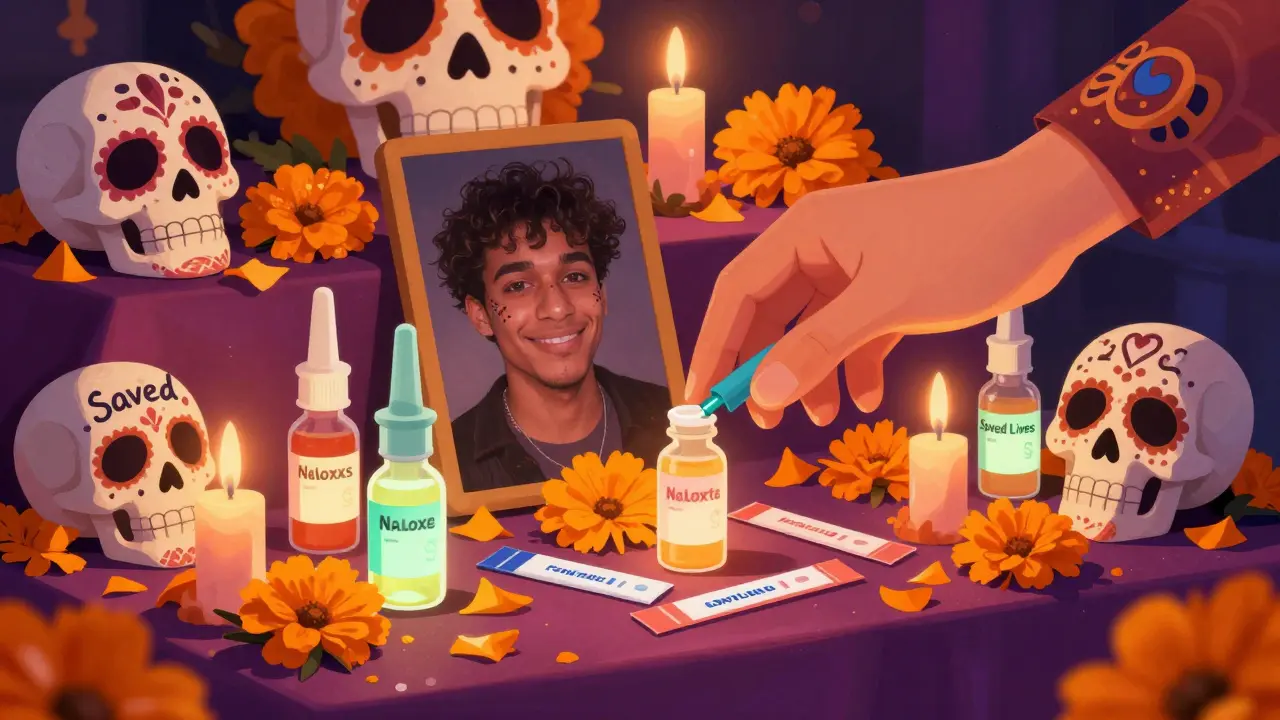
Naloxone, sold under brand names like Narcan and Kloxxado, is the only medication that can reverse an opioid overdose. It works by kicking opioids off brain receptors and restoring breathing. It’s not a cure-it doesn’t treat addiction-but it buys time. And time saves lives.The FDA approved the first over-the-counter naloxone nasal spray in March 2023. That means you don’t need a prescription anymore. You can walk into a pharmacy in most states and buy it like allergy medicine. It’s easy to use: one spray in each nostril. No needles. No training needed. Studies show 96% of people who’ve been shown how to use it can do it correctly-even after six months.
But access isn’t universal. Fourteen states still have restrictions on standing orders, meaning pharmacies can’t just hand it out without a doctor’s note. That’s why community programs are critical. In San Francisco, the DOPE Project distributed naloxone to over 10,000 people in 2019 and prevented 2,600 overdose deaths. In rural areas where clinics are scarce, peer-led distribution networks are filling the gap. If you know someone who uses opioids, keep naloxone on hand. Keep two doses. Fentanyl is so potent, sometimes one dose isn’t enough.
Test Before You Use: Fentanyl Test Strips Are Simple, Cheap, and Life-Saving
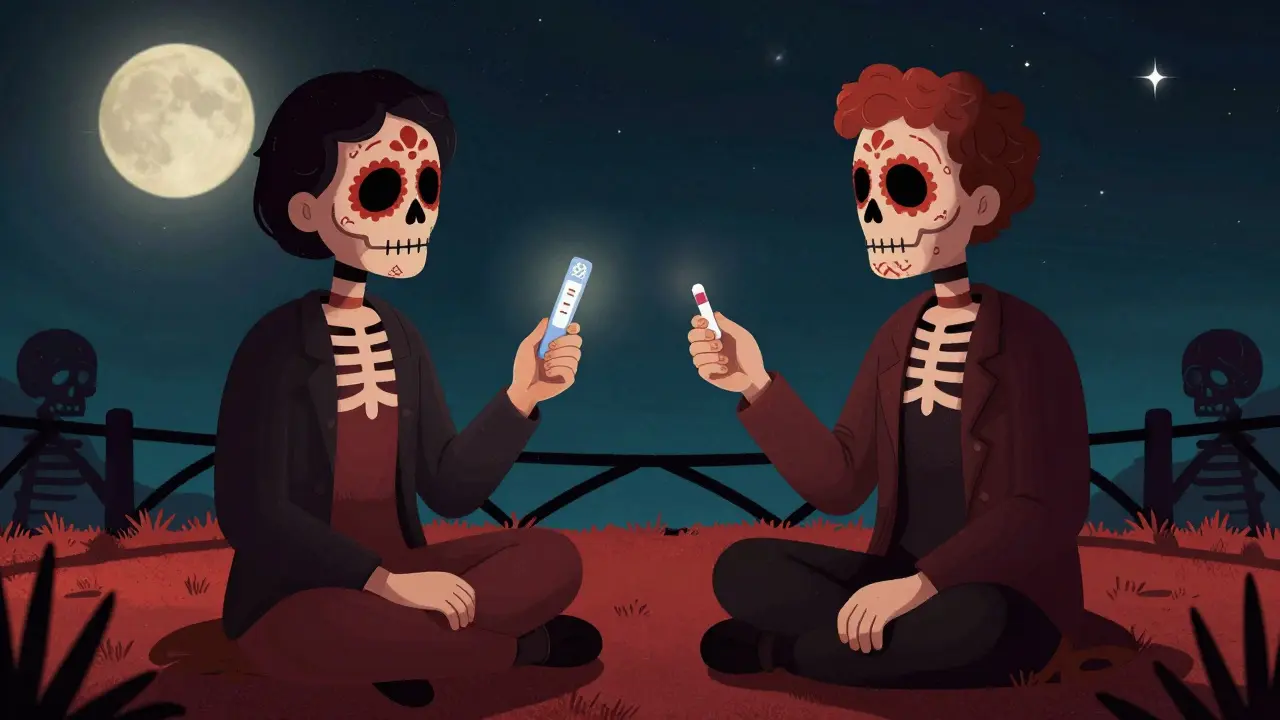
Many people who overdose don’t know they’re using fentanyl. They think they’re taking cocaine or a prescription pill. Fentanyl test strips (FTS) cost less than a dollar each and can detect fentanyl in powders, pills, and even liquids. You just dip the strip in a small sample mixed with water. In 15 seconds, you get a result: one line means fentanyl is present. Two lines mean it’s not.It’s not perfect. The strips can’t detect every variant of fentanyl, and they don’t tell you how much is there. But they do tell you if it’s present-and that’s enough to change behavior. A 2022 CDC study found that people who used test strips were 33% more likely to avoid using if fentanyl showed up. Some users started carrying smaller amounts. Others began using with someone else. A few switched to safer consumption sites.
These strips are legal in most states and available through harm reduction organizations, syringe exchanges, and even some online retailers. If you’re helping someone with a substance use disorder, teach them how to use these strips. Make it part of their routine-like checking the expiration date on medicine.
Treatment Works: Medication-Assisted Treatment (MAT) Reduces Overdose Risk by Half
The most effective way to prevent overdose long-term is to treat the disorder. Medication-Assisted Treatment (MAT) combines FDA-approved medications with counseling and behavioral therapy. The three main medications are methadone, buprenorphine, and naltrexone.Methadone and buprenorphine are opioid agonists. They activate the same brain receptors as heroin or fentanyl-but slowly and steadily. That stops cravings and withdrawal without the high. Studies from the World Health Organization show that people on these medications are 50% less likely to die from an overdose. They’re also more likely to stay in treatment-40 to 60% stay for a year, compared to just 10 to 20% with therapy alone.
Naltrexone is different. It blocks opioids entirely. It doesn’t reduce cravings, but it prevents opioids from working if someone relapses. It comes as a daily pill or a monthly injection. It’s safest for people who’ve already detoxed.
But here’s the problem: 82% of U.S. counties don’t have enough providers to offer all three medications. In rural areas, 60% of counties have zero MAT providers. That’s not a shortage of drugs-it’s a shortage of doctors trained to prescribe them. If you or someone you know needs treatment, call SAMHSA’s helpline (1-800-662-4357). They can connect you to providers who accept Medicaid or offer sliding-scale fees.
Never Use Alone: The Power of a Watchful Friend
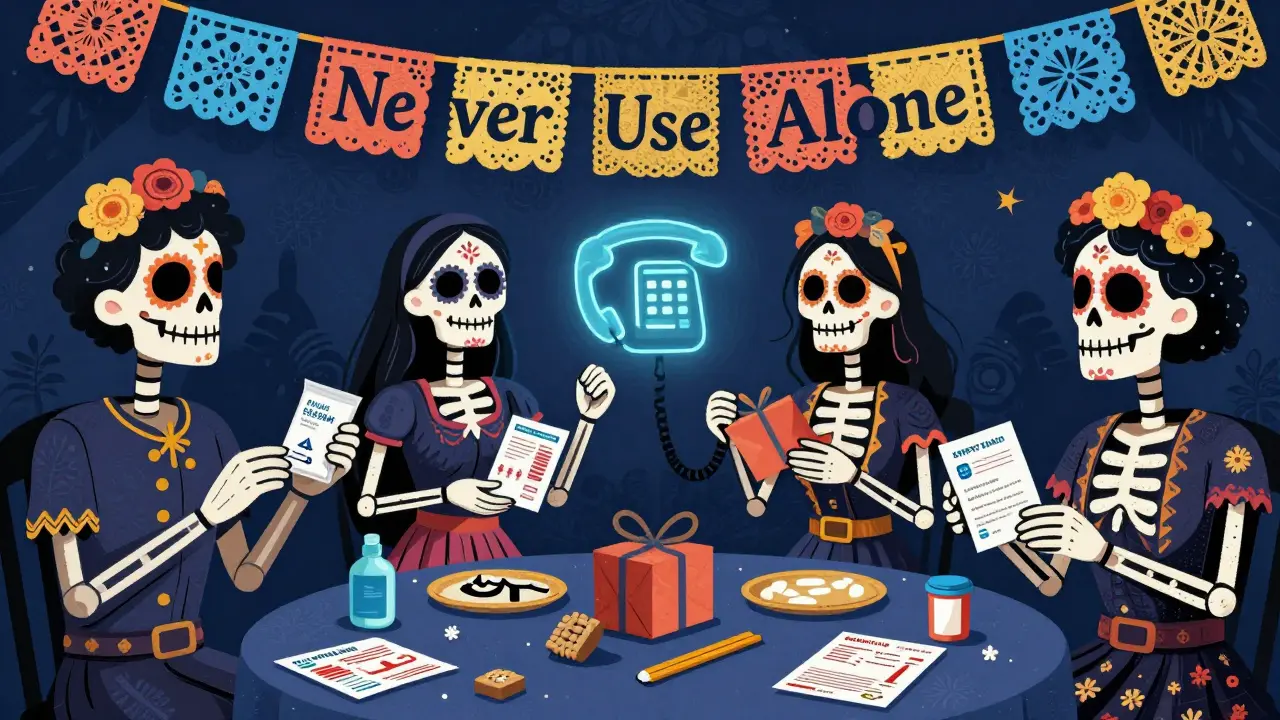
Most overdoses happen alone. People use in bathrooms, in cars, in isolated rooms. If something goes wrong, no one knows. That’s why the “Never Use Alone” model is so powerful.The “Never Use Alone” hotline, launched in 2020, lets people call or text before using. An operator stays on the line. If the person stops responding, the operator calls 911 and sends help. In 2023, they received about 12,000 calls per month. Over 80% of those calls came from people who said they’d never called for help before.
You don’t need a hotline to do this. Just make a plan: use with someone you trust. Have naloxone ready. Agree on a signal if something goes wrong. If you’re the one watching, don’t leave. Don’t assume they’re just sleeping. Check their breathing. Pinch their nail bed-if it doesn’t turn pink in 3 seconds, they’re not getting enough oxygen. Call 911 immediately. Give naloxone. Start chest compressions if they’re not breathing.
Safety Planning: A Simple Checklist That Reduces Risk by 28%
A safety plan isn’t therapy. It’s a practical, written guide for what to do before, during, and after using. The New York State Department of Health created one that’s been used by over 10,000 people. It includes:- Who to call before using
- Where to use (a safe, public place if possible)
- How much to use (start with a small amount)
- Having naloxone and test strips ready
- Not mixing drugs (especially alcohol, benzodiazepines, or xylazine)
- What to do if someone overdoses
People who used this plan had 28% fewer overdose events in a 2022 study. It’s not about stopping use-it’s about making use safer. If someone isn’t ready to quit, this is the next best thing.
Watch Out for Xylazine: The New Threat No One Talks About
A new drug is showing up in the drug supply: xylazine, also known as “tranq.” It’s a veterinary sedative, not an opioid. It doesn’t respond to naloxone. But it’s being mixed with fentanyl to make it cheaper and stronger. It causes severe skin ulcers, slow heart rate, and deep sedation that looks like an overdose.The DEA found xylazine in 23% of fentanyl powder and 7% of fentanyl pills seized in 2022. If someone is unresponsive, doesn’t respond to naloxone, and has open sores on their arms or legs, xylazine may be involved. Treatment is supportive: breathing support, wound care, and monitoring for organ damage. There’s no antidote yet.
That’s why knowing what’s in the drug matters more than ever. Test strips don’t detect xylazine, so if someone’s not responding to naloxone, assume it’s mixed with something else. Call 911 anyway. Don’t give up.
What Happens After an Overdose?
Surviving an overdose doesn’t mean the danger is over. In fact, the first two weeks after release from jail or hospital are the most dangerous. People lose their tolerance. If they use the same amount they used before, they can overdose again. A 2022 study in JAMA Psychiatry found that people recently released from incarceration are 120 times more likely to die from an overdose in those first two weeks.That’s why discharge planning is critical. Hospitals and jails should give naloxone and a prescription for buprenorphine before release. They should connect people to a MAT provider within 72 hours. If they don’t, ask for help. Call your local harm reduction center. They often have peer navigators who can walk you through the next steps.
Stigma Is the Silent Killer
One of the biggest barriers to prevention? Shame. Over 40% of people with substance use disorders say they avoid seeking help because they’re afraid of being judged. That’s not just unfair-it’s deadly. When people hide their use, they’re more likely to use alone. They’re less likely to carry naloxone. They’re less likely to test their drugs.Change the conversation. Don’t say “addict.” Say “person with a substance use disorder.” Don’t say “junkie.” Say “someone who uses drugs.” Talk about overdose prevention like you would about heart disease or diabetes. It’s a medical issue, not a moral one. When you normalize help-seeking, you save lives.
What You Can Do Right Now
You don’t need to be a doctor or a policymaker to make a difference. Here’s what you can do today:- Get naloxone. Buy it at the pharmacy. Keep it in your car, your bag, your home.
- Learn how to use it. Watch a 5-minute video on YouTube from the CDC or the American Red Cross.
- Carry fentanyl test strips. If you’re helping someone, give them a pack.
- Ask: “Do you have someone with you when you use?” If not, offer to be there.
- Share this information. Not to judge. Not to scare. Just to help.
Overdose prevention isn’t about perfection. It’s about reducing risk. One person with naloxone. One person who tests their drugs. One person who doesn’t use alone. That’s how you stop the next death.
TONY ADAMS
January 27, 2026 AT 14:27bro i got naloxone in my glovebox and i dont even use. just in case some dumbass friend of mine tries to do coke and gets fentanyled. saved my boy last year. he thought it was just oxy but it was fentanyl the whole time. one spray and he was coughing like a chainsaw. we called 911 anyway. no regrets.
Ashley Karanja
January 28, 2026 AT 08:06the real revolution here isn't just naloxone or test strips-it's the paradigm shift from moral judgment to harm reduction as public health. we've spent decades criminalizing addiction, treating it like a character flaw, when it's a neurobiological disorder with social determinants as deep as food deserts and trauma. fentanyl test strips aren't enabling-they're epistemic tools that restore agency. when someone knows what they're ingesting, they're no longer passive victims of a poisoned supply chain. this is medicine meeting pragmatism, and it’s beautiful. 🌱💉
Napoleon Huere
January 29, 2026 AT 21:11listen. i used to think people who used drugs were weak. then my cousin OD’d and i found out he was using what he thought was Adderall. turned out it was fentanyl-laced chalk dust. i didn’t know what to do. no one taught me. if i had known about test strips or naloxone, maybe he’d still be here. this post isn’t just info-it’s a lifeline. thank you. i’m buying two kits today and leaving one at my local gas station. if you’re reading this and you’ve never thought about this stuff… do it. it’s not about politics. it’s about people.
Neil Thorogood
January 30, 2026 AT 19:00so let me get this straight… we’re giving out free overdose antidotes like candy but still calling people ‘junkies’? 🤦♂️ the system is so broken it’s hilarious. i’ve seen cops confiscate naloxone from people who found it on the street. like, congrats, you just killed someone with bureaucracy. also-xylazine? the drug that turns your arm into a horror movie? why isn’t this on every news channel? we’re letting people die because we’d rather look away than fix it. 🤬
Joanna Domżalska
February 1, 2026 AT 04:02so you’re saying we should just hand out drugs and naloxone and call it a day? what about personal responsibility? if people didn’t want to get high so badly, they wouldn’t risk it. this is just enabling. also, why are we spending money on test strips when we could be building more prisons? at least then they’d be safe.
Faisal Mohamed
February 2, 2026 AT 07:40the ontological framework of harm reduction necessitates a reconfiguration of the biopolitical apparatus governing substance use. fentanyl test strips represent a semiotic rupture in the pharmacological hegemony of the illicit market, enabling epistemic autonomy for the embodied subject. however, the neoliberal co-optation of MAT via Medicaid mandates risks commodifying recovery as a transactional outcome, thereby reproducing the very logics of alienation that precipitated the crisis in the first place. 🌍💊
Curtis Younker
February 3, 2026 AT 13:14hey. if you’re reading this and you’re scared to ask for help-you’re not alone. i was there. i used alone for years. i didn’t think anyone cared. then someone handed me a test strip and said, ‘you matter.’ that changed everything. you don’t have to quit today. you just have to be safe today. get the naloxone. use with someone. call the hotline. it’s not weakness-it’s courage. i’m proud of you. you’ve already won by being here. 💪❤️
Shawn Raja
February 4, 2026 AT 18:43can we talk about how wild it is that the most effective overdose prevention tool is… a 99-cent strip of paper? or that a 5-minute YouTube video can save more lives than a $200k rehab? capitalism turned addiction into a profit center, but the people on the ground? they’re using duct tape and common sense to keep each other alive. that’s the real American innovation right there. no politicians. no lobbyists. just humans. 🇺🇸
Ryan W
February 5, 2026 AT 08:02the FDA approved OTC naloxone in 2023. this is correct. however, the 14 states with standing order restrictions are operating within their sovereign legal authority under the Supremacy Clause. the assertion that this is a ‘barrier’ is ideologically biased. personal responsibility, not state-sponsored distribution, should be the cornerstone of public health policy. also, ‘never use alone’ is a moral failing, not a solution. if you can’t control your impulses, incarceration is the appropriate response.
Henry Jenkins
February 6, 2026 AT 02:49interesting how the post mentions xylazine but doesn’t explain why it’s being mixed in. from what i’ve read, it’s because fentanyl is expensive to produce, and xylazine is cheap, stable, and adds sedative weight. dealers aren’t trying to kill people-they’re trying to stretch their product. but the unintended consequence is that now we’ve got a whole new class of overdose that naloxone can’t fix. it’s like playing whack-a-mole with poison. i wonder if there’s any research on detecting xylazine with cheaper tech-like a smartphone spectrometer or something. maybe we need open-source detection tools.
George Rahn
February 7, 2026 AT 20:33the decline of American moral fortitude is palpable. we have replaced discipline with distribution, accountability with access, and virtue with vending machines. to arm every citizen with naloxone is to surrender to chaos. the opioid crisis is not a medical issue-it is the inevitable fruit of a society that has abandoned its duty to cultivate character. if we cannot teach self-restraint, then we have already lost. The Constitution did not guarantee safety from one’s own choices. It guaranteed liberty-and liberty demands courage, not chemical crutches.