How to Avoid Contamination When Splitting or Crushing Pills: A Safe, Step-by-Step Guide
 Dec, 4 2025
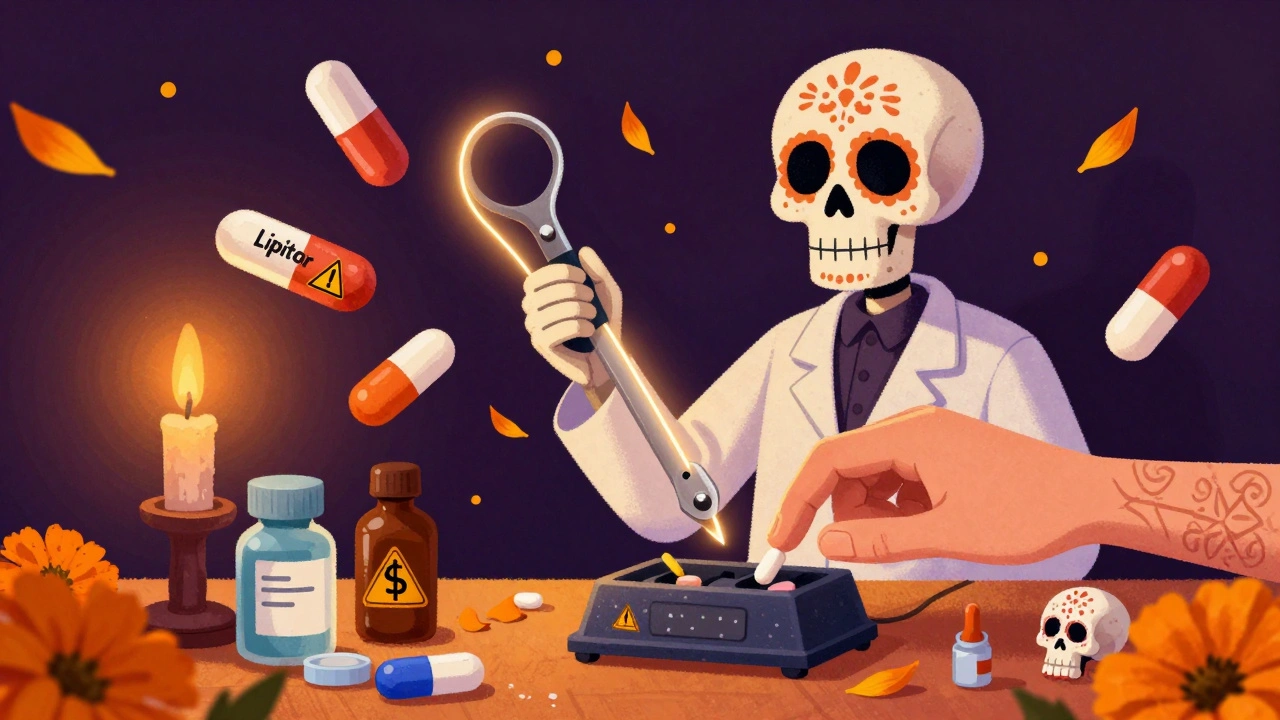
Splitting or crushing pills might seem like a simple fix-maybe you’re trying to save money, make it easier to swallow, or match a doctor’s exact dose. But if you do it wrong, you’re not just risking an uneven dose. You could be exposing yourself or someone else to dangerous contamination. A single crushed tablet of a chemotherapy drug like cyclophosphamide can leave toxic residue on your fingers, tools, or even the kitchen counter. And that’s not even the worst of it.
Why This Isn’t Just About Clean Hands
Most people think contamination means dirt or germs. But when it comes to pills, contamination is about chemical residue. That’s the leftover powder or particles from one medication that sticks to your splitter, your fingers, or your crushing device-and then gets mixed into the next pill you handle. The FDA says 97.8% of extended-release, enteric-coated, or hazardous drugs should never be crushed or split. That includes blood thinners like warfarin, antidepressants, seizure meds, and cancer drugs. If you crush one of those, you don’t just change how it works-you might release a full dose all at once. That can be deadly. Even for pills that are technically splittable, the risk of contamination is real. A 2021 study from the University of Jordan found that using scissors or a knife to split pills leads to dose errors in over 36% of cases. That’s more than one in three pills. And if you reuse the same splitter for different meds without cleaning it, you’re basically turning your kitchen into a pharmacy mixing lab-with no controls.What Pills Can You Split or Crush? (And What You Must Never Touch)
Not all pills are created equal. The only pills you should even consider splitting are those with a visible score line-a groove down the middle-and those labeled by the manufacturer as safe to split.- Safe to split: Most plain, immediate-release tablets like atorvastatin (Lipitor), lisinopril, or simvastatin-if they have a clear score line.
- Never split or crush: Enteric-coated pills (they have a shiny coating), extended-release tablets (often labeled ER, XR, SR, or CR), capsules, pills with a hard shell, or anything marked "DO NOT CRUSH" on the label.
- Hazardous drugs: Cancer meds (like cyclophosphamide, methotrexate), hormone therapies, and some antivirals. These are especially dangerous if crushed because they can become airborne. OSHA says even tiny amounts can cause skin irritation, reproductive harm, or long-term health issues for caregivers.
The Right Tools: No Kitchen Scissors Allowed
If you’re splitting pills, you need a real pill splitter-not a knife, not scissors, not a hammer. Look for one with a v-shaped holder and a retractable blade. The blade should be made of stainless steel with a tolerance of 0.05mm. That’s how precise you need to be. A 2022 study showed that using a proper splitter gives you 92.4% dose accuracy. Using scissors? You’re down to 63.7%. That’s a huge gap. For crushing, you need a closed-system crusher. The Silent Knight model is the gold standard. It seals the pill inside a chamber so powder doesn’t escape. Standard crushers? They release 27.9% of the powder into the air. For hazardous drugs, that’s not just messy-it’s a health hazard. And here’s the kicker: if you’re splitting or crushing for someone else-like a parent, partner, or resident in a care home-you need a dedicated tool for each person. Sharing equipment across multiple patients increases contamination risk by 17.8%, according to the Happy Healthy Lives care guide from 2022.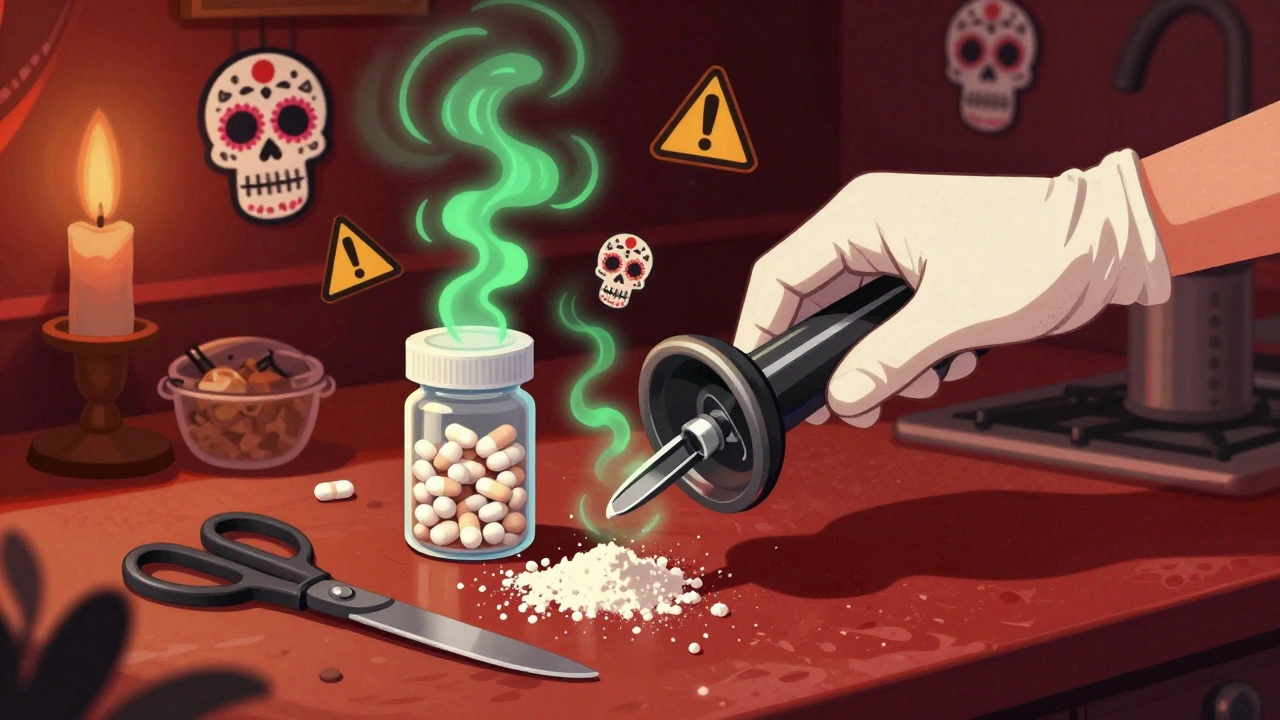
Step-by-Step: How to Split or Crush Safely
Follow these steps every single time. No shortcuts.- Wash your hands. Use soap and water for at least 20 seconds. Dry them completely.
- Put on gloves. Nitrile gloves are best. They block chemical residue better than latex.
- Clean your tool. Wipe the splitter or crusher with a 70% isopropyl alcohol wipe. Let it air dry. Don’t use water-some pills dissolve in moisture.
- Check the pill. Is it scored? Does the label say "DO NOT CRUSH"? If in doubt, don’t do it. Call the pharmacist.
- Split or crush one pill at a time. Never pre-split a whole bottle. The FDA says storing split pills can cause them to break down, lose potency, or absorb moisture.
- Use the tool properly. Place the pill in the holder, close the lid, and press firmly. Don’t wiggle it. Don’t force it.
- Dispose of the tool’s residue. If you’re crushing, empty the chamber into a sealed container. Don’t pour powder down the sink or toilet.
- Clean the tool again. Wipe it with alcohol after every single use-even if you’re splitting the same pill type again.
- Administer immediately. Don’t let a split or crushed pill sit out. Give it right away.
What If You’ve Been Doing It Wrong?
If you’ve been using scissors, a knife, or a shared splitter for months-or years-you’re not alone. A 2023 survey found that 63.2% of care home staff admitted to using scissors because they didn’t have proper tools. Another 41.7% of home caregivers didn’t even know cross-contamination was a risk. But it’s not too late to fix it. Start by talking to your pharmacist. Ask:- "Is this pill safe to split or crush?"
- "Do you have a pill splitter I can borrow or buy?"
- "Can you check if my meds are on the "DO NOT CRUSH" list?"
How to Spot a Problem After Splitting or Crushing
Signs something went wrong:- The pill looks uneven, dusty, or crumbly after splitting.
- You see white powder on the splitter, your gloves, or the counter.
- The person feels dizzy, nauseous, or unusually sleepy after taking the split pill.
- The medication seems less effective-or too strong.
The Bigger Picture: Why This Matters Beyond Your Kitchen
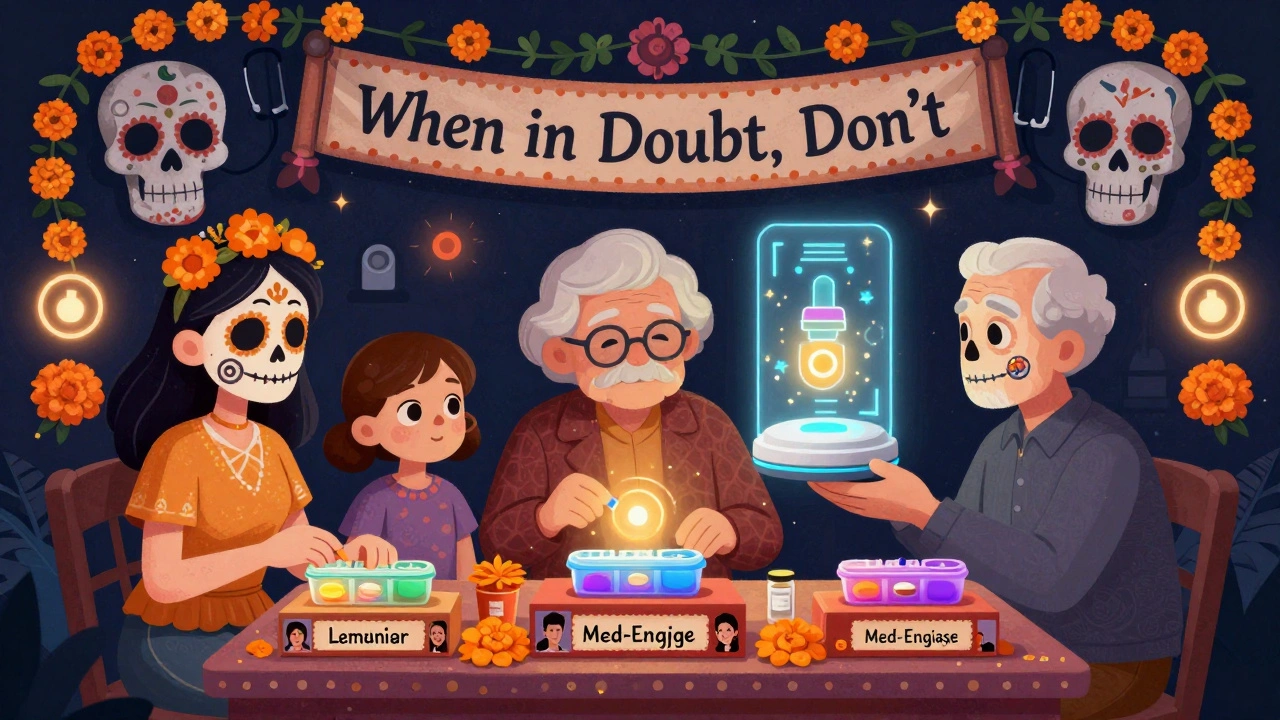
This isn’t just about personal safety. Improper pill splitting and crushing contribute to 8.3% of medication errors in hospitals and care homes, according to the Agency for Healthcare Research and Quality. That’s thousands of preventable mistakes every year. The FDA’s 2024 draft guidance requires all manufacturers to test and label whether a scored tablet can be safely split. That’s a big step. But until every pill is clearly labeled, the responsibility falls on you. And if you’re using a smart splitter-like the Med-Engage device that checks dose accuracy before releasing the pill-you’re not just being safe. You’re part of the future. Early trials show these devices cut errors by 47.2%.Final Reminder: When in Doubt, Don’t
The safest way to avoid contamination? Don’t split or crush unless you absolutely have to. And even then, only if:- The pill is clearly labeled as splittable.
- You have the right tool.
- You clean it after every use.
- You never pre-split a whole supply.
- You never share tools between people.
Can I split pills with a knife or scissors?
No. Knives and scissors are not precise enough and increase the risk of uneven doses and contamination. Studies show they lead to dose errors in over 36% of cases. Always use a dedicated pill splitter with a stainless steel blade and v-shaped holder for accuracy and safety.
Is it safe to crush pills for someone who can’t swallow them?
Only if the pill is approved for crushing and you use a closed-system crusher. Never crush enteric-coated, extended-release, or hazardous drugs. For cancer meds or hormones, crushing without a sealed system can expose you to toxic particles. Always check with a pharmacist first.
Can I split a whole bottle of pills at once and store them?
No. The FDA explicitly warns against this. Split pills lose potency faster, absorb moisture, and can degrade. Always split one pill at a time and take it immediately. Storing pre-split pills increases the risk of inaccurate dosing and contamination.
How do I clean my pill splitter between uses?
Wipe all surfaces with a 70% isopropyl alcohol wipe after every single use-even if you’re splitting the same medication again. Let it air dry. Never rinse with water, as moisture can damage some pills or leave residue. Never share splitters between people without thorough cleaning.
What if I accidentally crush a pill that shouldn’t be crushed?
Stop using the pill immediately. Do not give it to anyone. Wash your hands and clean the area with alcohol. Contact your pharmacist or doctor right away. If it was a hazardous drug, you may need to report exposure. Even small amounts of some cancer drugs can be harmful with repeated exposure.
Are there free tools available for pill splitting?
Yes. Many pharmacies, especially those serving Medicare patients, offer free pill splitters. Some also provide closed-system crushers for hazardous medications at no cost. Ask your pharmacist-they’re often happy to help if you’re managing long-term meds.
Can I use the same splitter for different medications?
Only if you clean it thoroughly with alcohol between each use. But it’s safer to have a dedicated splitter for each person. Sharing tools increases contamination risk by 17.8%, according to care guidelines. If you’re helping multiple people, assign one splitter per person.
How do I know if a pill is safe to split?
Look for a visible score line on the tablet and check the label for "DO NOT CRUSH" or "DO NOT SPLIT." If it’s not clear, ask your pharmacist or check the FDA’s Tablet Splitting resource. Never assume a pill is safe just because it looks like it can be split.
What should I do with leftover pill powder after crushing?
Dispose of it safely. Put the powder in a sealed container and take it to a pharmacy for disposal. Never pour it down the sink, toilet, or trash. Hazardous drug powder can contaminate water supplies and harm the environment.
Is it safer to get a lower-dose pill instead of splitting?
Yes, and it’s often the best option. Many medications come in lower strengths specifically to avoid splitting. Ask your doctor if a lower-dose version is available. It’s more accurate, safer, and reduces the risk of contamination or dosing errors.
sean whitfield
December 6, 2025 AT 02:00Mark Curry
December 7, 2025 AT 05:20aditya dixit
December 7, 2025 AT 18:14Ada Maklagina
December 9, 2025 AT 08:09Katie Allan
December 11, 2025 AT 04:51James Moore
December 12, 2025 AT 21:28Chris Brown
December 13, 2025 AT 04:33Stephanie Fiero
December 13, 2025 AT 18:07