Anticoagulant and Herbal Supplement Interactions: What You Need to Know for Safety
 Jan, 16 2026
More than half of adults over 65 in the U.S. take a blood thinner like warfarin or apixaban. And nearly half of them are also taking herbal supplements-thinking they’re harmless because they’re "natural." That’s where things get dangerous. Anticoagulant and herbal supplement interactions aren’t just theoretical risks. They’re landing people in emergency rooms with internal bleeding, strokes, or clots that shouldn’t have happened.
Why This Isn’t Just a "Natural Means Safe" Myth
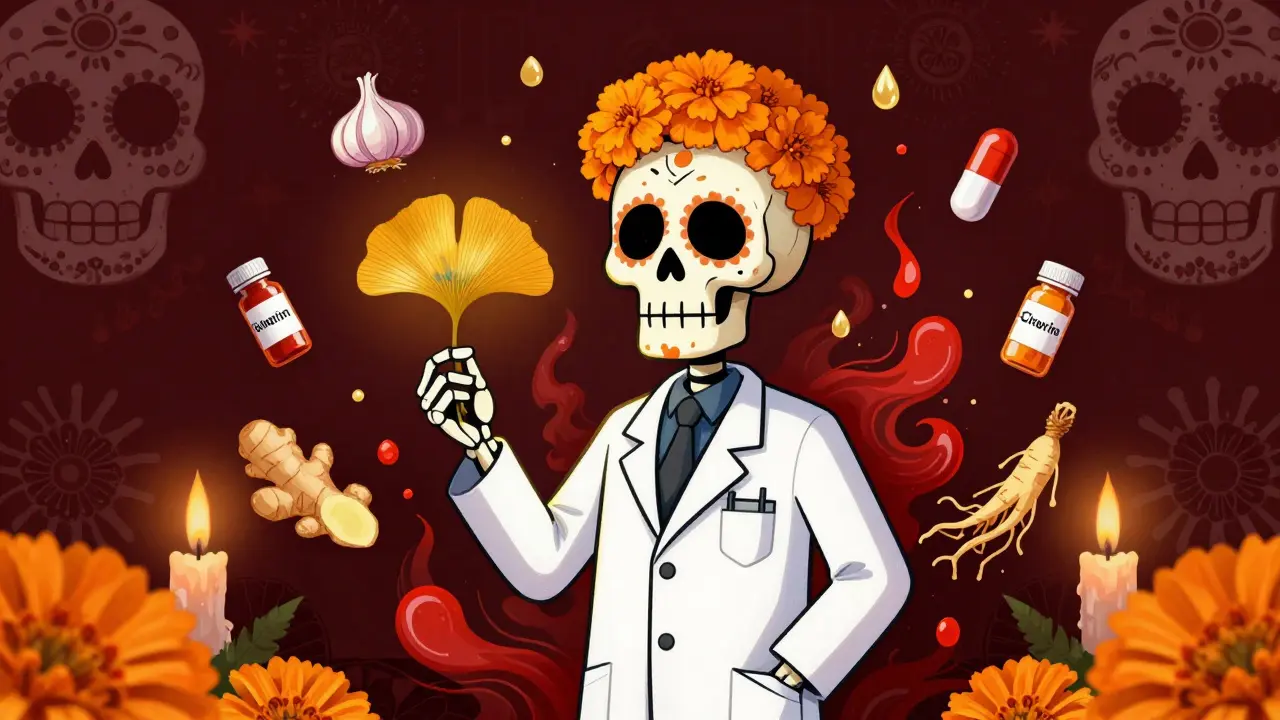
People assume herbs are gentle. But herbs are powerful. They’re concentrated plant chemicals, and your body doesn’t care if they come from a pharmacy or a farmer’s market. Ginkgo biloba, garlic, ginger, and ginseng don’t just "support circulation." They directly interfere with how blood clots. Take Ginkgo biloba with warfarin? That’s like adding another blood thinner without telling your doctor. A 2023 study tracked 12 cases where patients’ INR levels-how long it takes their blood to clot-spiked by 300% to 400% within just three days of starting Ginkgo. One man needed a transfusion. Another nearly died from a brain bleed.The Top 10 Dangerous Herbs (And What They Do)
The FDA’s 2024 review of over 14,000 adverse events found that 68% of serious cases involved just 10 herbs. Here’s what they do:- Ginkgo biloba: Blocks platelet function. Doubles bleeding risk with warfarin.
- Garlic: Inhibits platelet aggregation. Can cause nosebleeds or bruising you can’t explain.
- Ginger: Slows clotting. Even 1 gram a day can push INR up in sensitive people.
- Ginseng: Can either increase bleeding OR reduce warfarin’s effect-unpredictable.
- St. John’s Wort: Speeds up liver metabolism. Makes apixaban and rivaroxaban 50% less effective.
- Chamomile: Contains coumarin, a natural blood thinner. Adds to warfarin’s effect.
- Cranberry: Not just for UTIs. Can increase INR by up to 30% in some people.
- Green tea: High doses (over 5 cups/day) interfere with vitamin K absorption, making warfarin unpredictable.
- Chinese wolfberry (goji berry): Contains compounds that inhibit clotting enzymes.
- Dong quai: Used in traditional Chinese medicine. Has been linked to major bleeding in 17 documented cases.
And it’s not just these. CBD oil, now widely used for sleep and pain, was shown in a 2024 trial to increase INR by 2.8 times in nearly 7 out of 10 warfarin users. That’s not a coincidence. That’s a red flag.
Warfarin vs. Newer Blood Thinners: Which Is Safer?
Many assume newer drugs like apixaban (Eliquis) or rivaroxaban (Xarelto) are completely safe with herbs. They’re not. While they don’t rely on the same liver enzymes as warfarin, they’re still vulnerable. St. John’s Wort cuts apixaban levels in half within 72 hours. That means your blood starts clotting again-right when you’re trying to prevent a stroke. Warfarin is trickier because it has a narrow window. Your INR needs to stay between 2.0 and 3.0. Too low? Risk of clot. Too high? Risk of bleeding. Herbs can push you out of that range fast. Newer drugs don’t need daily INR checks, but they’re not immune. And if you’re on warfarin? Herbs are a ticking clock.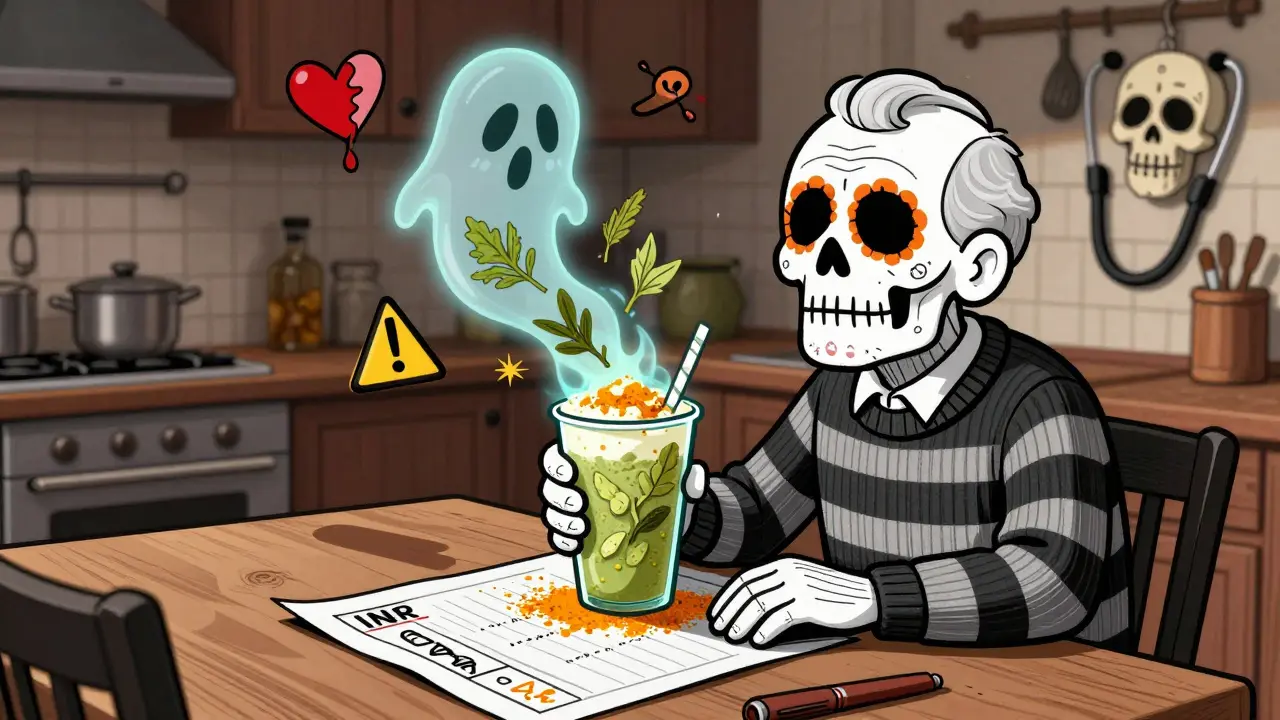
Why Doctors Don’t Always Ask (And Why You Should Speak Up)
A 2024 Medscape survey found that 69% of people on blood thinners took herbs without telling their doctor. Why? Because they were never asked. Only 27% of medical records even note herbal supplement use. Most doctors ask about prescriptions. Few ask about turmeric pills, garlic capsules, or green tea extract. One Reddit user, u/WarfarinWarrior, posted about his INR shooting to 4.2 after adding turmeric to his morning smoothie. He ended up in the ER with a swollen knee joint full of blood. He thought turmeric was "just an anti-inflammatory." It wasn’t. It was a blood thinner. And his doctor had no idea he was taking it. The problem isn’t just patients hiding things. It’s the system. A 2022 study found that while 89% of doctors asked about prescription drugs, only 37% asked about herbs. That gap is deadly.What You Can Do Right Now
If you’re on a blood thinner, here’s what to do:- List every supplement: Include vitamins, teas, powders, tinctures, and essential oils. Don’t leave anything out-even if you think it’s "too small."
- Bring it to every appointment: Don’t wait to be asked. Hand your doctor the list. Say: "I’m on a blood thinner. I want to make sure none of these interfere."
- Check the Natural Medicines Database: It rates interactions from 1 (no known interaction) to 7 (life-threatening). Ginkgo? Level 7. Garlic? Level 6. You don’t need a subscription-many public libraries offer free access.
- Don’t start anything new without checking: Even something like ginger tea. One cup might be fine. Five cups a day? Not if you’re on warfarin.
- Monitor for signs of bleeding: Unexplained bruising, nosebleeds that won’t stop, blood in urine or stool, headaches with dizziness, or joint swelling. These aren’t normal. Call your doctor immediately.
What About Vitamin K and Diet?
You’ve probably heard to avoid spinach and kale because they’re high in vitamin K. But here’s the truth: consistency matters more than avoidance. Eating the same amount of leafy greens every day keeps your INR stable. Fluctuating intake-eating greens one day, then none for a week-is what throws off warfarin. Herbs are worse. They’re unpredictable. One day you take a garlic pill. The next day you don’t. Your INR swings. That’s why doctors worry more about herbs than your salad.
The Bigger Picture: Regulation Is Broken
The FDA doesn’t test herbal supplements before they hit shelves. Under the 1994 Dietary Supplement Health and Education Act, companies don’t need to prove safety or purity. A 2023 FDA report found that 35% of herbal products contain unlisted ingredients-sometimes other drugs, heavy metals, or contaminants. Only 28% of supplements carry third-party verification seals (like USP or NSF). That means you’re guessing what’s in that bottle. And if you’re on a blood thinner? Guessing is a gamble with your life.What’s Changing in 2026
Good news: Things are starting to shift. In 2025, the FDA required all new anticoagulant prescriptions to include a standardized herbal interaction checklist. Pharmacies are now trained to flag high-risk combinations at the point of sale. In Europe, a new AI tool called MedCheck AI is being rolled out in clinics. It scans your meds and supplements in real time and flags dangerous combos with 92% accuracy. In the U.S., pharmacogenomic testing is becoming more common-checking your genes (CYP2C9, VKORC1) to predict how you’ll react to warfarin and herbs. That could cut bleeding risk by over 30%. But none of this replaces you speaking up. Technology helps. But your voice is the most powerful tool you have.Final Thought: Natural Doesn’t Mean Safe
There’s no such thing as a "safe herb" when you’re on a blood thinner. Not for everyone. Not without knowing your exact situation. What’s fine for your neighbor might nearly kill you. The science is clear: these interactions are real, common, and preventable. You don’t have to give up herbal remedies. But you do need to be informed. Talk to your doctor. Show them your bottle. Ask: "Is this safe with my blood thinner?" If they don’t know, ask for a pharmacist. They’re trained for this. Your life isn’t worth guessing.Can I take turmeric with warfarin?
Turmeric contains curcumin, which can inhibit platelet function and increase bleeding risk. In some people, even small amounts can raise INR levels. One case study showed an INR spike to 4.2 after daily turmeric use. It’s not recommended without close monitoring. If you want to use it, tell your doctor and get your INR checked more often.
Is ginger safe for people on blood thinners?
Ginger has mild anticoagulant effects. Low doses (under 1 gram per day) may be tolerated by some people on warfarin, especially if intake is consistent. But higher doses or sudden use can increase bleeding risk. If you use ginger regularly, your doctor should monitor your INR. Don’t start taking ginger supplements without checking first.
Does CBD oil interact with blood thinners?
Yes. CBD inhibits liver enzymes that break down warfarin, causing it to build up in your system. A 2024 clinical trial found that 68% of warfarin users who took CBD experienced a 2.8-fold increase in INR. This significantly raises the risk of serious bleeding. CBD is not safe to use with warfarin unless under strict medical supervision.
Can I drink green tea while on warfarin?
Moderate green tea (1-2 cups per day) is usually fine. But drinking large amounts (5+ cups daily) can interfere with vitamin K absorption and raise INR levels. Avoid green tea extracts or concentrated supplements-they’re far more potent. Consistency matters: if you drink tea daily, keep it the same. Don’t switch from tea to coffee one week and back the next.
What should I do if I accidentally took a dangerous herb?
Stop taking the herb immediately. Call your doctor or pharmacist. If you notice signs of bleeding-unusual bruising, nosebleeds, blood in urine or stool, dizziness, or severe headaches-go to the emergency room. Don’t wait. INR levels can rise quickly, especially with herbs like Ginkgo or garlic. Bring the supplement bottle with you so they can identify the active ingredients.
Are there any herbs that are safe with blood thinners?
There’s no guaranteed "safe" herb when you’re on a blood thinner. Even herbs like chamomile or licorice can have unpredictable effects. The safest approach is to avoid all herbal supplements unless your doctor or pharmacist confirms they’re safe for your specific medication and health condition. Always assume interaction until proven otherwise.
Why do some people say they took garlic with warfarin and had no problems?
Everyone metabolizes drugs differently. Genetics, diet, liver function, and other medications all play a role. One person might tolerate garlic without issue, while another has a dangerous spike in INR. That’s why personalized care matters. Just because someone else did it doesn’t mean it’s safe for you. Your body is unique. Don’t rely on anecdotal reports.
How often should I get my INR checked if I use herbal supplements?
If you’re on warfarin and using any herbal supplement, your doctor should check your INR more frequently-especially when you start or stop a supplement. Typically, that means weekly for the first 2-4 weeks, then every 2-4 weeks if stable. Never assume your INR is fine just because you’ve been stable before. Herbs can change your body’s response overnight.
Can I switch to a different blood thinner to avoid these interactions?
Newer anticoagulants like apixaban or rivaroxaban have fewer interactions than warfarin, but they’re not risk-free. St. John’s Wort still cuts their levels in half. Other herbs can still affect bleeding risk. Switching isn’t a magic fix-it’s a trade-off. Talk to your doctor about your options, but don’t assume a different pill makes herbs safe.
Where can I find reliable information about herbal interactions?
Use the Natural Medicines Database (available through many libraries or hospitals). It’s the gold standard for evidence-based interaction ratings. Avoid websites that sell supplements-they often downplay risks. Also ask your pharmacist. They’re trained to check for interactions and have access to the same databases doctors use.
vivek kumar
January 16, 2026 AT 20:16Let’s be real-this post is the most important thing I’ve read all year. I’m on apixaban and was taking ashwagandha because my ‘wellness coach’ said it ‘reduces stress.’ Turns out, it’s a CYP3A4 inhibitor. My INR was fine, but my liver enzymes were spiking. I stopped it cold. No more ‘natural’ crap without checking with my pharmacist. This isn’t about fear-it’s about data.
Riya Katyal
January 17, 2026 AT 22:56Oh wow, so turmeric is dangerous now? Next you’ll tell me water is a blood thinner because it ‘thins your blood’ 😂 I’ve been eating curry every day since 2010 and I’m still standing. Maybe your ‘studies’ need better samples. Or maybe you’re just selling warfarin.
Henry Ip
January 18, 2026 AT 08:26My grandma’s on warfarin and takes ginger tea every morning. She’s 82 and hikes every weekend. Her INR’s been stable for 3 years. Consistency matters more than fear. But I agree-tell your doctor. No assumptions. I printed this list and gave it to my dad. He’s been on Eliquis for 5 years and just started CBD for back pain. He didn’t know it could spike his INR. Thanks for the heads up.
kanchan tiwari
January 19, 2026 AT 16:57THEY KNOW. THEY’VE ALWAYS KNOWN. WHY IS THIS ONLY COMING OUT NOW? THE FDA IS IN BED WITH BIG PHARMA AND BIG HERB. THEY WANT YOU AFRAID OF PRESCRIPTIONS BUT STILL BUYING ‘NATURAL’ SUPPLEMENTS SO THEY CAN SELL YOU MORE. GINKGO IS A COVER-UP. THEY’RE HIDING THE TRUTH ABOUT CANNABIS AND WARFARIN. I SAW A WHISPER IN A PHARMACY BACK IN 2018-THEY WERE REMOVING WARNINGS FROM BOTTLES. I’M NOT CRAZY. I’M JUST AWARE.
Bobbi-Marie Nova
January 21, 2026 AT 06:19Okay but like… who even takes 5 cups of green tea a day? That’s not a tea habit, that’s a caffeine hostage situation 😅 I drink one cup with breakfast and it’s fine. But yeah, if you’re chugging green tea extract like it’s protein powder… yeah, that’s a problem. Also-CBD? Nope. Not worth it. My aunt had a nosebleed that lasted 45 minutes after trying ‘calming gummies.’ We threw them out. No regrets.
Samyak Shertok
January 23, 2026 AT 05:01So you’re telling me that the same plant compounds that ancient civilizations used for centuries to heal are now ‘dangerous’ because some lab rat in Ohio says so? You’re reducing millennia of ethnobotanical wisdom to a 2024 FDA spreadsheet. Who are you to say what’s ‘safe’? Maybe your body doesn’t need warfarin at all. Maybe you’re just medicating a societal anxiety. Herbs aren’t the problem-your fear of natural systems is. The real danger is trusting a system that profits from your dependence.
Stephen Tulloch
January 24, 2026 AT 03:52LMAO at people saying ‘natural = safe’ 🤡 I’ve got a bottle of ‘organic turmeric’ from Amazon that’s 70% fillers and 10% actual curcumin. My pharmacist flagged it. I thought I was being healthy. Turns out I was just throwing money at a placebo with a side of bleeding risk. Also-CBD? Don’t. Just don’t. My cousin’s INR went from 2.4 to 5.1 in 72 hours after a ‘relaxation gummy.’ He had to get a transfusion. Not cute. Use the Natural Medicines Database. It’s free. Stop being lazy.
Melodie Lesesne
January 24, 2026 AT 04:49This is so helpful. I’m on rivaroxaban and started taking magnesium citrate for cramps. Didn’t think it mattered. Now I’m going to check it. I love how you included the database link-so many people just Google and end up on a supplement site that says ‘perfectly safe!’ 😅 My mom’s been on warfarin for 12 years and never thought to mention her chamomile tea. I’m printing this out for her. Thank you for writing this.
Corey Sawchuk
January 25, 2026 AT 07:37My uncle had a brain bleed last year after taking garlic capsules. He didn’t tell anyone. Thought it was just ‘for his heart.’ He’s fine now but uses a cane. This post saved me from making the same mistake. I take ashwagandha too. Just stopped it. No drama. Just checked the database. Level 6. Not worth it. Thanks for the clarity.
evelyn wellding
January 26, 2026 AT 10:54YOU ARE A LIFESAVER. I JUST STARTED WARFARIN LAST WEEK AND WAS ABOUT TO BUY A ‘HEART HEALTH BLEND’ WITH GINGKO AND GINSENG. I’M CRYING RIGHT NOW. THANK YOU FOR THIS. I’M TAKING A PICTURE OF THIS LIST AND PUTTING IT ON MY FRIDGE. 🙏❤️