Travel Medicine: Vaccines, Malaria Prophylaxis, and Safe Food Practices
 Feb, 11 2026
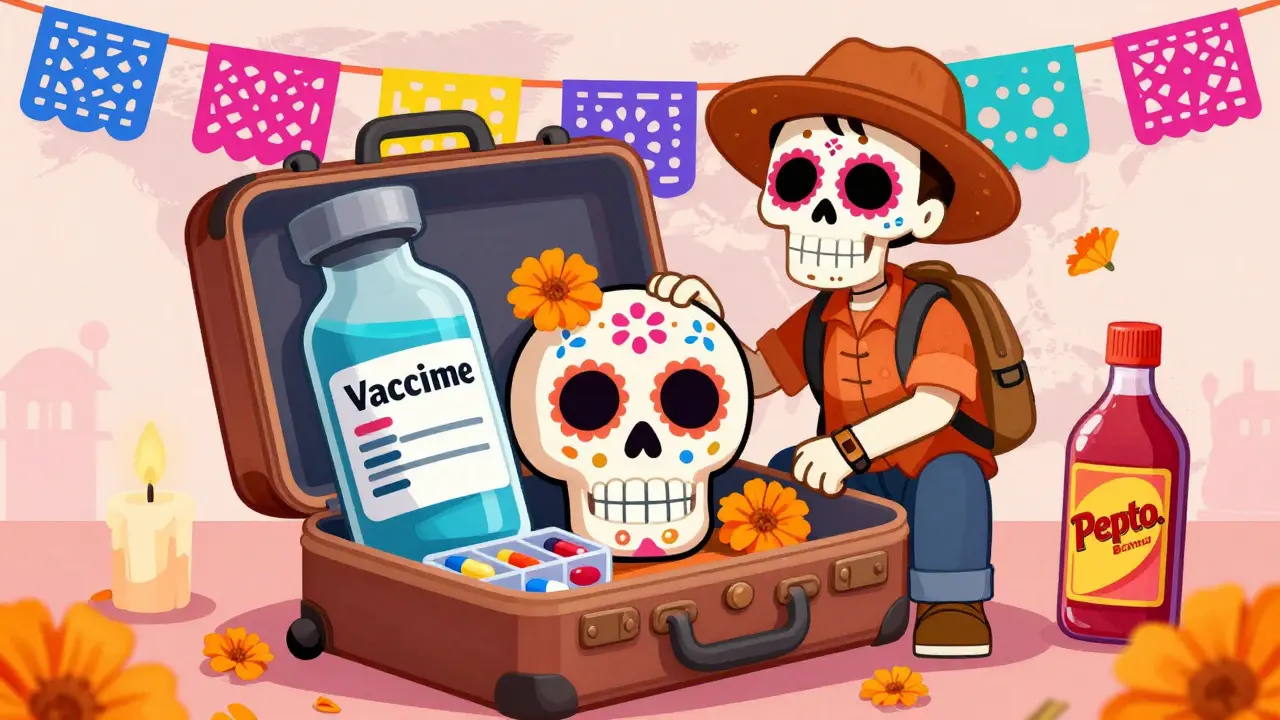
Every year, over 1.4 billion people cross international borders. Many of them will get sick-not from plane crashes or lost luggage, but from something far more common: food, water, or insects they never thought to worry about. Travel medicine isn’t about fancy clinics or exotic treatments. It’s about simple, proven steps that keep you healthy when you’re far from home. And if you’re planning a trip to a place with different risks, skipping these basics could mean a hospital stay instead of a vacation.
Why Travel Vaccines Matter More Than You Think
You don’t need a vaccine for every country. But for some destinations, skipping one shot can land you in serious trouble. The CDC reports that Hepatitis A is the #1 vaccine-preventable illness among travelers. It’s not rare. Around 1.4 million cases happen globally each year, and most come from food or water contaminated with feces. You won’t know it’s there. A single bite of undercooked shellfish or an ice cube in your drink can be enough.
The Hepatitis A vaccine is simple: two doses, six to twelve months apart. But here’s the catch-most people wait until the week before departure. That’s too late. The first dose gives you strong protection within two weeks, but the second dose locks in lifelong immunity. If you only get one, you’re still at risk. After two doses, protection lasts at least 25 years. That’s not just for your next trip-it’s for every trip after that.
Typhoid is another big one. The old typhoid shot (injected) only works for about two years and is 50-80% effective. The newer typhoid conjugate vaccine (TCV), given as a single shot, lasts three years and is 87% effective. It’s now the CDC’s top recommendation for travelers to South Asia, Africa, and parts of Latin America. If your doctor still offers the old version, ask for the new one.
And don’t forget the basics. If you haven’t had a Tdap shot in the last 10 years, get one before you leave. Same with MMR. These aren’t “travel” vaccines-they’re routine ones that some adults skip. But measles outbreaks still happen in Europe, and whooping cough can hit you hard overseas. Make sure your childhood shots are up to date.
Malaria Prophylaxis: Choosing the Right Drug
Malaria isn’t just a tropical disease anymore. Climate change has pushed mosquito zones higher and farther. The Lancet Planetary Health journal predicts 200 million more travelers could be at risk by 2030. That’s not a future scare-it’s already happening. In 2024, over 3,000 cases of imported malaria were reported in the U.S. alone. Most were preventable.
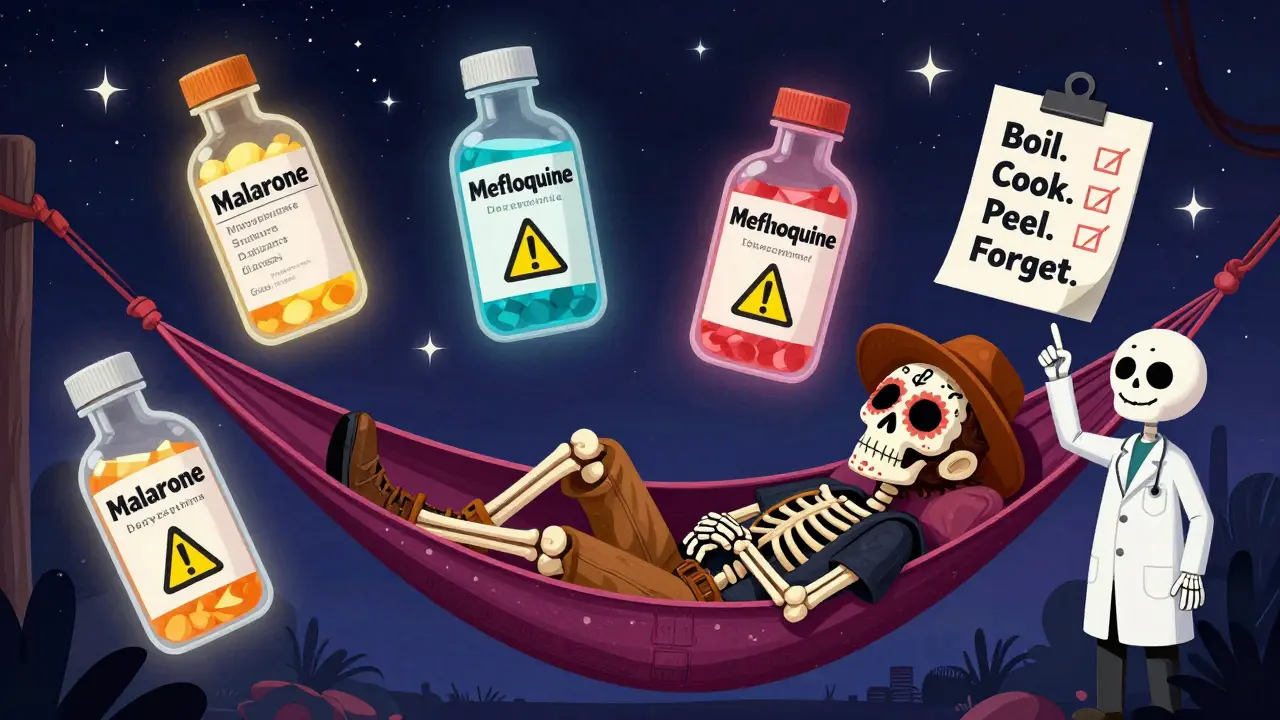
There are four main drugs used to prevent malaria. Each has trade-offs:
- Atovaquone-proguanil (Malarone): Take one pill daily, starting 1-2 days before travel. 95% effective. Side effects? Mild stomach upset for a few people. But it costs about $220 for a 3-week trip.
- Doxycycline: A $45 option. Take one daily, starting two days before. 90% effective. But it makes your skin burn in the sun-30% of users get bad sunburns. Also, you can’t take it if you’re pregnant or under 8.
- Mefloquine (Lariam): One pill a week, starting 2-3 weeks before. 90% effective. But it’s risky. Some people get nightmares, dizziness, or even panic attacks. Reddit threads are full of stories like “mefloquine sent me to the ER in Thailand.” The CDC still lists it, but most specialists avoid it now.
- Tafenoquine (Krintafel): Newer, weekly dose, started 3 days before. 95% effective. But you MUST get tested for G6PD deficiency first. If you have it, this drug can destroy your red blood cells. About 10% of people in malaria zones have this genetic trait. It’s now approved for kids over 16, thanks to a January 2025 FDA update.
Adherence is the real problem. Studies show only 62% of travelers take their pills consistently. That’s why most malaria cases happen-not because the drug failed, but because someone skipped a dose. Set a daily phone alarm. Keep pills in a pill organizer. If you forget one, don’t double up. Just resume the next day. You’re still protected.
Safe Food Practices: The Rule That Saves Lives
Travelers’ diarrhea affects 30-70% of people depending on where they go. In Southeast Asia? It’s closer to 70%. Bacteria-mostly E. coli-cause 80% of those cases. And no, it’s not always “street food.” Sometimes it’s the ice in your cocktail. Or the salad washed in tap water. Or the fruit peeled by someone who didn’t wash their hands.
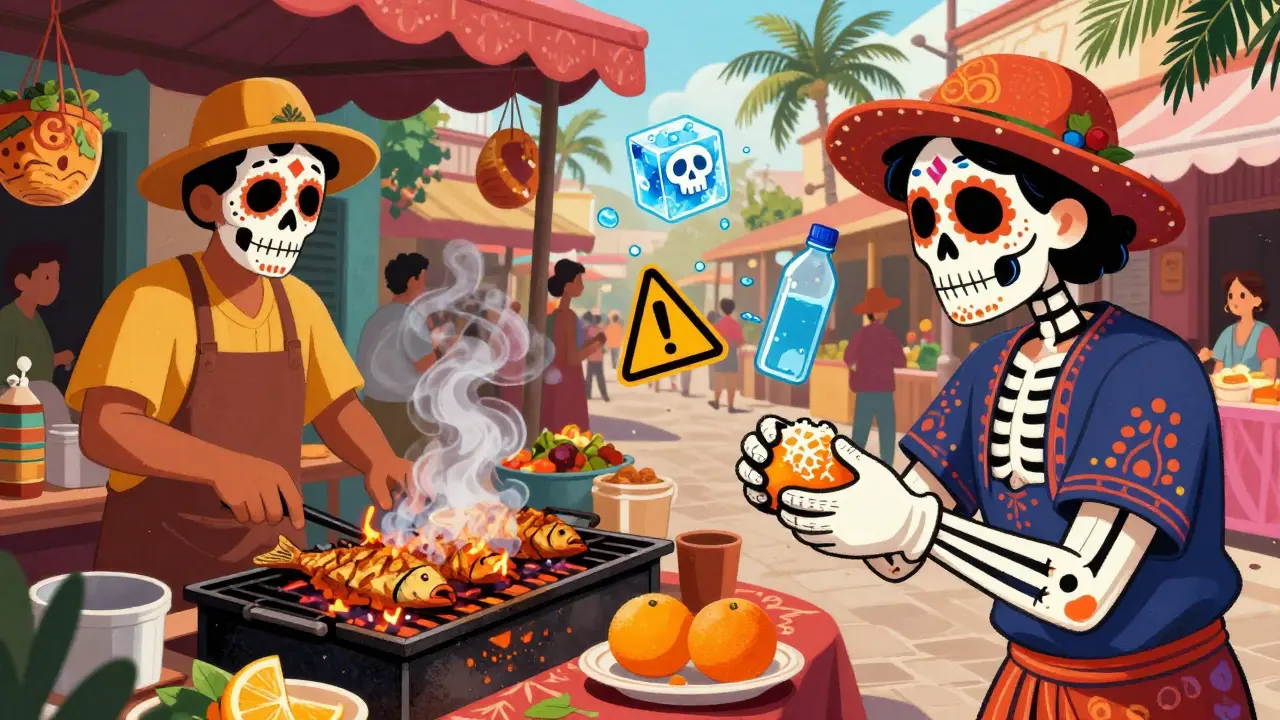
The CDC’s rule is simple: boil it, cook it, peel it, or forget it.
- Boil it: Water should be boiled for at least one minute (three minutes at high altitudes). Bottled water? Check the seal. Some brands refill bottles. Stick to sealed, branded bottles.
- Cook it: Food must be steaming hot. Not warm. Not lukewarm. Steam should rise off it. Poultry? 165°F (74°C). Ground meat? 160°F (71°C). Fish? 145°F (63°C). If it’s not hot enough, don’t eat it.
- Peel it: Bananas, oranges, mangoes? Fine. Apples, grapes, tomatoes? Only if you peel them yourself. Don’t let someone else peel it for you.
- Forget it: Raw salads, uncooked seafood, street-side smoothies, tap water ice, unpasteurized dairy. Skip them. Even if everyone else is eating it.
There’s one more tool: bismuth subsalicylate (Pepto-Bismol). Taking two tablets four times a day can cut your risk of diarrhea by 65%. It’s not a cure, but it’s a shield. And it’s available without a prescription in most countries. Just don’t take it for more than three weeks. It can cause black tongue or stools-harmless, but weird.
What No One Tells You: The Hidden Risks
Most travelers think the big risks are malaria and Hepatitis A. But here’s what’s getting worse:
- Antibiotic resistance: Azithromycin is the go-to for treating travelers’ diarrhea. But in Southeast Asia, over 30% of E. coli strains are now resistant. That means your usual pill might not work. Carry a backup-like ciprofloxacin-if your doctor prescribes it. But don’t self-medicate. Use it only if you’re sick for more than 48 hours with fever or bloody stool.
- Medication bans: Some countries ban common U.S. drugs. ADHD meds, opioids, even some allergy pills. If you’re carrying them, bring the original prescription with the generic name. A doctor’s letter helps. Otherwise, you could get arrested at customs.
- Climate change: Mosquitoes are moving into new areas. High-altitude towns in the Andes, parts of southern Europe, even mountain resorts in Nepal are now at risk. Check the CDC Yellow Book 2026 for updated maps. It’s updated every two years, and the 2026 edition came out April 23, 2025.
And here’s the hardest truth: Only 55% of travelers to high-risk areas get pre-travel advice. That means nearly half are flying blind. You don’t need a travel clinic. But you do need to talk to your doctor at least 4-6 weeks before you go. Vaccines take time. Some need multiple doses. Some need blood tests. Waiting until the last minute isn’t just risky-it’s reckless.
What to Do Before You Leave
Here’s your checklist:
- Check the CDC Yellow Book 2026 for your destination. Type your country into their travel health page. It’s free. It’s updated. It’s the gold standard.
- Get your routine vaccines up to date: MMR, Tdap, varicella.
- Get Hepatitis A and typhoid vaccines if you’re going to Asia, Africa, or Latin America.
- For malaria zones: Talk to your doctor about the right prophylaxis. Don’t pick based on price alone. Consider side effects and your health history.
- Carry Pepto-Bismol and a standby antibiotic if prescribed. Keep them in your carry-on.
- Label all medications with generic names and your doctor’s contact info. Pack extras.
- Drink only bottled or boiled water. Avoid ice. Eat only hot, freshly cooked food.
There’s no magic formula. No secret trick. Just consistency. The people who stay healthy? They’re not lucky. They’re prepared.
Do I need a yellow fever vaccine for every trip?
No. Only if you’re traveling to parts of Africa or South America where yellow fever is present. Some countries require proof of vaccination to enter-even if you’re just transiting. The International Certificate of Vaccination (yellow card) is mandatory in 194 countries. If you don’t have it, you can be denied entry or quarantined for six days.
Can I get travel vaccines at my local pharmacy?
Some can. Many pharmacies now offer Hepatitis A, typhoid, and Tdap shots. But not all give travel-specific vaccines like rabies or cholera. Check ahead. Also, some vaccines need to be stored cold. Pharmacies may not have the right refrigeration. A travel clinic or doctor’s office is more reliable.
Is it safe to take malaria pills if I’m pregnant?
Avoid travel to malaria zones if you’re pregnant. If you must go, atovaquone-proguanil is the safest option. Doxycycline and tafenoquine are not safe during pregnancy. Mefloquine may be used in some cases but only after careful risk assessment. Always consult your OB-GYN and a travel medicine specialist.
What if I forget my malaria pills?
If you miss one dose, take it as soon as you remember. Then go back to your regular schedule. Don’t double up. Missing one day doesn’t ruin protection-but missing several does. If you miss more than two days in a row, talk to a doctor. You may need emergency treatment.
Are there natural ways to prevent malaria?
No. Garlic, vitamin B, or essential oils won’t protect you. Only proven antimalarial drugs work. Mosquito nets and repellents help reduce bites, but they’re not enough alone. If you’re in a malaria zone, you need both-medication AND bug protection.
Final Thought: It’s Not About Fear. It’s About Control.
Travel medicine isn’t about scaring you. It’s about giving you back control. You don’t have to avoid the world. You just need to know the rules. The people who come home sick? They didn’t know. The people who come home healthy? They planned. And now, so can you.
Annie Joyce
February 12, 2026 AT 22:18Just got back from Bali and let me tell you-I ate everything and lived to tell the story. But I also carried Pepto-Bismol like it was my emotional support pill. Took two before every meal. Felt like a wizard with a tiny brown bottle. Didn’t get sick once. Also, ice? Never touched it. Even in that killer mango smoothie. Worth the sacrifice.
Luke Trouten
February 14, 2026 AT 19:10The science here is remarkably well-structured. What stands out isn’t just the data-it’s the framing. Travel medicine isn’t about fearmongering; it’s about agency. You’re not being told what to avoid-you’re being given tools to navigate uncertainty with competence. That shift in perspective is what makes this post valuable. Most people treat travel prep like a chore. It’s actually a form of self-respect.
Kristin Jarecki
February 14, 2026 AT 21:57While I appreciate the comprehensive nature of this guide, I must emphasize the importance of consulting a certified travel medicine specialist rather than relying solely on online resources. Many pharmacies lack the infrastructure to properly store and administer certain vaccines. Furthermore, individual health histories-including autoimmune conditions, pregnancy, or immunocompromised status-require nuanced evaluation that cannot be generalized. Your safety is worth the extra time and cost.
Jonathan Noe
February 15, 2026 AT 04:30Okay but let’s be real-mefloquine is a nightmare. I took it in Cambodia and had dreams where I was being chased by mosquitoes with human faces. Woke up sweating, heart racing, convinced the hotel was on fire. Didn’t even need malaria. My brain did it for me. Doxycycline? Yeah, I got sunburned like a lobster, but at least I didn’t hallucinate my pillow trying to bite me. Malarone? Expensive? Fine. Worth every penny. And tafenoquine? I’m waiting for my G6PD test like it’s a job interview.
Suzette Smith
February 16, 2026 AT 16:55Boil it, cook it, peel it, or forget it? That’s cute. I’ve eaten street pho in Hanoi with raw herbs and raw beef and I’m still here. You’re overcomplicating things. People have been traveling and eating weird stuff for centuries without Pepto-Bismol and CDC brochures. Maybe the real problem is that we’ve become too scared of our own shadows.
Gloria Ricky
February 18, 2026 AT 08:54omg i just got back from peru and i totally forgot my malaria pills for 3 days 😭 i was so scared but i just kept drinking bottled water and eating hot food and somehow survived? i think my body just knew what to do? also pepto bismol is my spirit animal now
Jason Pascoe
February 19, 2026 AT 01:16I’ve traveled through 17 countries in the last 5 years, mostly in Southeast Asia and West Africa. I’ve never taken a malaria prophylactic. I use DEET, sleep under nets, wear long sleeves after dusk, and avoid dusk-to-dawn outings. I’ve never gotten sick. The data on adherence is real-but so is the fact that many people overestimate their risk. Prevention isn’t just pills. It’s behavior. And behavior is something we can control.
Sonja Stoces
February 19, 2026 AT 07:04Y’all are so gullible. The CDC? Big Pharma’s marketing arm. Hepatitis A vaccine? It’s not about protection-it’s about profit. Same with malaria drugs. They make billions off scared travelers. I’ve been to 12 countries without one shot. Used garlic, neem oil, and drank lemon water. Zero issues. Also, your ‘boil it or forget it’ rule? That’s why you’re all still stuck in sterile bubble worlds. Real travelers eat the food. They trust the people. You’re not prepared-you’re paranoid.
Jim Johnson
February 20, 2026 AT 13:19Hey, I’m not a doctor but I’ve been to 23 countries and I’m still standing. Here’s my hack: I always pack a small bottle of apple cider vinegar. I mix a capful into my bottled water. Supposedly helps your gut adjust. I’ve never had diarrhea. Also, I take one Pepto-Bismol before bed every night-just in case. Feels like a bedtime ritual. Don’t overthink it. Just be smart. And don’t let fear stop you from seeing the world. You got this 💪
andres az
February 20, 2026 AT 19:26Let’s be honest-this entire post is a controlled narrative. The CDC doesn’t care about your health. They care about vaccine revenue. Malaria isn’t even a real threat anymore. The ‘200 million more at risk by 2030’? That’s a projection based on biased modeling. And tafenoquine? That’s just a gateway drug for genetic surveillance. They’re testing how fast we’ll swallow pills without asking questions. Wake up. You’re being manipulated.
steve sunio
February 21, 2026 AT 15:09u think u r so smart with ur CDC and ur vaccines but in nigeria we dont even have access to clean water and we still survive. u r just scared. stop overcomplicating. i ate street food every day in ghana and still here. no pills. no pepto. just faith and hot food. ur western anxiety is your real disease.
athmaja biju
February 22, 2026 AT 00:57India has the best street food in the world. You think we don’t know how to handle bacteria? We’ve been eating raw chili, unpeeled mangoes, and tap water since birth. Your ‘boil it’ rule is colonial thinking. We don’t need your vaccines. We need your respect. And if you can’t handle the heat, maybe you shouldn’t be traveling at all.
Robert Petersen
February 23, 2026 AT 19:19This is the kind of post I wish I’d read before my first trip to Vietnam. I got sick for a week and felt like such a fool. But here’s the thing-you don’t need to be perfect. You just need to be consistent. I missed a dose of Malarone once. Didn’t panic. Just kept going. Ate only hot food. Avoided ice. And guess what? I didn’t get sick again. It’s not about being a hero. It’s about being smart. And you’re already on the right path by reading this. Keep going 🙌
Craig Staszak
February 25, 2026 AT 18:18Just got my TCV shot today at the pharmacy. Took 5 minutes. Cost $45. No appointment. I’m so glad I didn’t wait until the last minute. Also bought a pill organizer with a little alarm. Feels weird to be this prepared but honestly? Kinda empowering. Traveling shouldn’t be a gamble. It should be a choice you make with your eyes wide open. Cheers to that 🥂
alex clo
February 27, 2026 AT 05:37While the information presented is largely accurate, I would like to clarify that the CDC’s recommendations are based on population-level epidemiology and may not account for individual risk profiles. For instance, travelers with prior exposure to Hepatitis A may have pre-existing immunity. Serological testing prior to vaccination can prevent unnecessary immunization. Additionally, the efficacy of atovaquone-proguanil may be reduced in regions with high rates of cytochrome P450 polymorphisms. Personalized medicine remains the gold standard.