Seizure Threshold: What It Is and How Medications Affect It
When we talk about seizure threshold, the level of brain activity needed to trigger a seizure. It’s not a fixed number—it changes based on your health, meds, sleep, and even what you eat. People with epilepsy often have a lower threshold, but even those without a diagnosis can hit their limit under the right (or wrong) conditions. Think of it like a glass filling with water. Some people’s glasses are already half full from genetics or past brain injuries. Add a bad night’s sleep, a drug interaction, or sudden withdrawal from a medication, and the glass overflows—that’s when a seizure happens.
Anticonvulsants, medications designed to raise the seizure threshold. Drugs like levetiracetam, lamotrigine, and valproate don’t just calm the brain—they literally make it harder for abnormal electrical bursts to start. But here’s the catch: switch brands, skip a dose, or mix them with something like an antibiotic or even grapefruit juice, and that threshold can drop overnight. That’s why narrow therapeutic index, a small window between effective and toxic drug levels. drugs like phenytoin or carbamazepine are so risky to swap with generics without close monitoring. One tiny change in absorption, and you’re back at the edge of that glass.
It’s not just about epilepsy. People on antidepressants, stimulants, or even high-dose steroids can see their seizure threshold drop. Withdrawal from alcohol, benzodiazepines, or sleep aids is one of the most common triggers in non-epileptic patients. Even something as simple as low blood sugar or dehydration can tip the balance. And if you’re taking multiple meds—say, for pain, mental health, or heart issues—the risk multiplies. That’s why pharmacogenetic testing is becoming more important: your genes determine how fast your body breaks down these drugs, and that directly affects your seizure risk.
What you’ll find in the posts below isn’t just theory. These are real-world stories and science-backed facts about how medications, drug switches, and lifestyle choices interact with your brain’s natural safety system. From generic drug recalls that changed seizure control for some, to how thyroid meds or kidney failure treatments can quietly lower your threshold—you’ll see how thin the line can be between stability and crisis. No fluff. No guesswork. Just what you need to know to protect yourself or someone you care about.
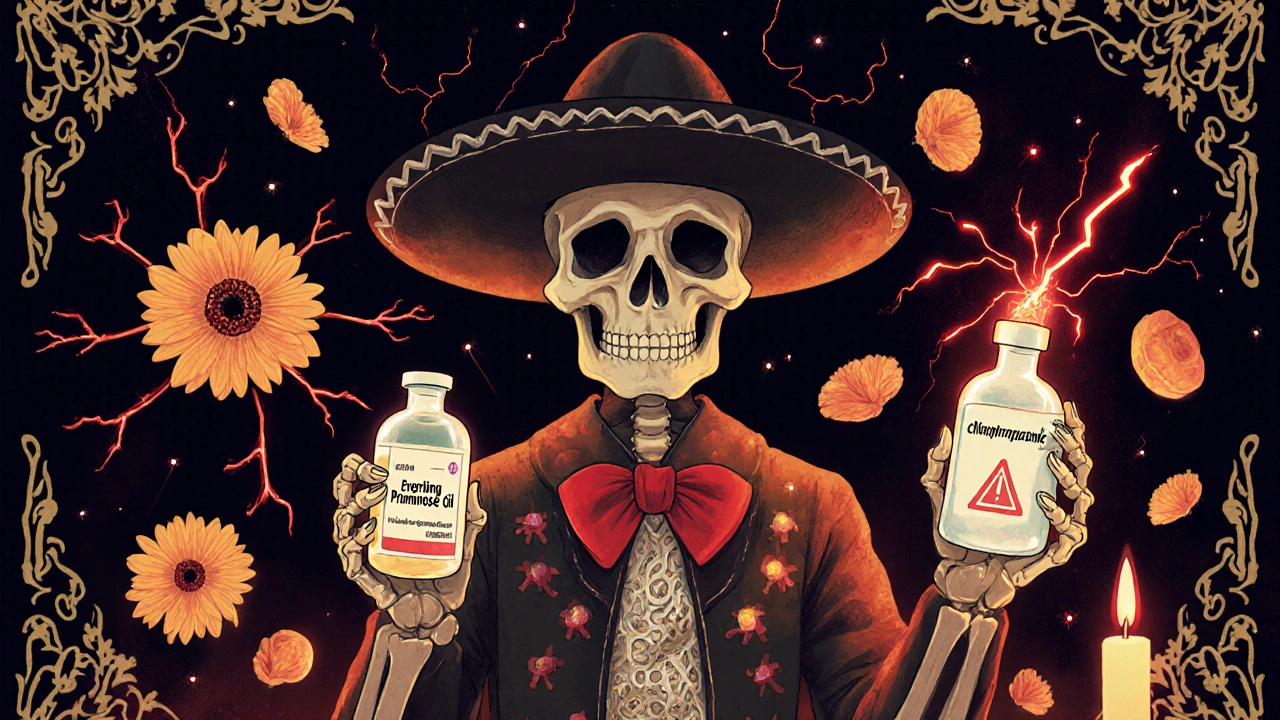
Evening Primrose Oil and Seizure Risk: What You Need to Know About Antipsychotic Interactions
Evening primrose oil may interact with antipsychotics and increase seizure risk, but evidence is conflicting. Learn who should avoid it, which meds are most dangerous, and what real patients report.