Hatch-Waxman Amendments: How Generic Drugs Get Delayed and What It Means for You
When you hear Hatch-Waxman Amendments, a 1984 U.S. law that balanced brand-name drug patents with faster access to generics. Also known as the Drug Price Competition and Patent Term Restoration Act, it was meant to cut drug costs by letting generics enter the market after patents expired. But over time, the system got gamed—patent thickets, 30-month stays, and litigation tactics now delay generics by an average of 3.2 years after FDA approval.
That delay hits hardest for drugs with a narrow therapeutic index, medications where tiny changes in dose can cause serious harm or treatment failure. Think warfarin, levothyroxine, cyclosporine, and tacrolimus. These aren’t ordinary pills. Switching from brand to generic—or even between generic brands—can throw your blood levels off, risking rejection, clots, or seizures. That’s why 27 states have laws blocking automatic substitution for these drugs. The Hatch-Waxman Amendments didn’t plan for this, but now it’s part of the system.
And it’s not just about patents. Generic drug recalls are rising, mostly because of manufacturing issues overseas. Patients get caught in the middle—approved by the FDA, then pulled from shelves weeks later. Meanwhile, companies file dozens of overlapping patents on one drug, each triggering a new 30-month court delay. Even if a generic is safe and effective, it can’t launch until every lawsuit clears. The result? Cancer drugs, transplant meds, and epilepsy treatments stay expensive long after they should be cheap.
The Hatch-Waxman Amendments were supposed to save money and lives. Today, they’re a legal maze that protects profits more than patients. But you’re not powerless. You can ask your pharmacist if your drug is affected by a patent stay. You can check if your state blocks generic swaps for narrow therapeutic index drugs. You can compare prices across pharmacies—even if your drug is branded, you might find a cheaper generic elsewhere if you know where to look. Below, you’ll find real cases from 2023 to 2025 showing how this plays out in clinics and pharmacies. You’ll see how patent litigation blocks access, how patients get hurt by unsafe switches, and what you can do to protect yourself before your next prescription.
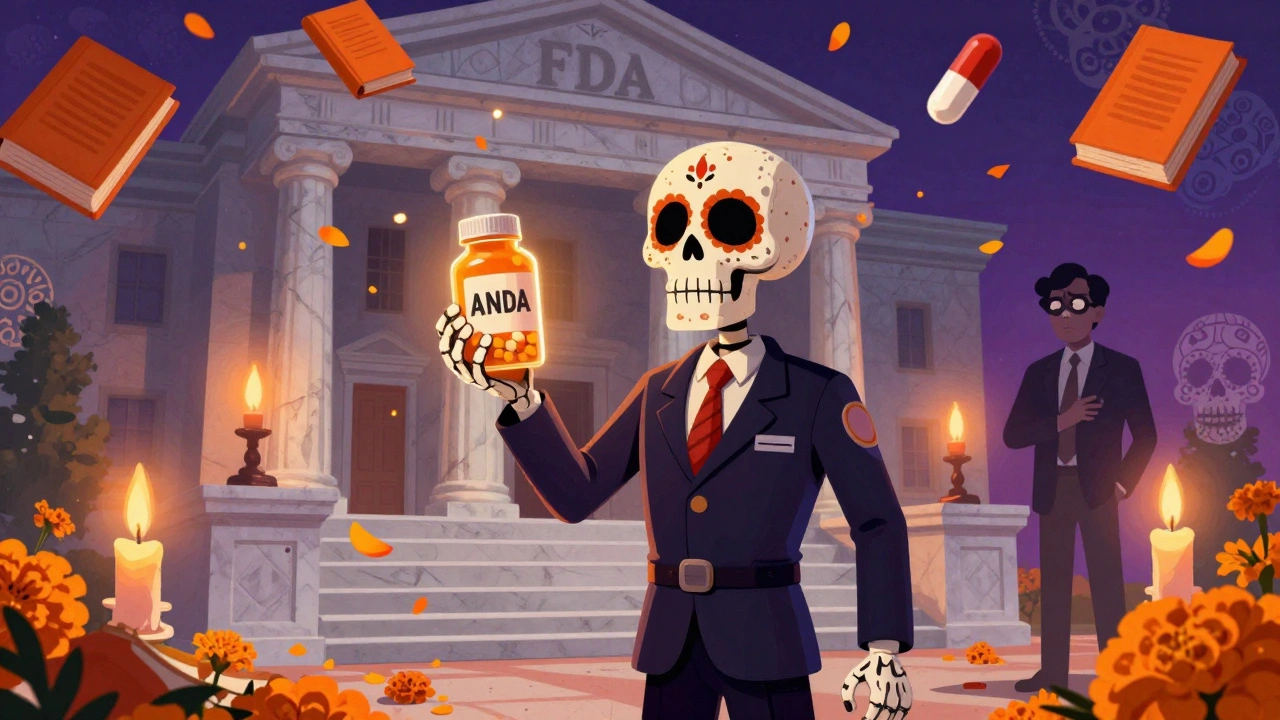
Federal Food, Drug, and Cosmetic Act: How It Built the Legal Foundation for Generic Drugs
The Federal Food, Drug, and Cosmetic Act laid the groundwork for generic drugs through the 1984 Hatch-Waxman Amendments, creating the ANDA pathway that lets safe, affordable generics enter the market. Today, 90% of U.S. prescriptions are filled with generics, saving consumers trillions.