FD&C Act: What It Means for Your Medications and Generic Drug Access
When you pick up a prescription or buy a generic pill at the pharmacy, you’re relying on the FD&C Act, the foundational U.S. law that gives the FDA authority to regulate food, drugs, cosmetics, and medical devices. Also known as the Federal Food, Drug, and Cosmetic Act, it’s the reason your meds are tested, labeled correctly, and held to safety standards before they reach you. This isn’t just bureaucracy—it’s what stops dangerous or fake drugs from hitting the market. Without it, there’d be no way to track why a generic version of cyclosporine might cause rejection in transplant patients, or why some pill-splitting practices lead to dangerous overdoses.
The FD&C Act doesn’t just set rules—it creates the system that lets generics exist. Thanks to the Hatch-Waxman Act, an amendment to the FD&C Act, companies can bring cheaper versions of drugs to market after patents expire. But the law also created loopholes. Patent thickets, 30-month stays, and complex bioequivalence rules mean that even after FDA approval, a generic drug can sit on a shelf for over three years. That’s not a glitch—it’s built into the system. And when it comes to drugs with a narrow therapeutic index—like warfarin or levothyroxine—the FD&C Act lets states step in with NTI substitution laws to block automatic generic swaps, because even tiny differences can be life-threatening.
It’s also why recalls happen. If a generic drug made overseas has contamination or incorrect dosing, the FD&C Act gives the FDA the power to pull it. But enforcement isn’t perfect. That’s why you see recalls for generic antibiotics, blood pressure meds, or even supplements like evening primrose oil that might interact with antipsychotics. The law sets the stage, but real-world risks depend on how it’s applied—and how well you understand your meds.
From how your asthma spacer is labeled to whether your migraine pill can be crushed safely, the FD&C Act touches every step. It’s behind pharmacogenetic testing guidelines, preconception medication reviews, and even the rules for how pharmacies handle palliative care opioids. The posts below dive into these real-life impacts—how patent delays block access, why some states block generic swaps, and what you can do when your medication gets pulled. This isn’t about legal jargon. It’s about making sure your next pill does what it’s supposed to—without surprises.
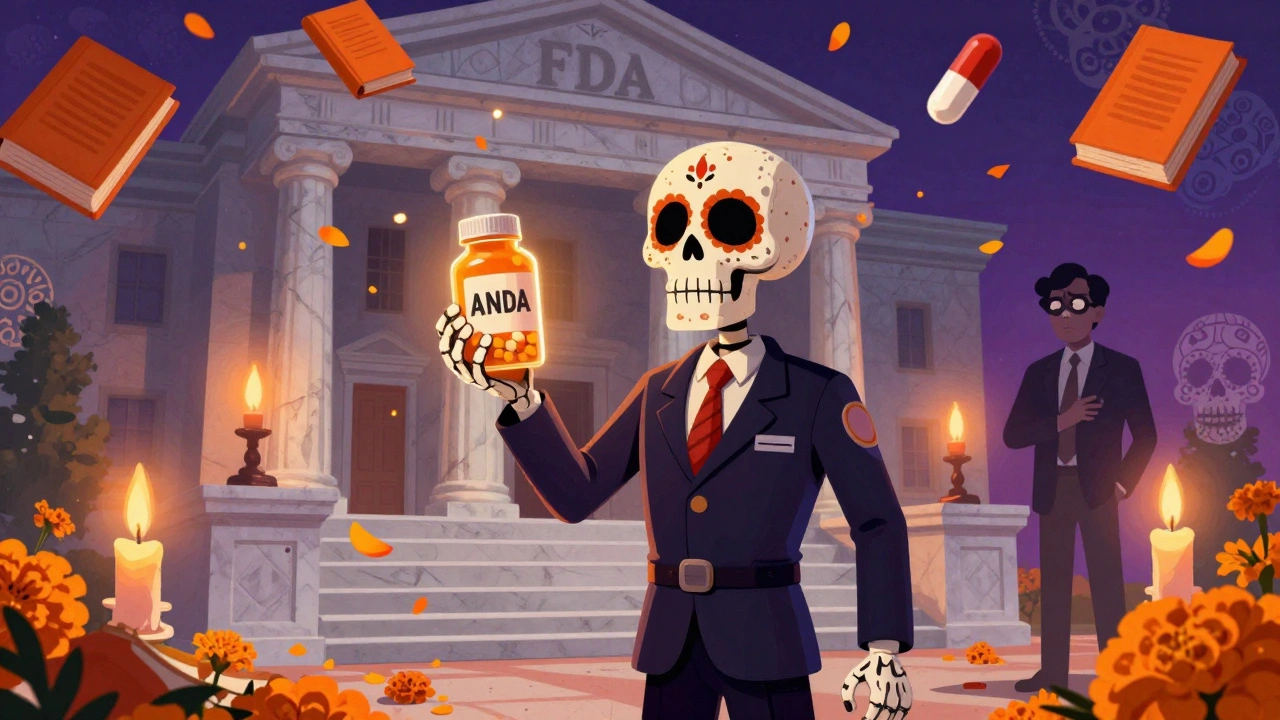
Federal Food, Drug, and Cosmetic Act: How It Built the Legal Foundation for Generic Drugs
The Federal Food, Drug, and Cosmetic Act laid the groundwork for generic drugs through the 1984 Hatch-Waxman Amendments, creating the ANDA pathway that lets safe, affordable generics enter the market. Today, 90% of U.S. prescriptions are filled with generics, saving consumers trillions.