Antipsychotics: What They Are, How They Affect Fertility, and What You Need to Know
When you’re trying to get pregnant, every medication matters—even those meant for mental health. Antipsychotics, a class of drugs used to treat schizophrenia, bipolar disorder, and severe depression. Also known as neuroleptics, they work by blocking dopamine in the brain to reduce hallucinations and mood swings—but they don’t stop there. These drugs can also raise prolactin levels, which can shut down ovulation, lower libido, and mess with your menstrual cycle. For women trying to conceive, this isn’t just a side effect—it’s a roadblock.
It’s not just about fertility. Prolactin, a hormone that triggers milk production and suppresses ovulation often spikes with antipsychotics like risperidone or haloperidol. High prolactin means no egg release, even if everything else looks normal. Men aren’t safe either—these drugs can reduce sperm count and testosterone. And if you’re on multiple meds, like antidepressants or thyroid pills, the risks stack up. That’s why a preconception medication plan, a careful review of all drugs before pregnancy isn’t optional. It’s essential.
Some antipsychotics are worse than others. Olanzapine and clozapine? High risk for weight gain and insulin resistance—both linked to PCOS and infertility. Quetiapine? A bit gentler, but still a concern. Aripiprazole? It’s one of the few that doesn’t spike prolactin much, making it a better choice for people planning a family. But switching meds isn’t simple. Stopping cold turkey can trigger psychosis or severe withdrawal. You need a doctor who understands both mental health and reproductive medicine.
You’ll find posts here that dig into how drugs like cabergoline—used to lower prolactin—can help restore fertility after antipsychotic use. Others show how pharmacogenetic testing might predict if you’ll have bad reactions to certain antipsychotics. There’s even a piece on medication-induced delirium in older adults, because these drugs don’t just affect fertility—they can change how your whole body responds to stress, sleep, and other meds. And if you’re on long-term treatment, you’ll see how generic substitutions, recalls, and drug interactions play into your safety.
This isn’t about avoiding treatment. It’s about making smarter choices. If you’re on antipsychotics and want to become a parent, you need to know which drugs are safest, how to monitor your hormones, and when to talk to your psychiatrist about alternatives. The posts below give you real, practical answers—not theory, not guesses. Just what works, what doesn’t, and what you should ask your doctor next time you sit down for a checkup.
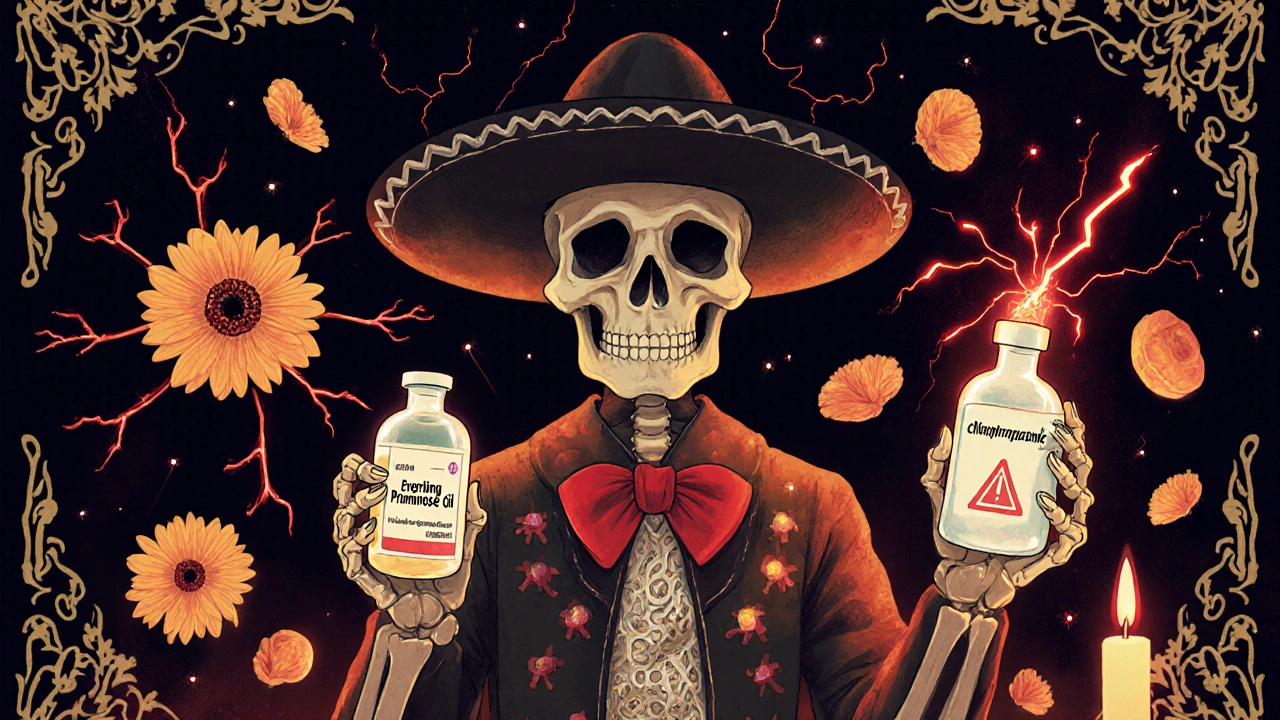
Evening Primrose Oil and Seizure Risk: What You Need to Know About Antipsychotic Interactions
Evening primrose oil may interact with antipsychotics and increase seizure risk, but evidence is conflicting. Learn who should avoid it, which meds are most dangerous, and what real patients report.