Pharmacogenetic Testing: How Your Genes Affect Medication Response
When you take a pill, your body doesn’t just absorb it the same way everyone else does. Your genes decide whether it works well, causes side effects, or does nothing at all. This is where pharmacogenetic testing, a method that analyzes how your DNA affects your response to drugs. Also known as genetic drug testing, it helps doctors pick the right medicine at the right dose—before you even take it. It’s not science fiction. It’s happening right now in fertility clinics, mental health offices, and hospitals treating chronic conditions.
Think about it: two people take the same antidepressant. One feels better in weeks. The other gets dizzy, nauseous, and quits. Why? Their genes. Some people break down meds too fast—so the drug never builds up enough to help. Others break it down too slow—so it piles up and causes harm. gene-drug interaction, how specific DNA variations change how your liver processes medications is the core of this. It’s why some people need twice the dose of a fertility drug like clomiphene to ovulate, while others get ovarian hyperstimulation on a standard dose. And it’s why personalized medicine, tailoring treatment based on individual genetic profiles is no longer a buzzword—it’s a necessity in IVF, mental health, and chronic disease care.
Pharmacogenetic testing doesn’t just prevent bad reactions. It saves time, money, and stress. If you’ve tried multiple medications for PCOS, depression, or high blood pressure and none worked, your genes might be why. This isn’t about guessing. It’s about reading your biological blueprint. Clinics using this data cut trial-and-error cycles by half. They avoid dangerous drug interactions—like mixing certain antidepressants with fertility meds—or skip ineffective drugs entirely. Even something as simple as folic acid dosing can be optimized based on MTHFR gene variants, which affect how your body uses folate. And if you’ve ever wondered why your friend’s thyroid meds work perfectly while yours cause heart palpitations, the answer is likely in your DNA.
What you’ll find below isn’t a list of random articles. It’s a collection of real-world cases where genetics, medication safety, and treatment outcomes collide. From how NTI generics demand stricter testing to why older adults get confused from common pills, these posts show how deeply your genes shape your health journey. You’ll see how drug timing, food interactions, and even generic brands matter more than you think—all because of how your body is wired. Whether you’re planning pregnancy, managing a chronic condition, or just tired of meds that don’t work, this is the missing piece you’ve been looking for.
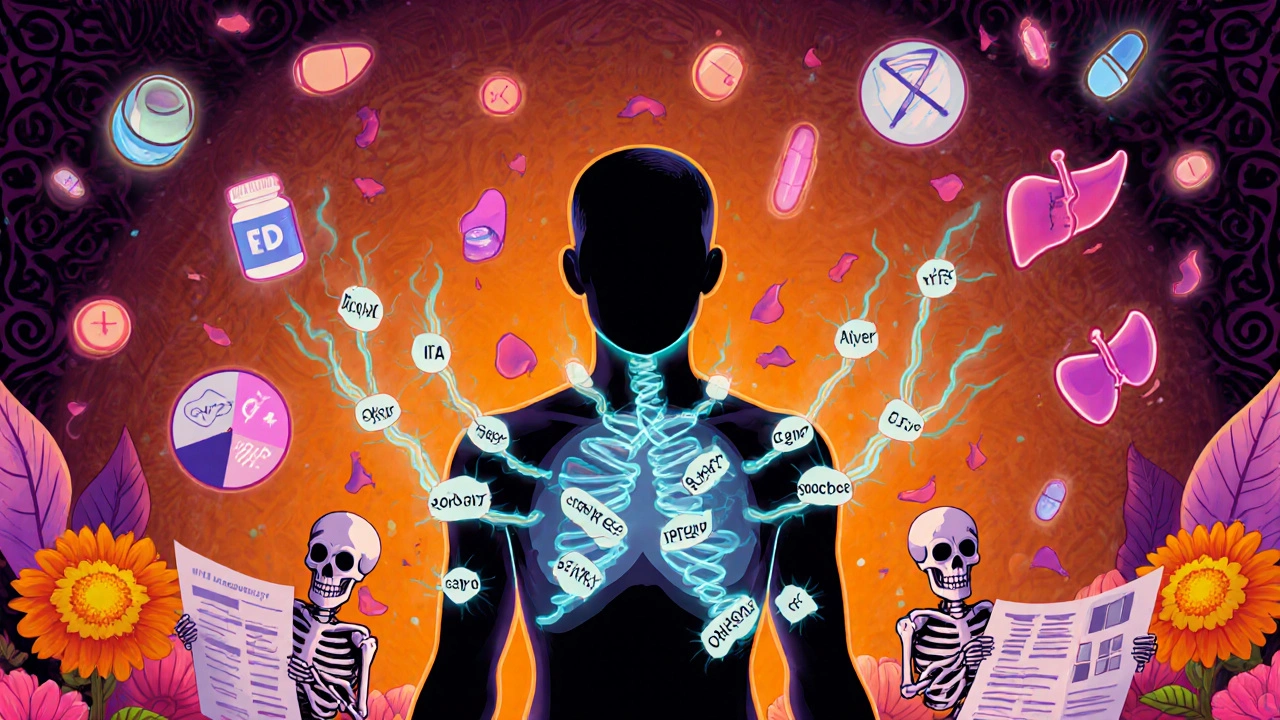
Preventing Adverse Drug Reactions with Pharmacogenetic Testing
Pharmacogenetic testing uses your DNA to predict how you'll respond to medications, helping prevent dangerous side effects. Studies show it cuts adverse drug reactions by 30% when used before prescribing.