Gene-Drug Interactions: How Your DNA Affects Medication Safety and Effectiveness
When you take a pill, your body doesn’t treat it the same way everyone else’s does. That’s because of gene-drug interactions, the way your genetic makeup changes how your body absorbs, breaks down, or responds to medications. Also known as pharmacogenomics, this field explains why one person gets sick from a standard dose while another needs triple the amount to feel anything. It’s not about being allergic—it’s about your DNA telling your liver how fast to process the drug, or whether your brain even has the right receptors to respond.
Some people have genes that make them slow metabolizers—meaning drugs build up in their system and cause side effects. Others are ultra-rapid metabolizers, where the drug vanishes before it can do its job. Take clopidogrel, for example. If you have a certain variant in the CYP2C19 gene, the drug won’t work at all to prevent clots, putting you at risk for a heart attack. Or take codeine: if you’re a fast metabolizer, your body turns it into morphine too quickly, which can be deadly. These aren’t rare cases. Studies show over 90% of people carry at least one gene variant that affects how they respond to common meds.
This isn’t just about painkillers or heart drugs. It shows up in antidepressants, blood thinners, cancer treatments, and even fertility meds. If you’ve ever been told a drug "didn’t work" for you, or had a bad reaction when others didn’t, your genes might be the reason. That’s why genetic testing for meds, a simple saliva or blood test that checks key drug-response genes is becoming part of routine care in places like the Mayo Clinic and Kaiser Permanente. It’s not sci-fi—it’s practical medicine.
And it’s not just about picking the right drug. It’s about picking the right dose. A 50 mg pill might be perfect for one person and toxic for another. That’s why doctors are starting to use gene data to avoid trial-and-error prescribing. For women trying to conceive, this matters too. Fertility drugs like clomiphene or letrozole can behave wildly differently based on liver enzymes shaped by your genes. If your body breaks them down too fast, you won’t ovulate. Too slow? You risk ovarian hyperstimulation. personalized medicine, the practice of tailoring treatment to your genetic profile isn’t the future—it’s already here, and it’s saving lives.
Below, you’ll find real-world examples of how gene-drug interactions show up in everyday treatments—from antidepressants that fail to thyroid meds that cause heart trouble. You’ll see how people figured out what was wrong, what tests helped, and what they did next. No fluff. No jargon. Just what works—and what doesn’t—when your genes are in the driver’s seat.
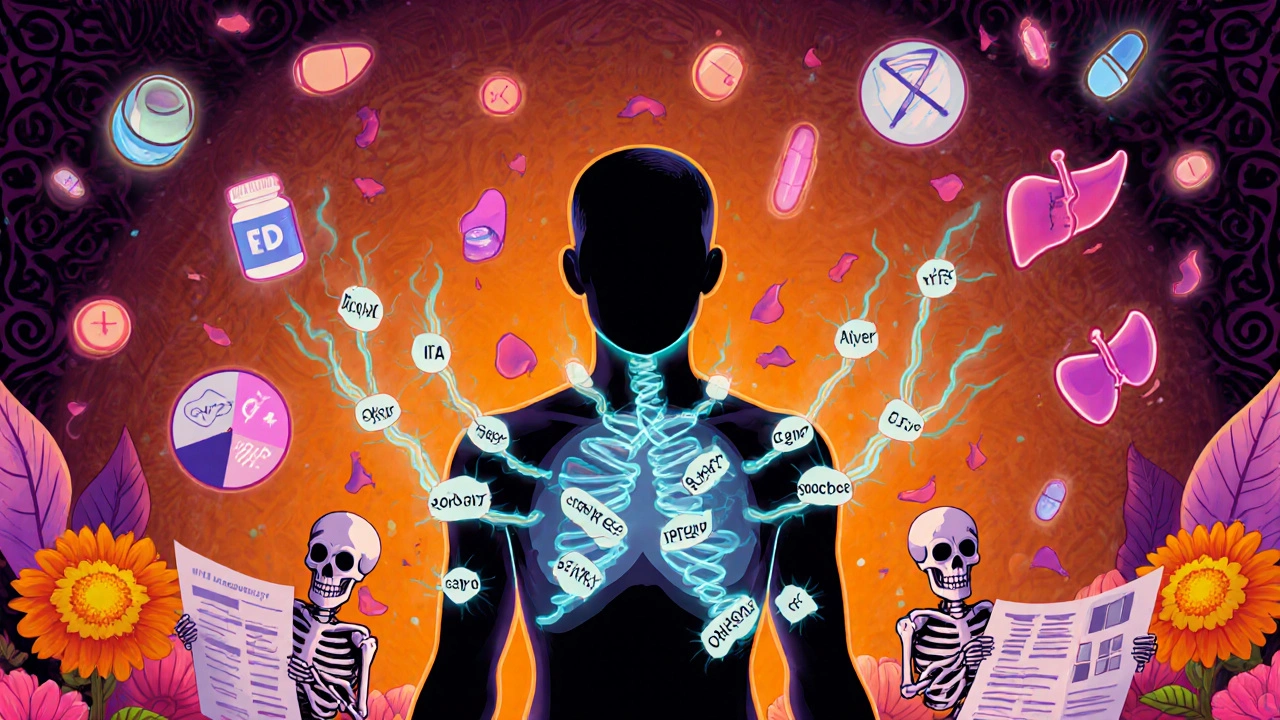
Preventing Adverse Drug Reactions with Pharmacogenetic Testing
Pharmacogenetic testing uses your DNA to predict how you'll respond to medications, helping prevent dangerous side effects. Studies show it cuts adverse drug reactions by 30% when used before prescribing.