Asthma in Schools: What Parents and Teachers Need to Know
When a child has asthma, a chronic condition where airways swell and narrow, making breathing difficult. Also known as childhood asthma, it affects nearly 1 in 12 kids in the U.S. and similar rates in other countries — and many of those kids spend most of their day in school. This isn’t just about occasional coughing. Asthma can lead to missed school days, emergency visits, and even hospitalizations if not managed properly during school hours.
Schools are full of hidden asthma triggers, environmental factors that can cause symptoms to flare up. Common ones include dust from chalkboards or old carpets, mold in damp classrooms, strong cleaning chemicals, pollen drifting through open windows, and even cold air from air conditioning. Some kids react to perfume or scented hand soap. And while teachers focus on learning, they often don’t realize that a child wheezing after gym class isn’t just out of shape — it’s a medical signal. That’s why a written asthma action plan, a personalized document created by a doctor that outlines symptoms, medications, and emergency steps. Also known as asthma management plan, it’s not optional — it’s critical. This plan tells the school nurse, PE teacher, and even the bus driver what to do if the child starts struggling to breathe. It includes which inhaler to use, when to call 911, and who to contact.
Many kids with asthma need to use a rescue inhaler during the school day. Albuterol is the most common — it opens airways in minutes. But schools have rules about who can carry it, who can give it, and whether a doctor’s note is required. Some parents think their child can just use it at home, but 60% of asthma attacks in kids happen during school hours. That’s why keeping an extra inhaler in the nurse’s office — with a signed permission form — is one of the smartest things a parent can do.
Medication isn’t the whole story. Kids with asthma can still run, play, and compete — if the school supports them. That means letting them warm up slowly, avoiding outdoor activity on high-pollen or high-pollution days, and not punishing them for needing a break. Teachers who know the signs — rapid breathing, quiet voice, or reluctance to join games — can act before a crisis hits.
Below, you’ll find real-world advice from parents, nurses, and doctors who’ve been there. You’ll learn how to spot early warning signs, how to talk to school staff without sounding demanding, which medications are safest for daily use, and how to handle emergencies without panic. These aren’t theory pieces — they’re practical, tested strategies from families and schools managing asthma every day.
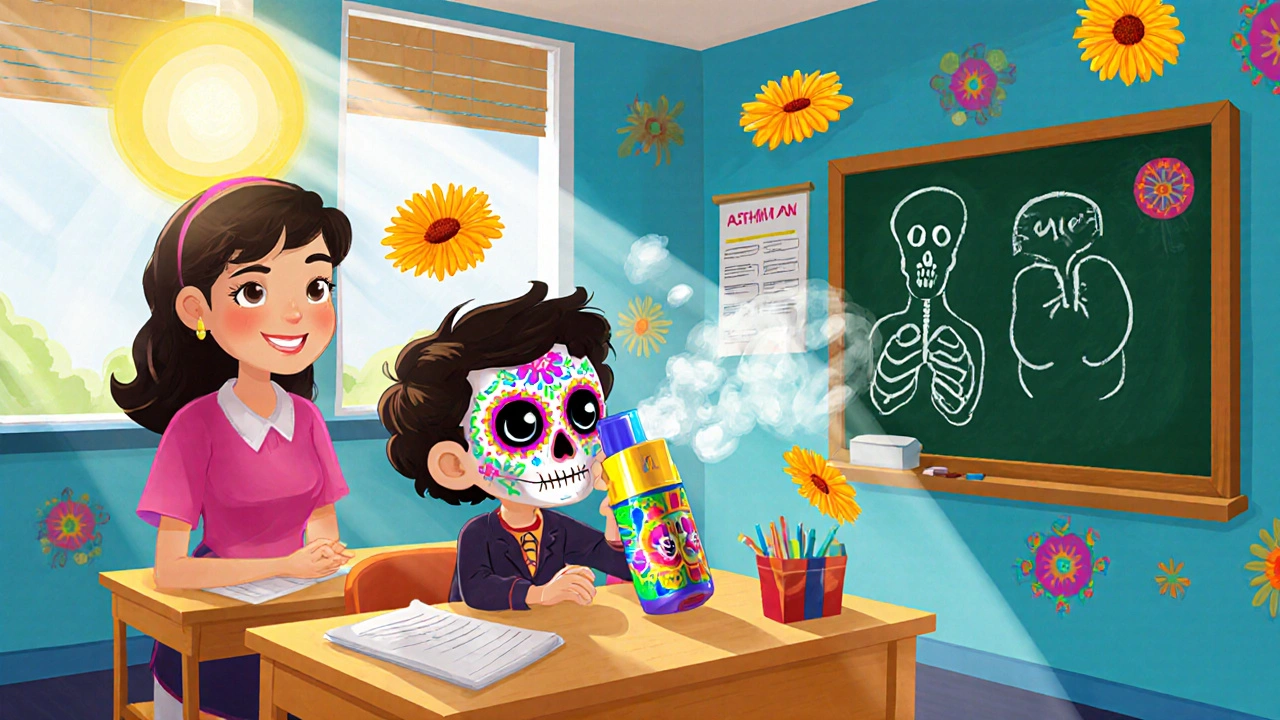
Asthma in Children: How Spacers, Schools, and Care Plans Work Together
Spacers are essential for children with asthma, improving medication delivery and reducing hospital visits. Learn how to use them correctly, why schools must support care plans, and how to overcome teen resistance.