Medication Errors in Hospitals vs. Retail Pharmacies: What You Need to Know
 Mar, 22 2026
Every year, millions of prescriptions are filled in the U.S. - over 3 billion. And somewhere in that massive system, mistakes happen. Not all of them are caught. Some lead to hospital visits. Others? They slip through unnoticed until it’s too late. The truth is, medication errors aren’t random. They follow patterns. And those patterns change depending on whether the error happens in a hospital or a retail pharmacy.
How Often Do Errors Happen?
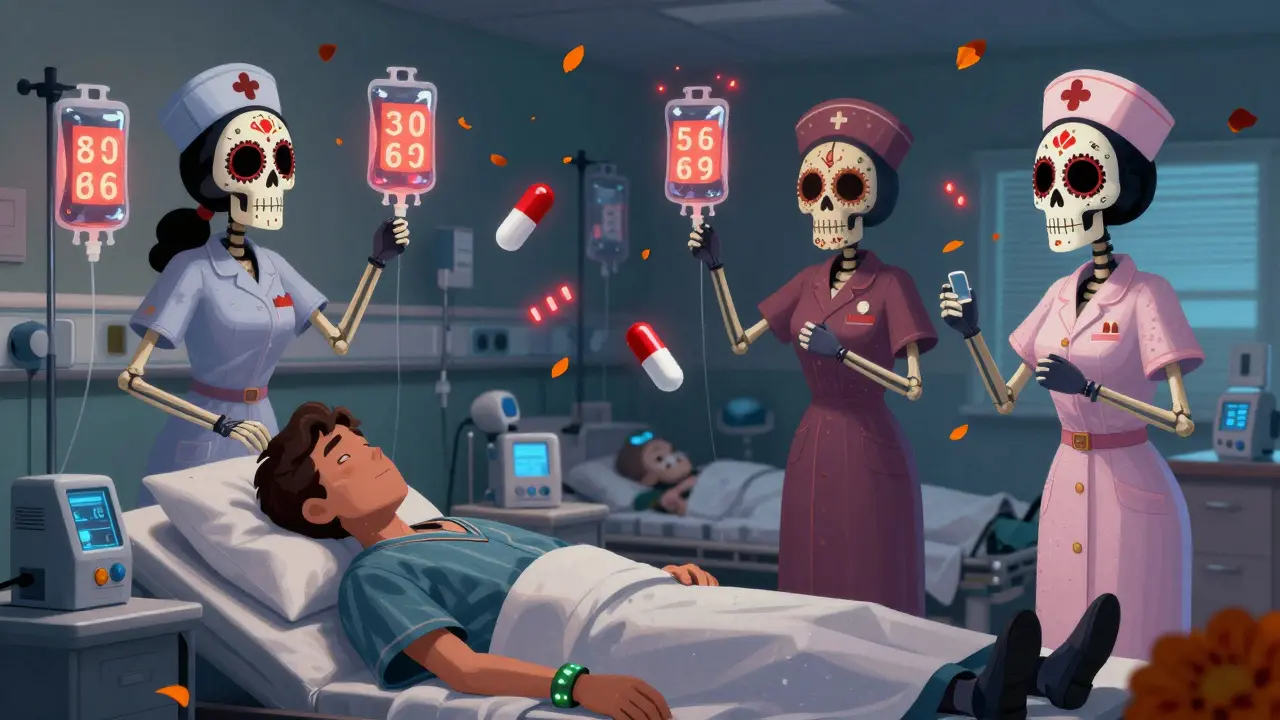
In hospitals, errors are common - shockingly so. One major study found that nearly 1 in every 5 doses given to patients contained some kind of mistake. That’s 20%. It doesn’t mean every patient gets the wrong drug. It means that during the process - from when a doctor writes the order, to when a nurse gives the pill - something goes wrong. Timing errors. Wrong doses. Wrong medications. These aren’t rare. They’re routine.
But here’s the twist: hospitals have layers of checks. Nurses double-check before giving a drug. Pharmacists review orders. Barcode systems scan pills and match them to patient wristbands. These systems cut errors by up to 86%. So even though mistakes happen often, many are caught before they reach the patient.
Now look at a retail pharmacy. The numbers are much lower - about 1.5% of all prescriptions have a dispensing error. That sounds small. But when you’re talking about 3 billion prescriptions a year, 1.5% equals 45 million mistakes. That’s not a typo. That’s 45 million times someone got the wrong drug, the wrong dose, or the wrong instructions.
And here’s the scary part: in a retail pharmacy, there’s no nurse to catch the error. No pharmacist double-checks the patient’s chart. No barcode scan. The pharmacist fills the bottle. The patient walks out. That’s it. The last line of defense? The patient. And most people don’t know what they’re supposed to be taking.
What Kind of Errors Happen?
In hospitals, the most common errors happen during administration. A nurse gives a drug 2 hours late. The dose is 50% too high. The wrong IV bag is attached. These are often caught because someone else is watching. But when they aren’t caught? The results can be deadly. A patient on an ICU with heart failure who gets the wrong diuretic? That’s a code blue waiting to happen.
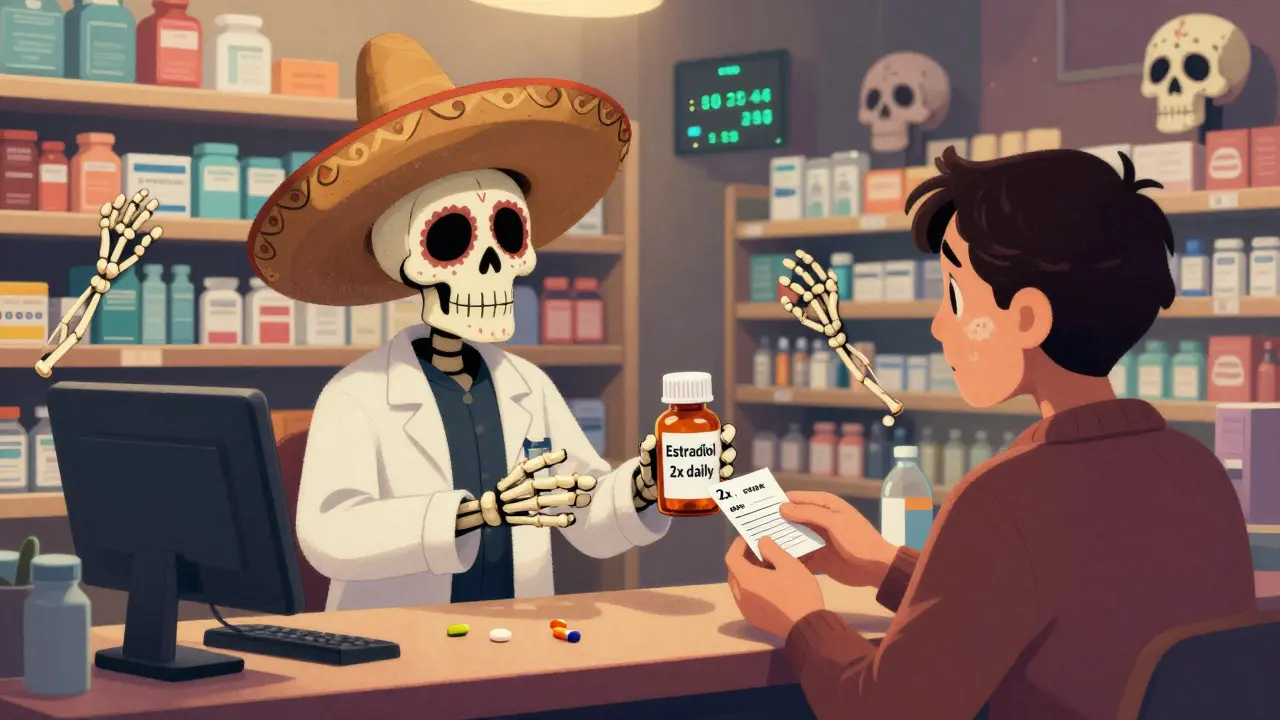
In retail pharmacies, the errors are different. The top three? Wrong medication, wrong dose, wrong directions. One real case from the AHRQ report: a patient was prescribed estradiol - 1 tablet twice per week. The pharmacist misread it as twice per day. The patient took it daily for weeks. She ended up with severe side effects and had to see her doctor again. That’s not a rare case. It’s typical.
Transcription errors are the biggest culprit in community pharmacies. A handwritten script. A misread number. A confusing abbreviation. The pharmacist types it into the system. The system sends it to the automated dispenser. The pill goes into the bottle. No one checks if it makes sense.
And here’s something most people don’t realize: in hospitals, errors are often about timing. In pharmacies, they’re about confusion. A patient with diabetes gets insulin - but the label says "take after meals" when it should say "take before." They take it after. Their blood sugar crashes. They end up in the ER. That’s not a hospital error. That’s a pharmacy error. And it happens more often than you think.
Why Do These Errors Happen?
Hospital errors come from chaos. Overworked staff. Too many patients. Shift changes. Poor communication between doctors and pharmacists. A doctor writes "Lantus 10 units." The pharmacist sees "Lantus 100 units" because the zero is smudged. The nurse gives it. The patient goes into a coma. It’s not negligence. It’s a system that’s stretched too thin.
Community pharmacy errors? They come from pressure. A pharmacy fills 250 prescriptions a day. That’s one every 2 minutes. The pharmacist is juggling calls, insurance issues, and angry customers. They’re tired. They’re rushed. They’re looking at a screen with tiny text. One wrong click. One misread number. One moment of distraction - and the error is in the bottle.
Studies show that 80% of pharmacy errors are tied to how the work environment is set up. Poor lighting. Loud background noise. Too many tasks at once. Automated dispensers that don’t flag obvious mistakes. Even the best pharmacist can’t work perfectly under those conditions.
What Happens After the Error?
In hospitals, errors are logged. Reported. Analyzed. Teams meet weekly to review what went wrong. Why did the wrong drug get given? Was it a labeling issue? A system glitch? A training gap? The hospital learns. It fixes the problem. It doesn’t blame the nurse. It fixes the system.
In retail pharmacies? Not so much. Until recently, most didn’t have formal reporting systems. A mistake happened. The patient didn’t notice. Or they noticed, but didn’t say anything. Or they noticed, called the pharmacy, and got a weak apology. No one tracked it. No one learned. That’s changing - slowly. California now requires pharmacies to report errors to the state board. Other states are following. But most still don’t.
The result? The same mistakes keep happening. The same drugs get mislabeled. The same instructions get misread. And the patients? They’re the ones paying the price.
Who Pays the Price?
The cost of medication errors in the U.S. is over $177 billion a year. That’s not just hospital bills. It’s lost wages. Emergency room visits. Long-term disability. Death.
In hospitals, the cost per error is high - but the number of errors that actually harm patients is lower because of the safety nets. In community pharmacies, the cost per error might be lower - maybe a single ER visit - but the number of errors that reach patients is massive. And when those errors involve insulin, blood thinners, or seizure medications? The consequences can be fatal.
One study found that 1 in 10,000 community pharmacy prescriptions leads to a hospitalization. That’s 300,000 hospitalizations a year - just from pharmacy errors. And that’s only the ones we know about.
What’s Being Done to Fix It?
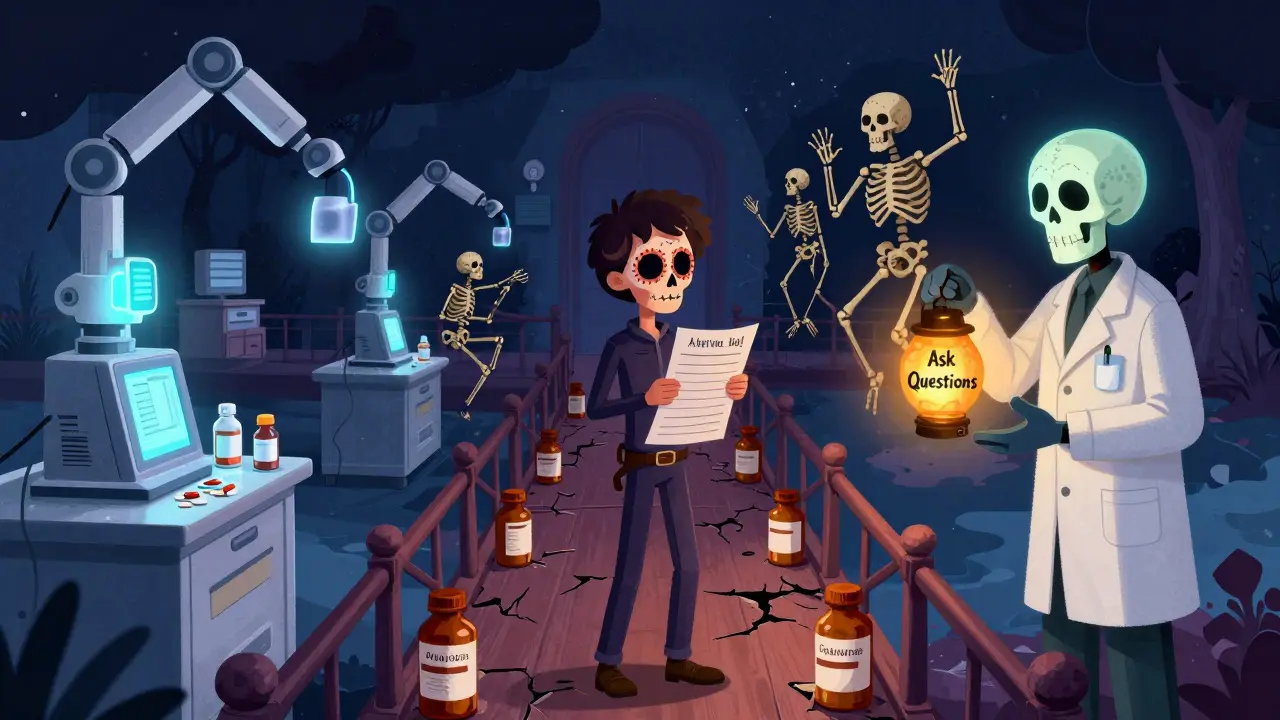
Hospitals have made progress. Barcode systems. Electronic prescribing. Automated dispensing robots. Clinical decision support tools. These have cut errors dramatically. Mayo Clinic cut hospital errors by 52% after integrating its electronic health records with its pharmacy system.
Community pharmacies are catching up. CVS Health rolled out AI-powered verification in 2022. It flagged 37% more errors before they left the pharmacy. UCSF’s pilot program showed AI could cut transcription errors by 63%. These aren’t sci-fi. They’re real. And they’re working.
But technology alone won’t fix it. Culture has to change. Pharmacists need time. Training. Support. Reporting systems that don’t punish them for speaking up. Patients need to be educated - not just handed a bottle and told to "take as directed."
What Can You Do?
If you’re picking up a prescription:
- Ask the pharmacist: "What is this for?" and "How should I take it?"
- Compare the pill to the description on the label. Does it match what you’ve taken before?
- Check the dose. Does it make sense? If your doctor prescribed 5 mg and the bottle says 50 mg - ask.
- Don’t assume the pharmacist caught it. They’re human. They’re busy.
If you’re a caregiver for someone on multiple medications:
- Keep a written list of every drug they take - including doses and times.
- Bring that list to every appointment.
- Call the pharmacy and ask: "Has this medication changed?"
Medication safety isn’t just a hospital job. It’s everyone’s job. And if you’re the last person to check - you need to be the one who asks.
Rachele Tycksen
March 24, 2026 AT 00:10Grace Kusta Nasralla
March 24, 2026 AT 05:12Danielle Arnold
March 25, 2026 AT 09:13Alex Arcilla
March 25, 2026 AT 20:57Zola Parker
March 27, 2026 AT 10:39florence matthews
March 28, 2026 AT 21:32Kenneth Jones
March 28, 2026 AT 23:36Mihir Patel
March 30, 2026 AT 01:52Aaron Sims
March 31, 2026 AT 21:08Stephen Alabi
April 1, 2026 AT 15:05