Medicaid Generic Drug Policies: How States Are Cutting Prescription Costs
 Jan, 19 2026
Medicaid spends billions on prescription drugs every year, but here’s the surprising part: generic drugs make up 85% of all Medicaid prescriptions - yet only 16% of the total drug spending. That’s the power of generics. States aren’t just relying on them by accident. They’ve built entire systems to push more generics, block price spikes, and squeeze out waste. And it’s working - but not without friction.
How Medicaid Gets Its Generic Drug Discounts
The foundation of all this is the Medicaid Drug Rebate Program (MDRP), created in 1990. It’s not optional. If a drug manufacturer wants Medicaid to cover their product, they must pay a rebate. For brand-name drugs, that rebate is huge - 23.1% of the average price. But for generics? It’s simpler: 13% of the Average Manufacturer Price (AMP), or the difference between AMP and the best price they’ve sold to anyone else, whichever is higher. Here’s the catch: states can’t negotiate extra rebates on generics like they can with brand drugs. The formula is locked in by federal law. That means states can’t just call up a drugmaker and say, “Give us a better deal.” They have to work around it. And they have.Maximum Allowable Cost Lists: The Real Weapon
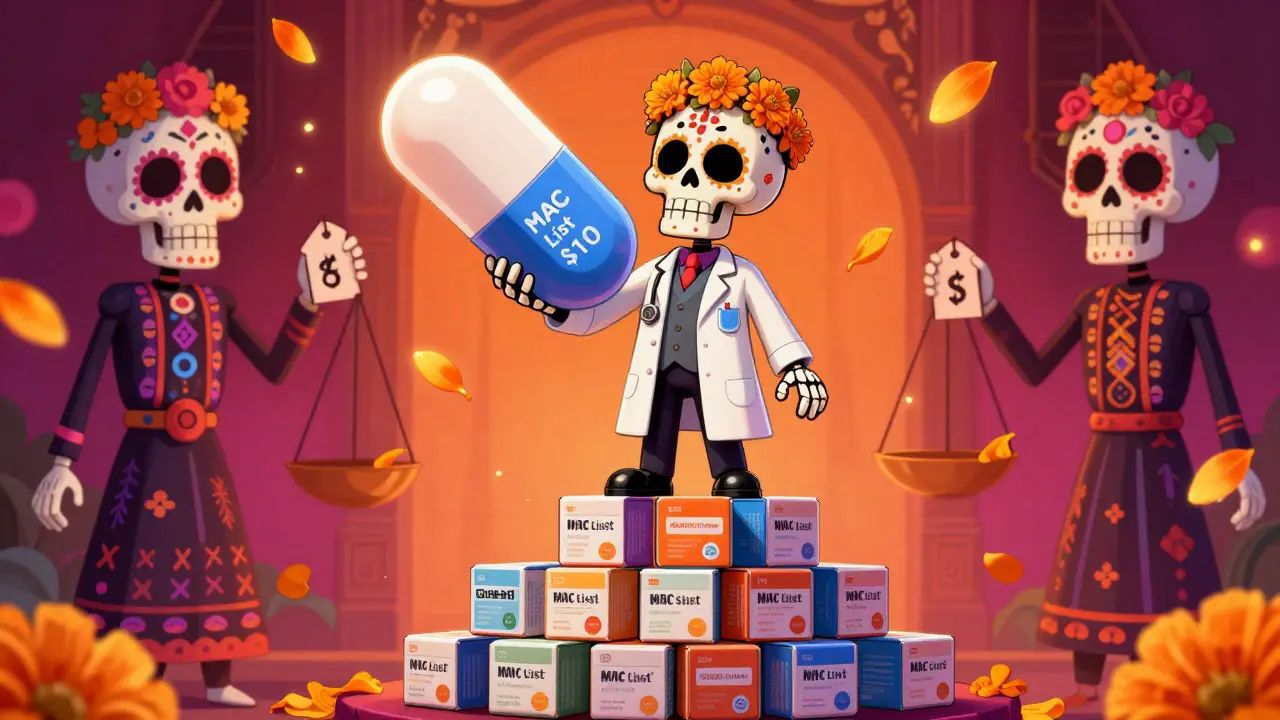
Forty-two states now use Maximum Allowable Cost (MAC) lists. Think of these as price caps for generic drugs. If a pharmacy tries to bill Medicaid for a generic at $15, but the MAC list says the max allowed is $10, Medicaid only pays $10. The pharmacy eats the difference - or finds a cheaper supplier. These lists aren’t static. Thirty-one states update them quarterly or more often. States like Texas and Oregon track wholesale prices daily. If a generic drops from $8 to $3, the MAC list gets updated fast. But here’s the problem: 68% of states update MAC lists monthly or slower. That means when a drug price crashes, pharmacies can’t get paid fairly - and when prices spike, patients might get stuck with a drug that’s suddenly too expensive to cover. Independent pharmacies are feeling the squeeze. A 2024 survey of 1,200 small pharmacies found that 74% had claims denied or payments delayed because MAC lists didn’t match real-time prices. It’s not a system failure - it’s a lag. And that lag hurts the people who need the drugs most.Forcing Substitution: When Doctors Can’t Choose
Forty-nine states require pharmacists to substitute a generic drug unless the doctor specifically says “dispense as written.” That’s not just policy - it’s a cultural shift. Pharmacists now routinely ask patients, “Would you like the generic version?” - and most say yes. But it’s not always simple. Some generics have different fillers, coatings, or release mechanisms. A patient on a specific brand might switch to a generic and feel a difference - even if the FDA says they’re bioequivalent. That’s why 37 states restrict which generics can be used in certain therapeutic classes. For example, if a patient is on a seizure medication, states may limit substitutions to only the most rigorously tested generics.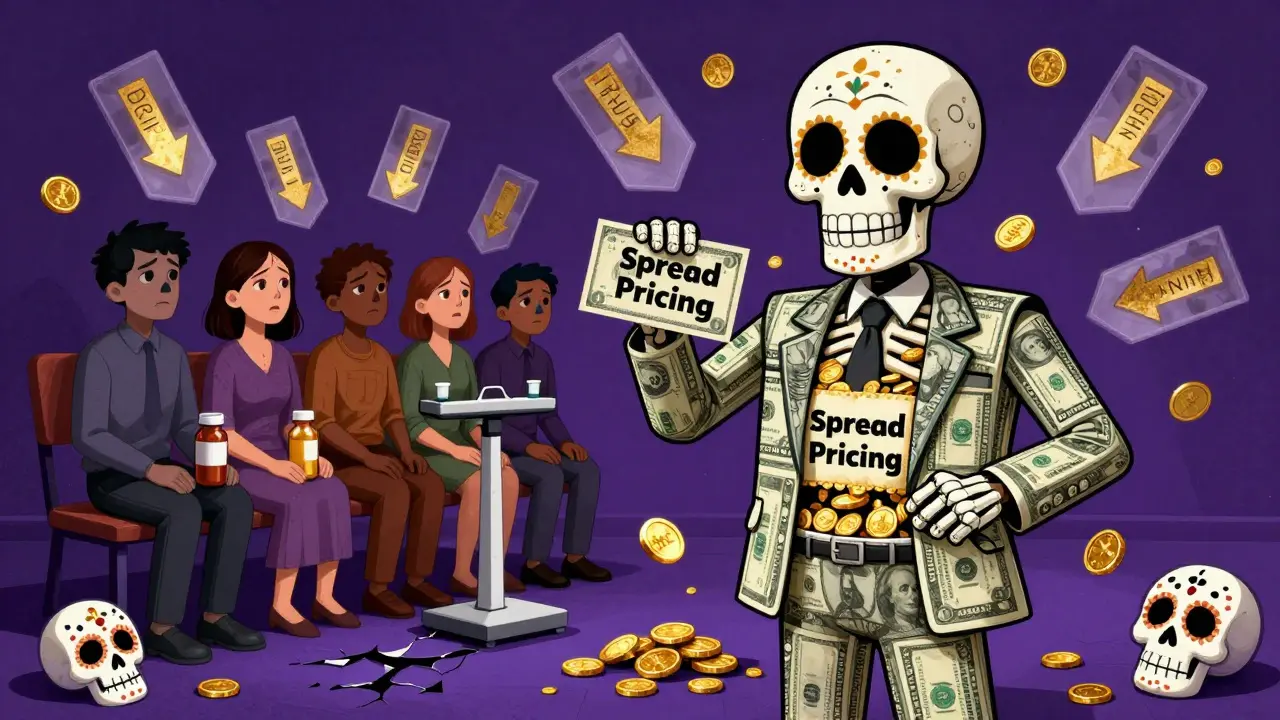
Stopping Price Gouging on Old Drugs
One of the most aggressive moves? Going after companies that jack up prices on generic drugs with no new research. In 2020, Maryland passed a law making it illegal to charge “unconscionable” prices for off-patent drugs. If a drug’s price jumps more than 50% in two years with no new data, the state can demand justification - or fine the company. Other states followed. California, Colorado, and Minnesota now have similar laws. These aren’t price controls - they’re transparency tools. Manufacturers have to prove the hike is justified. In one case, a generic version of a heart medication jumped from $0.30 to $12 per pill. Maryland’s law forced the company to explain - and they backed down.The PBM Problem: Who’s Really Making Money?
Medicaid doesn’t buy drugs directly. It contracts with Pharmacy Benefit Managers (PBMs) - companies like OptumRx, Magellan, and Conduent. These PBMs negotiate with manufacturers, set reimbursement rates, and collect rebates. But here’s the issue: they often don’t pass the savings on. In 2024, 27 states started requiring PBMs to disclose what they actually pay for generic drugs. Before, a PBM might say they paid $2 for a pill and billed Medicaid $10, keeping the $8 as “spread pricing.” Now, states are forcing PBMs to show their real acquisition costs. Nineteen states now require that disclosure. It’s a quiet revolution. Some states are even going further. New Hampshire and Texas created risk pools to absorb price spikes. Oregon and Washington teamed up with seven other states to form a buying consortium. Together, they negotiate bulk discounts on 47 high-volume generics - saving millions.Shortages Are the Silent Crisis
Here’s the dark side: as states push down prices, manufacturers sometimes walk away. In 2023, 23 states reported shortages of critical generic drugs - antibiotics, insulin, seizure meds, even IV fluids. The average shortage lasted nearly five months. Why? Because when a drug makes $0.05 profit per pill, and the cost to produce and ship it is $0.07, companies stop making it. The FDA says three companies now control 65% of the generic injectable market. That’s not competition - it’s a cartel waiting to happen. Twelve states passed laws in 2024 to stockpile critical generics. Maryland is building a warehouse for antibiotics. Texas is creating backup suppliers. The goal? Prevent a repeat of the 2021 IV bag shortage that left hospitals scrambling.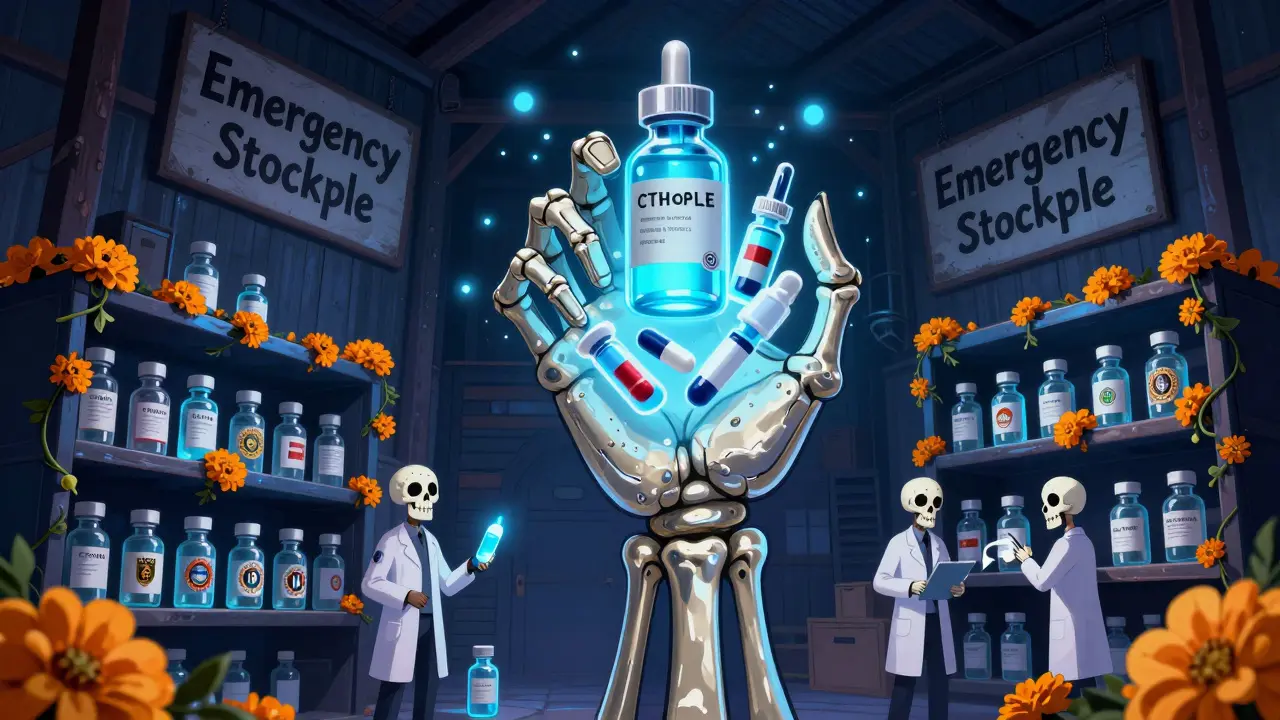
What’s Next? The GLP-1 Wildcard
GLP-1 drugs like Ozempic and Wegovy cost $12,000 a year. They’re brand-name, not generic - but they’re exploding in Medicaid use. Thirteen states now cover them for obesity, but only with strict prior authorization. The federal government is pushing to require all Medicaid programs to cover them. That could add $1.2 billion to state budgets in a single year. States are watching closely. If they can’t control the cost of these new drugs, the savings from generics could vanish. That’s why 15 more states are expected to introduce generic pricing bills in 2025. The focus isn’t just on cutting prices - it’s on protecting supply.Can States Keep This Up?
The Congressional Budget Office says state efforts could save $3.8 billion a year by 2027. But they also warn: if states go too far, manufacturers might stop making certain generics altogether. That could force Medicaid to pay more for brand-name alternatives - and cost more than the savings. The balance is fragile. Too little control, and costs spiral. Too much, and drugs disappear. The smartest states - Oregon, Maryland, Texas - are doing both: pushing prices down while building backup systems. They’re not just saving money. They’re protecting access. This isn’t about ideology. It’s about survival. Medicaid covers 85 million Americans. If the system breaks, millions lose access to basic medicines. States aren’t trying to punish drugmakers. They’re trying to keep the lights on.How do Maximum Allowable Cost (MAC) lists help control Medicaid drug costs?
MAC lists set price caps for generic drugs that Medicaid will pay. If a pharmacy tries to charge more than the MAC limit, Medicaid only pays the capped amount. This forces pharmacies to find cheaper suppliers or absorb the cost, which drives down overall spending. Forty-two states use MAC lists, and 31 update them quarterly to match real-time market prices.
Why can’t states negotiate better rebates on generic drugs?
Federal law under the Medicaid Drug Rebate Program sets a fixed rebate formula for generics: 13% of the Average Manufacturer Price (AMP) or the difference between AMP and the best price, whichever is higher. Unlike brand-name drugs, states can’t add supplemental rebates for generics. This limits their ability to bargain, so they focus on other tools like MAC lists and anti-gouging laws.
What’s the difference between generic substitution and therapeutic interchange?
Generic substitution means a pharmacist swaps a brand-name drug for a chemically identical generic - allowed in 49 states unless the doctor blocks it. Therapeutic interchange goes further: it swaps one generic for another within the same drug class, based on cost or clinical guidelines. Thirty-seven states use therapeutic interchange to steer patients toward lower-cost options, even if they’re not the exact same drug.
How are states fighting generic drug shortages?
Twelve states passed laws in 2024 to address shortages by creating strategic stockpiles of critical generics like antibiotics and insulin. Others are building backup supplier networks or requiring manufacturers to report potential shortages earlier. Maryland and Texas are now maintaining emergency reserves to prevent hospital disruptions during supply crunches.
Do state generic drug policies risk reducing drug availability?
Yes - that’s the biggest trade-off. When states cap prices too low, manufacturers may stop making unprofitable generics. The FDA reports that three companies control 65% of the generic injectable market, making the system vulnerable. The Congressional Budget Office warns overly aggressive pricing could reduce availability and push patients toward more expensive brand-name drugs, increasing overall Medicaid costs by 2.3%.
What role do Pharmacy Benefit Managers (PBMs) play in Medicaid generic drug costs?
PBMs act as middlemen between Medicaid and pharmacies, negotiating prices and handling claims. But they’ve been accused of keeping savings for themselves through “spread pricing” - charging Medicaid more than they pay for the drug. In 2024, 27 states required PBMs to disclose their actual acquisition costs, and 19 now require them to pass savings directly to the program.
Glenda Marínez Granados
January 19, 2026 AT 14:30Malvina Tomja
January 19, 2026 AT 22:13Andrew Rinaldi
January 21, 2026 AT 09:29michelle Brownsea
January 21, 2026 AT 22:18Gerard Jordan
January 22, 2026 AT 02:03Yuri Hyuga
January 22, 2026 AT 09:16Ashok Sakra
January 22, 2026 AT 14:12MARILYN ONEILL
January 22, 2026 AT 16:40lokesh prasanth
January 23, 2026 AT 05:00