Pharmacokinetics: How Your Body Processes Medications
When you take a pill, it doesn’t just sit there and work. Pharmacokinetics, the study of how drugs move through the body over time. Also known as ADME, it stands for absorption, distribution, metabolism, and excretion—the four stages that decide if a drug will help you, hurt you, or do nothing at all. This isn’t theory. It’s why some people get sick from a standard dose while others need double to feel anything. It’s why grapefruit can turn a safe statin into a heart risk. And why switching from one generic to another can cause transplant rejection or seizures.
Drug absorption, how quickly and completely a medication enters your bloodstream. Food, stomach acid, even the time of day can change this. A pill taken on an empty stomach might hit your system in 30 minutes. The same pill after a big meal? Maybe two hours—and half the effect. Then comes drug metabolism, how your liver breaks down the drug using enzymes like CYP2C19 and CYP3A4. If you’re a slow metabolizer, drugs build up. If you’re fast, they vanish before they work. That’s why pharmacogenetic testing is now used before prescribing certain antidepressants, blood thinners, and pain meds. And bioavailability, the percentage of a drug that actually reaches circulation. That’s why some generics work fine and others cause problems—especially with narrow therapeutic index drugs like warfarin or cyclosporine. One milligram too much, and you bleed. One milligram too little, and your body rejects the transplant.
None of this happens in isolation. Pharmacokinetics is the hidden link between your DNA, your diet, your other meds, and whether your treatment works. It explains why a senior on multiple drugs gets confused (medication-induced delirium), why a woman with PCOS responds better to one fertility pill than another, and why a kidney patient must avoid certain NSAIDs. It’s why you need to know what time to take your thyroid med, why you shouldn’t mix evening primrose oil with antipsychotics, and why some states ban generic swaps for certain drugs. The posts below dig into real cases—where pharmacokinetics made the difference between healing and harm. You’ll find practical guides on avoiding dangerous interactions, choosing safer generics, and understanding why your body reacts the way it does to the pills you swallow.
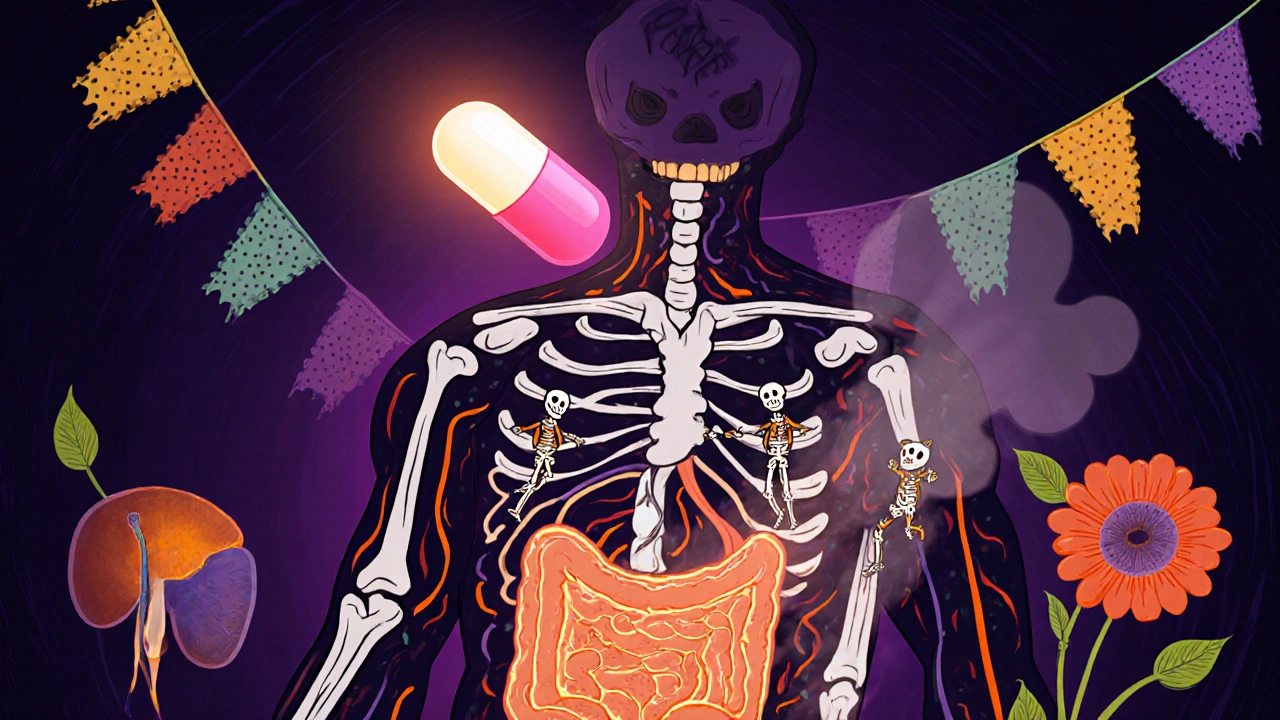
How Medications Work: Understanding Pharmacology and Drug Mechanisms
Learn how medications work in the body through pharmacology basics-understanding pharmacokinetics, pharmacodynamics, drug mechanisms, and why people respond differently to the same drugs.